Table 1From “CRM adoption is knowledge integration, not a rollout”
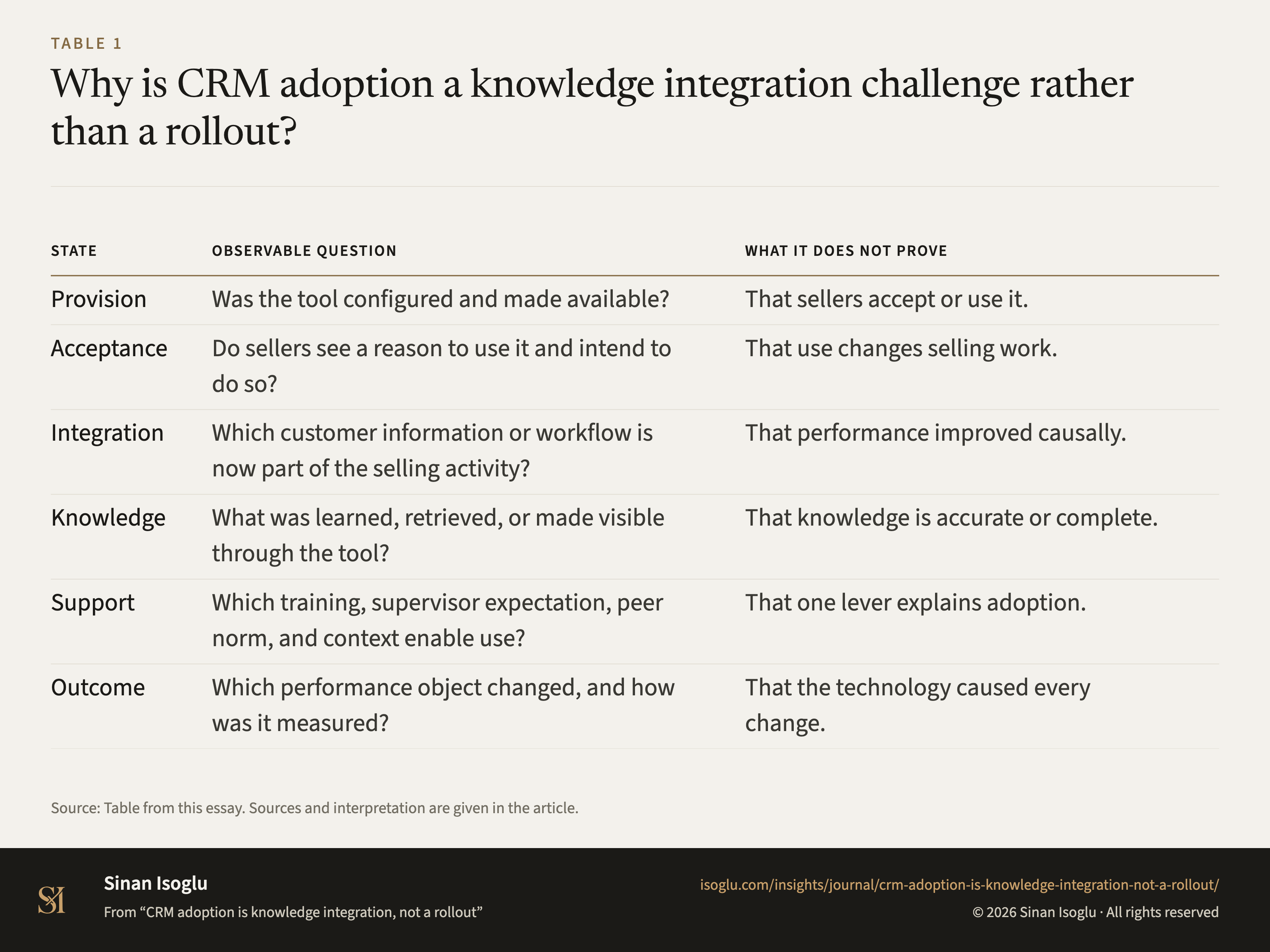
Why is CRM adoption a knowledge integration challenge rather than a rollout?
Table 1Why is CRM adoption a knowledge integration challenge rather than a rollout?
| State | Observable question | What it does not prove |
|---|---|---|
| Provision | Was the tool configured and made available? | That sellers accept or use it. |
| Acceptance | Do sellers see a reason to use it and intend to do so? | That use changes selling work. |
| Integration | Which customer information or workflow is now part of the selling activity? | That performance improved causally. |
| Knowledge | What was learned, retrieved, or made visible through the tool? | That knowledge is accurate or complete. |
| Support | Which training, supervisor expectation, peer norm, and context enable use? | That one lever explains adoption. |
| Outcome | Which performance object changed, and how was it measured? | That the technology caused every change. |
Swipe or scroll horizontally if the table is wider than your screen.
Source: Table from this essay. Sources and interpretation are given in the article.
From the essay
Revenue operations & AI
CRM adoption is knowledge integration, not a rollout
A CRM rollout is a provision event: adoption requires acceptance, knowledge integration, changed selling work, support, and a measured outcome.
Read the essayThis exhibit belongs to an essay: the numbers live here, the argument lives there.
Cite or embed
Related exhibits
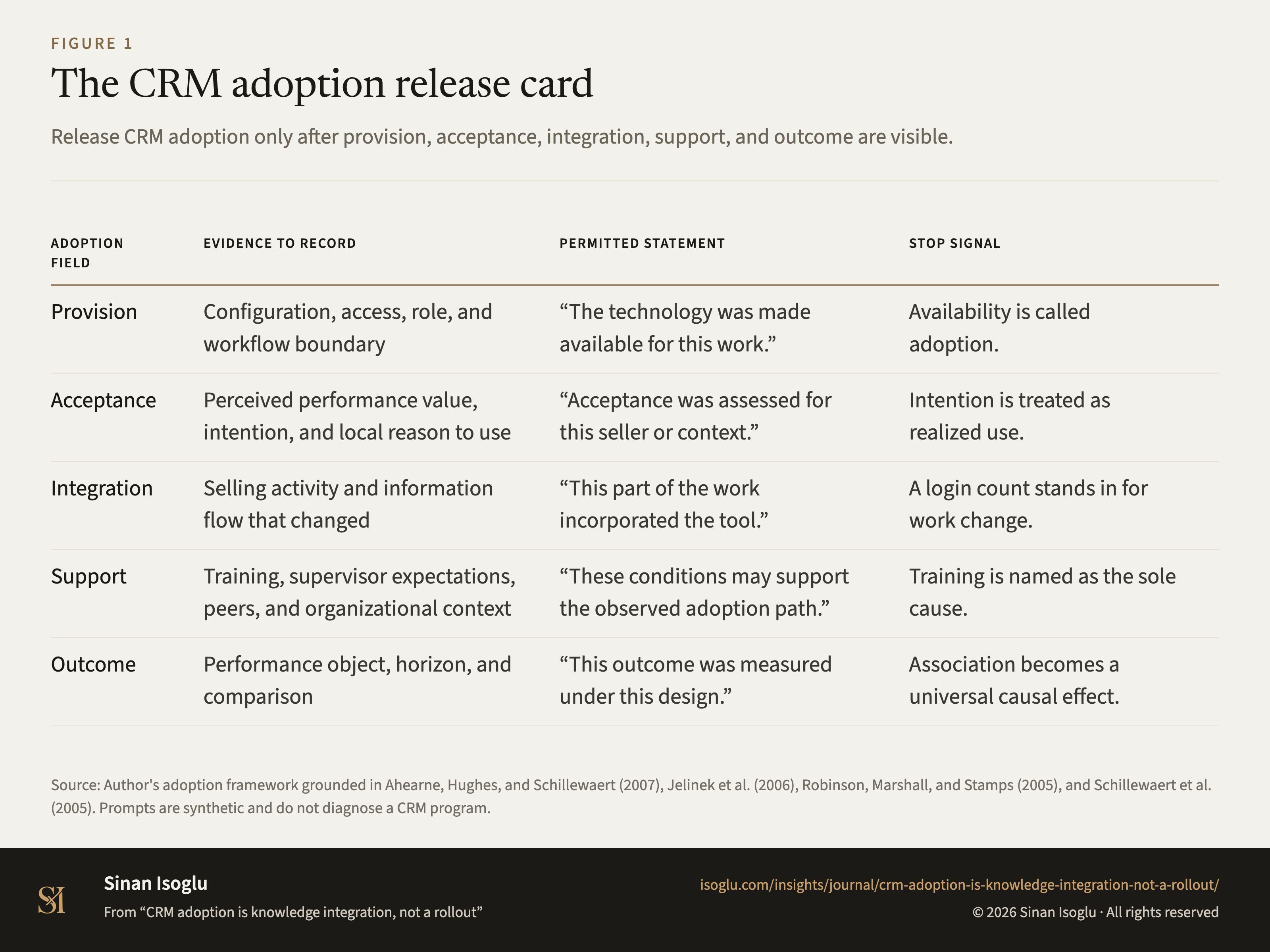
Figure 1Figure
The CRM adoption release card
CRM adoption is knowledge integration, not a rollout
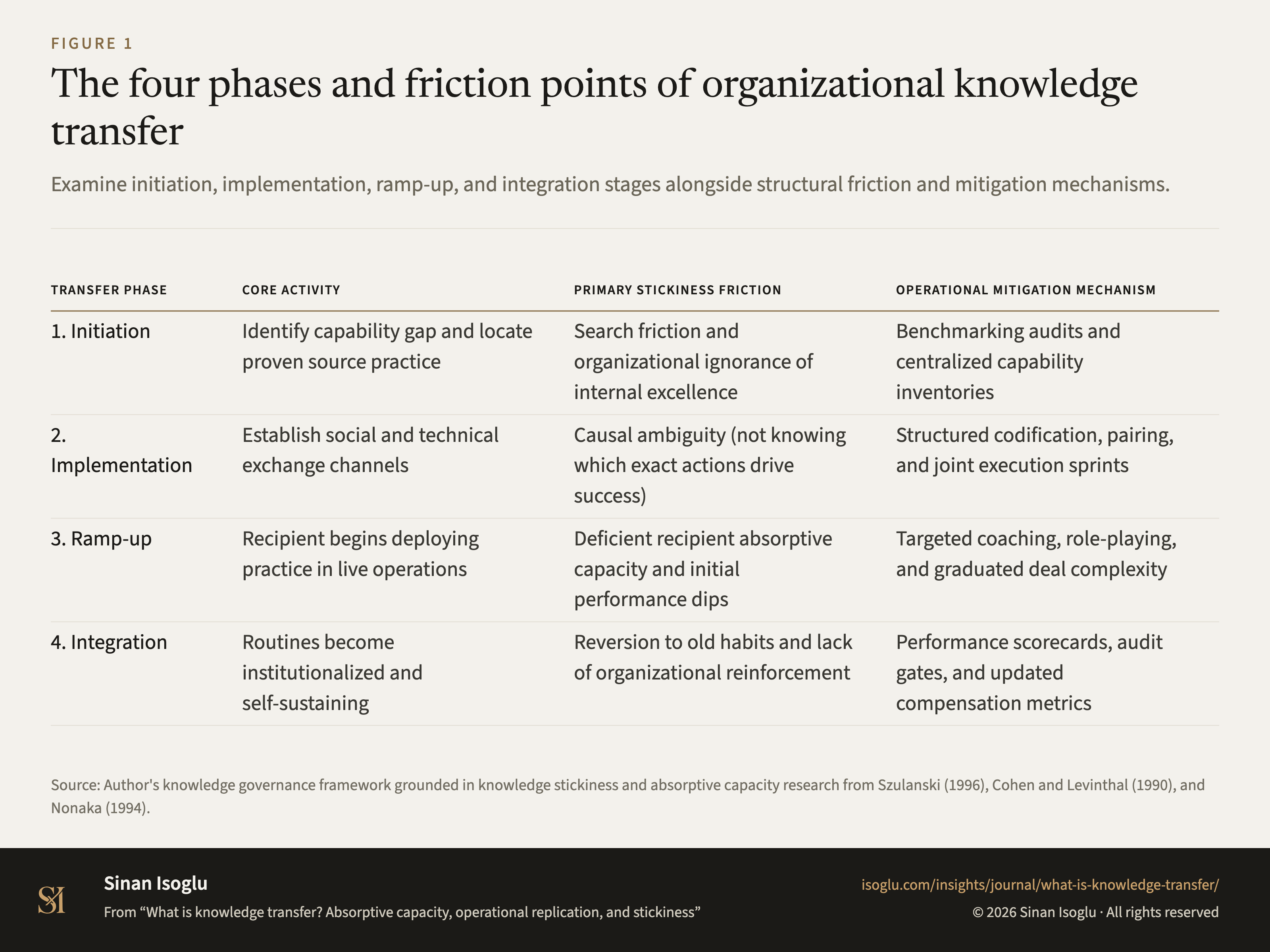
Figure 1Figure
The four phases and friction points of organizational knowledge transfer
What is knowledge transfer? Absorptive capacity, operational replication, and stickiness
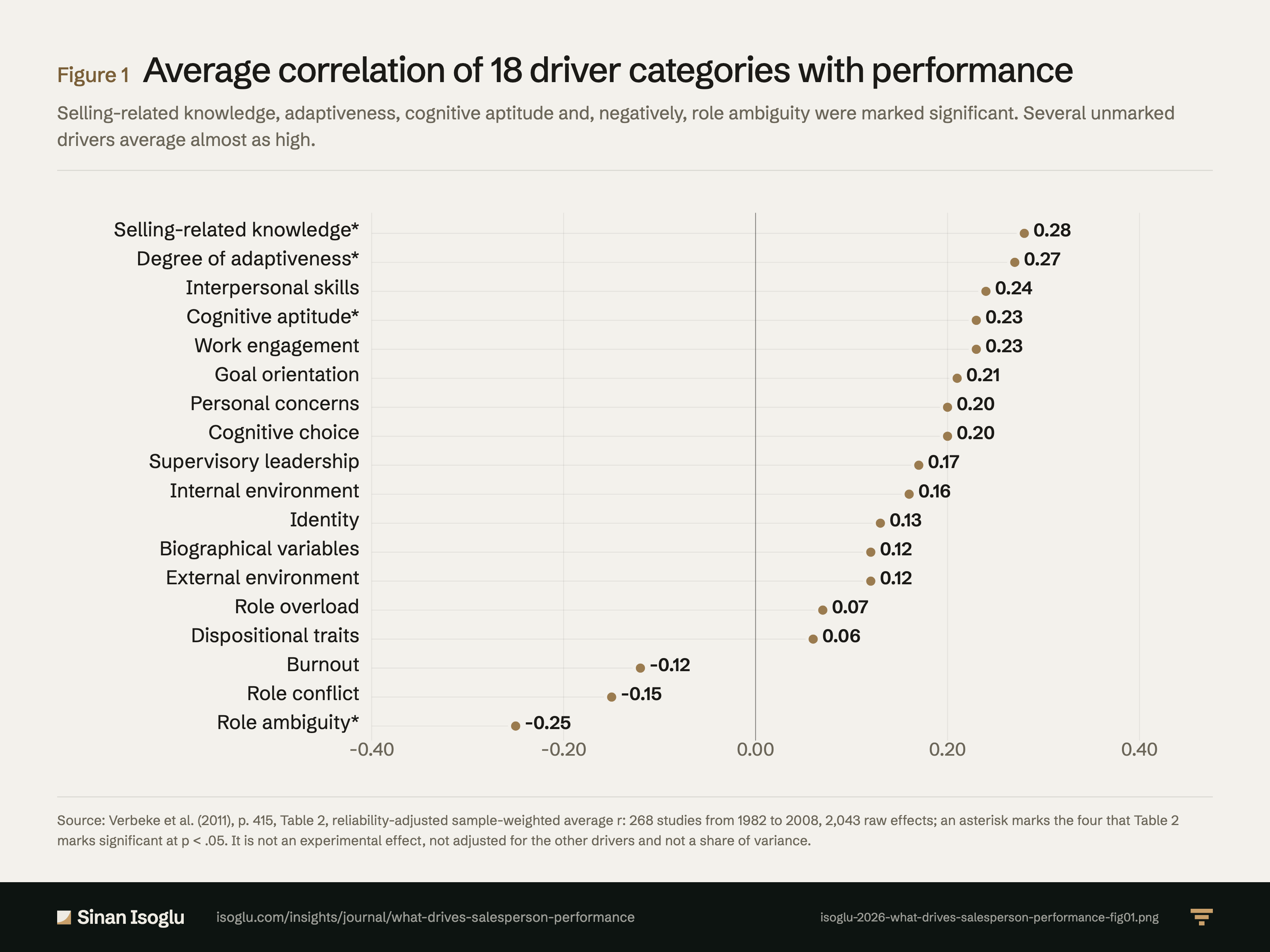
Figure 1Figure
Average correlation of 18 driver categories with performance
What drives salesperson performance?
Contact
Bring the question you're working on.
Research, a guest lecture, or a commercial question.