Table 1From “The playbook study never asked who made the tools”
Three perspectives on codified integration playbooks
How empirical management research views codified integration tools, and where the consultant market parts company with the evidence.
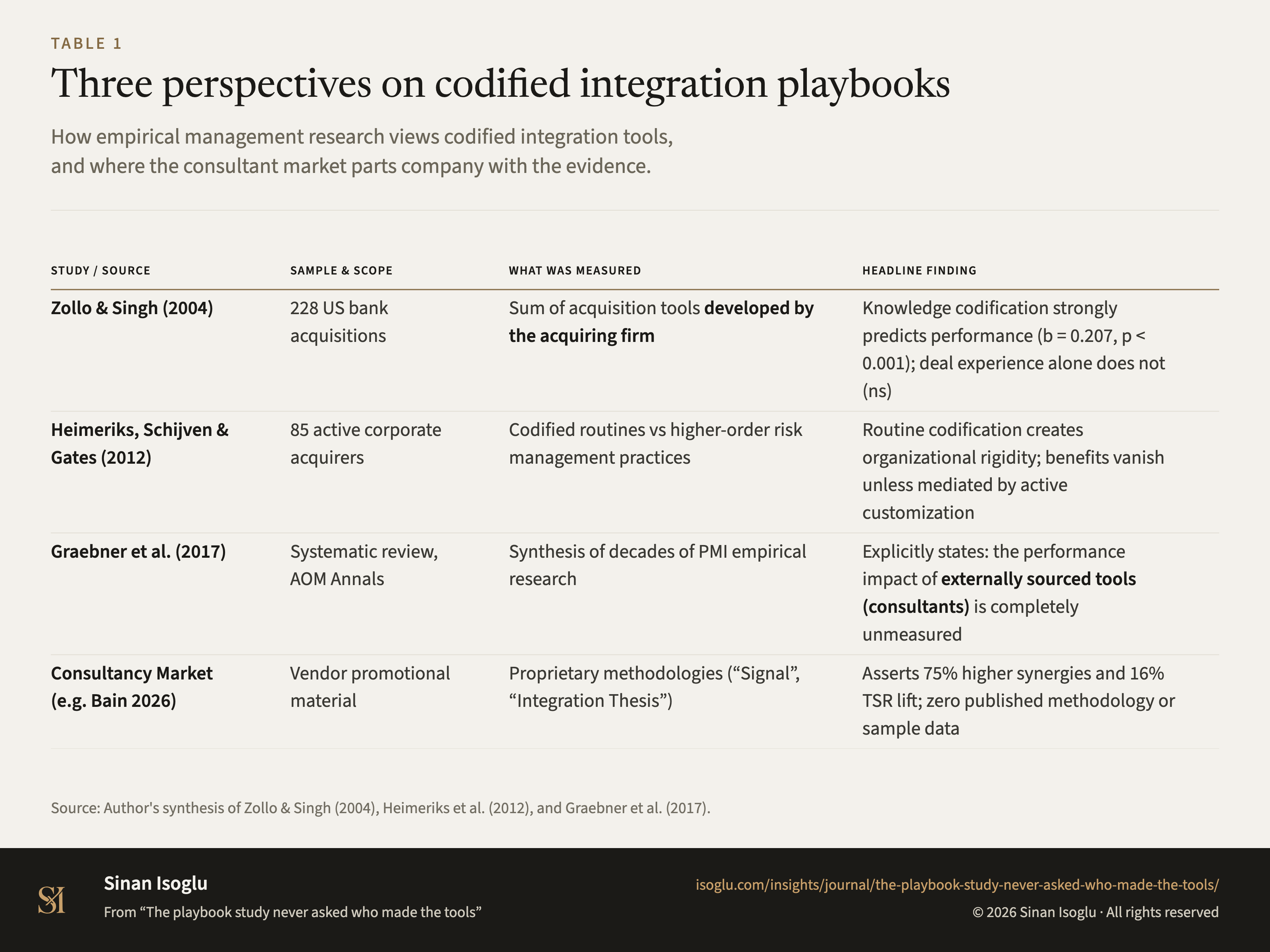
Table 1Three perspectives on codified integration playbooks
| Study / Source | Sample & Scope | What was measured | Headline finding |
|---|---|---|---|
| Zollo & Singh (2004) | 228 US bank acquisitions | Sum of acquisition tools developed by the acquiring firm | Knowledge codification strongly predicts performance (b = 0.207, p < 0.001); deal experience alone does not (ns) |
| Heimeriks, Schijven & Gates (2012) | 85 active corporate acquirers | Codified routines vs higher-order risk management practices | Routine codification creates organizational rigidity; benefits vanish unless mediated by active customization |
| Graebner et al. (2017) | Systematic review, AOM Annals | Synthesis of decades of PMI empirical research | Explicitly states: the performance impact of externally sourced tools (consultants) is completely unmeasured |
| Consultancy Market (e.g. Bain 2026) | Vendor promotional material | Proprietary methodologies ("Signal", "Integration Thesis") | Asserts 75% higher synergies and 16% TSR lift; zero published methodology or sample data |
Swipe or scroll horizontally if the table is wider than your screen.
Source: Author's synthesis of Zollo & Singh (2004), Heimeriks et al. (2012), and Graebner et al. (2017).
From the essay
Growth that compounds
The playbook study never asked who made the tools
Consultancies sell M&A playbooks as repeatable capability. The study that proved playbooks work measured tools the acquirer built: buying is unmeasured.
Read the essayThis exhibit belongs to an essay: the numbers live here, the argument lives there.
Cite or embed
Related exhibits
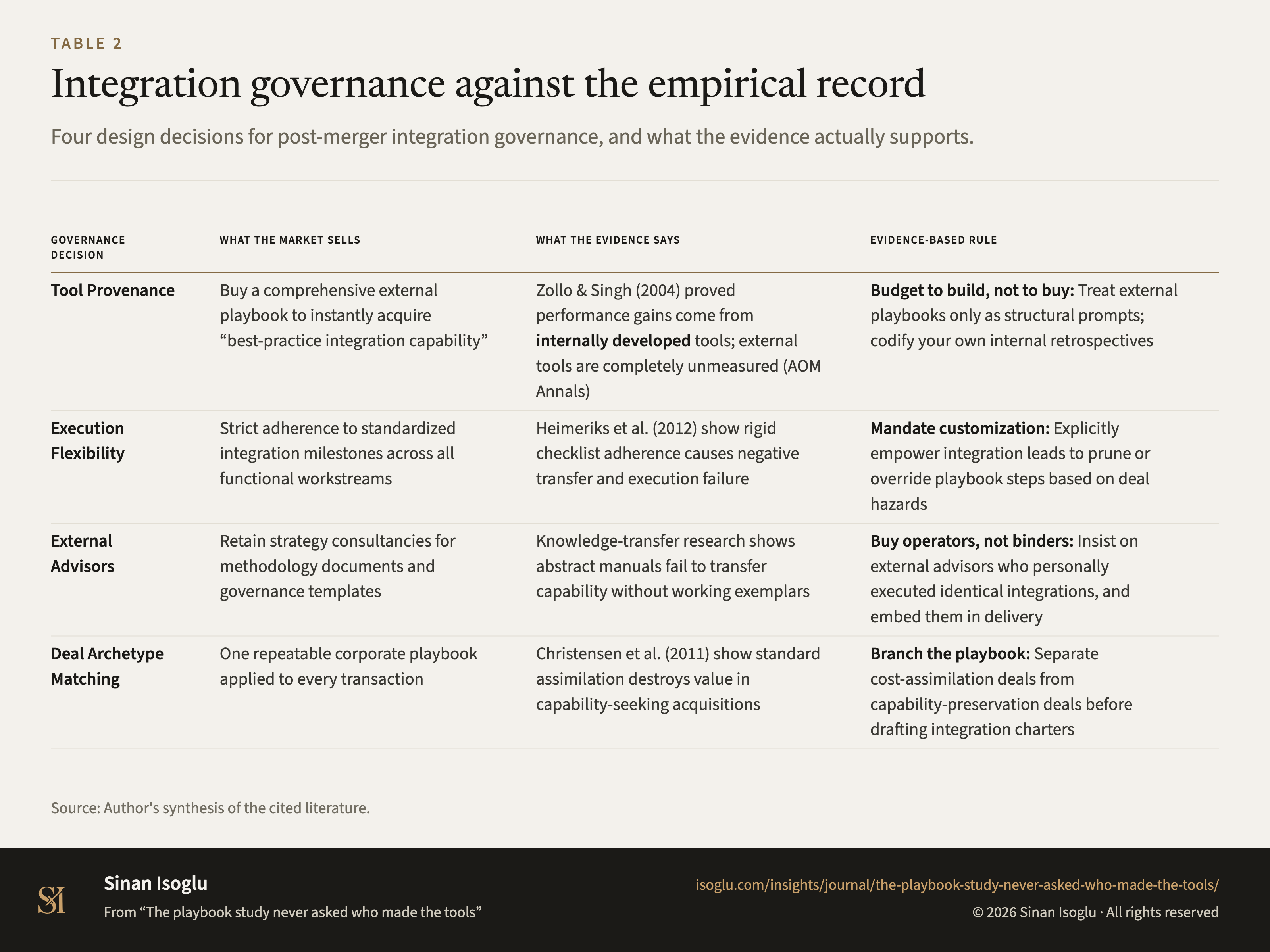
Table 2Table
Integration governance against the empirical record
The playbook study never asked who made the tools
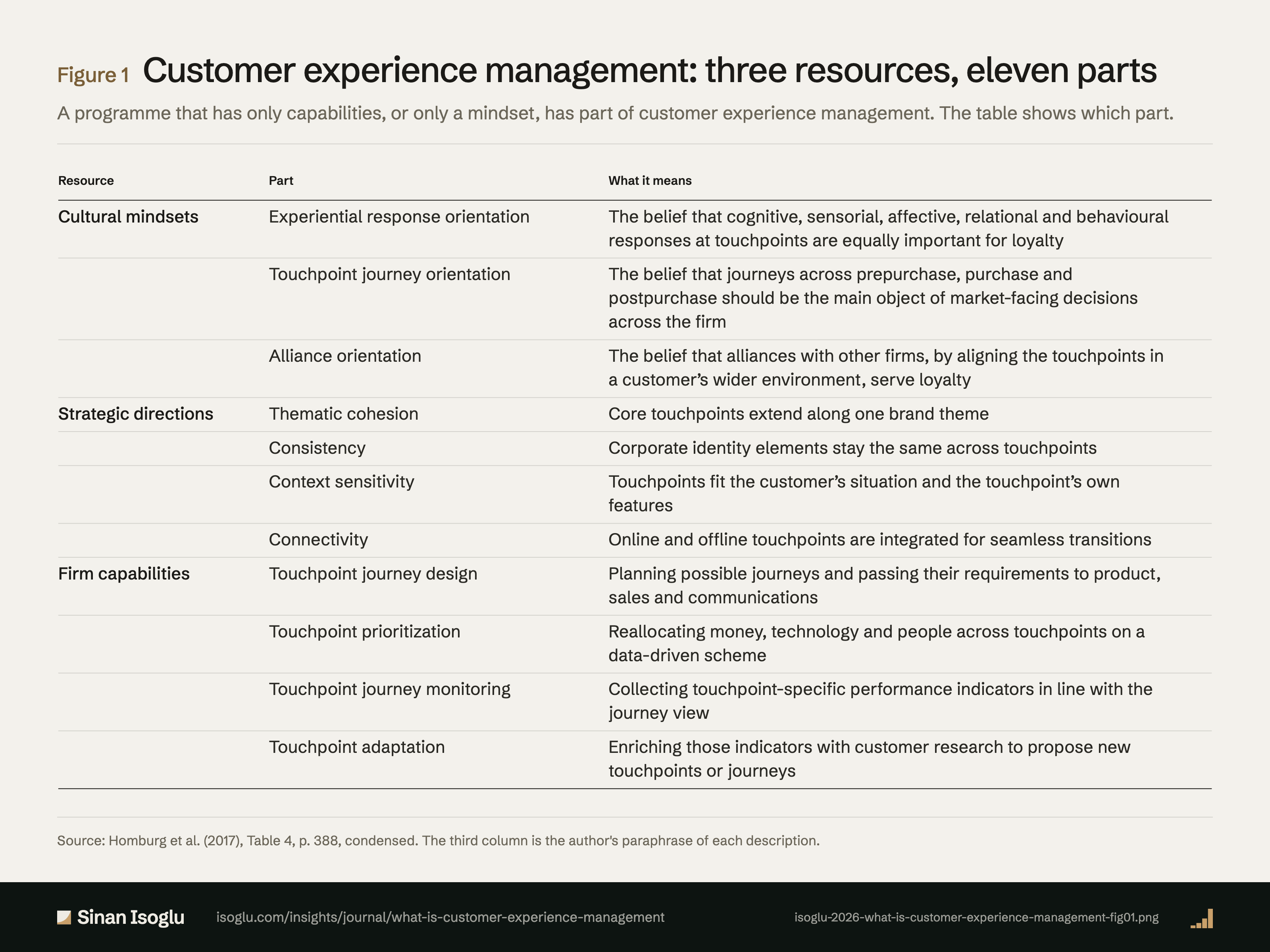
Figure 1Figure
Customer experience management: three resources, eleven parts
What is customer experience management?
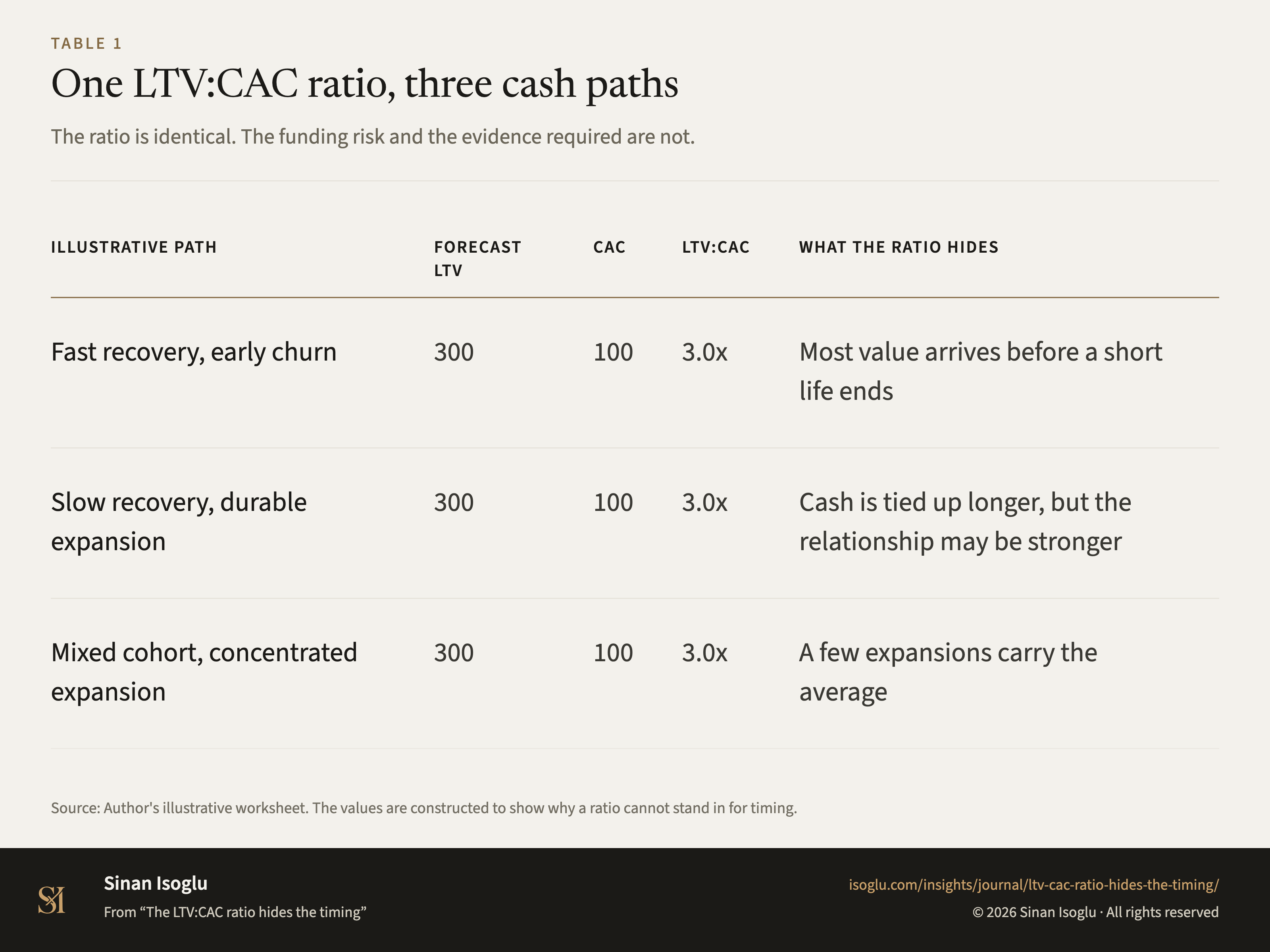
Table 1Table
One LTV:CAC ratio, three cash paths
The LTV:CAC ratio hides the timing
Contact
Bring the question you're working on.
Research, a guest lecture, or a commercial question.