Tabelle 1Aus „Was ist eine Preisaktion?“
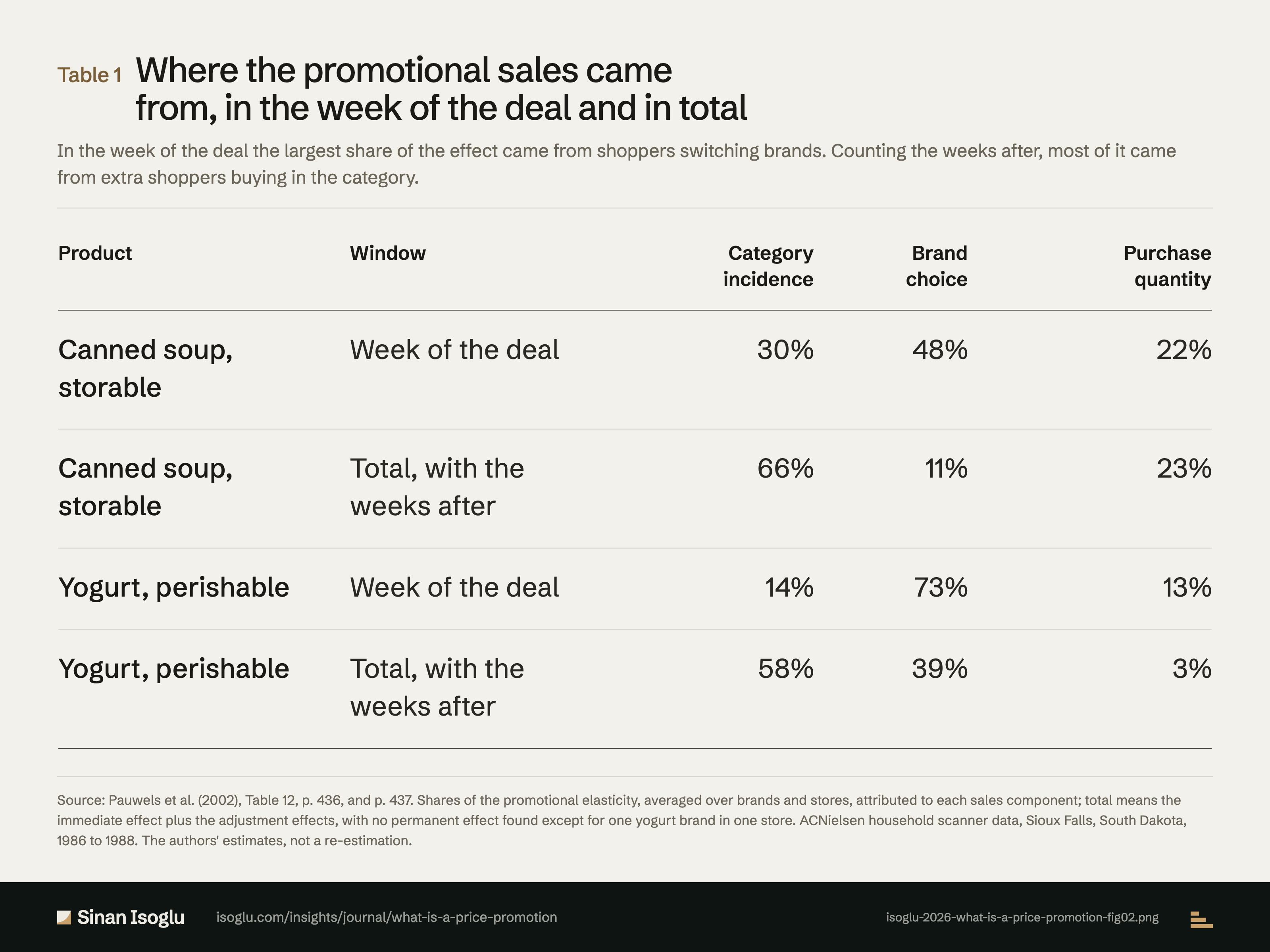
Woher der Aktionsabsatz kam, in der Aktionswoche und insgesamt
In der Aktionswoche entfiel der größte Anteil der Wirkung auf Markenwechsel. Mit den Wochen danach kam der größte Teil von zusätzlichen Käufern in der Kategorie.
Tabelle 1Woher der Aktionsabsatz kam, in der Aktionswoche und insgesamt
| Produkt | Zeitraum | Kaufinzidenz in der Kategorie | Markenwahl | Kaufmenge |
|---|---|---|---|---|
| Dosensuppe, lagerfähig | Aktionswoche | 30 % | 48 % | 22 % |
| Dosensuppe, lagerfähig | Insgesamt, mit den Wochen danach | 66 % | 11 % | 23 % |
| Joghurt, verderblich | Aktionswoche | 14 % | 73 % | 13 % |
| Joghurt, verderblich | Insgesamt, mit den Wochen danach | 58 % | 39 % | 3 % |
Bei breiten Tabellen horizontal wischen oder scrollen.
Quelle: Pauwels et al. (2002), Tabelle 12, S. 436, und S. 437. Anteile der über Marken und Geschäfte gemittelten Aktionselastizität, die jeder Absatzkomponente zugerechnet werden; insgesamt heißt unmittelbare Wirkung plus Anpassungswirkung, eine dauerhafte Wirkung fanden die Autoren nur für eine Joghurtmarke in einem Geschäft. ACNielsen-Haushalts-Scannerdaten, Sioux Falls, South Dakota, 1986 bis 1988. Schätzungen der Autoren, keine Neuschätzung.
Quelle und Evidenz
Jede Zeile nennt eine Aussage zu dieser Abbildung, ihre Quelle und die Art ihrer Prüfung.
- A PHS02-C3 Brand sales are split into category incidence, brand choice and purchase quantity, measured for canned soup (storable, not impulse) and yogurt (perishable, impulse) in ACNielsen household scanner data from Sioux Falls, 1986 to 1988 (pp. 422, 426): "category incidence (the total number of panelists buying in the product category), brand choice (the share of these consumers buying the brand), and purchase quantity (the average quantity purchased by the brand's consumers)"; "a storable product that is not generally bought on impulse"; "a perishable product that is often bought on impulse"; "scanner data in the Sioux Falls, S. Dak., market for the period July 14, 1986, until September 5, 1988"pauwels-hanssens-siddarth-2002-long-term-promotions
- A PHS02-C4 Table 12: the immediate elasticity breakdown (incidence/choice/quantity) is 30/48/22 for soup and 14/73/13 for yogurt, the total breakdown 66/11/23 and 58/39/3; brand choice is the largest immediate component in both categories (a majority for yogurt, not for soup), total effects fall mainly on category incidence; one yogurt brand in one store showed a permanent effect (pp. 432, 436, 437): "Brand choice is the dominant factor in the immediate elasticity breakdown."; "Except for yogurt Brand 4 in Store 1."; "Price promotions have a larger immediate impact on selective demand (brand choice) than on primary demand (category incidence and purchase quantity)." (holds for yogurt and on average, not for the soup immediate row); "The relative magnitude of the total effects of a price shock are 66/11/23 for soup and 58/39/3 for yogurt."; "A comparison with the immediate breakdown of 30/48/22 for soup and 14/73/13 for yogurt"; "Although price promotions have a large immediate impact on brand choice, their total impact on brand choice is relatively low."pauwels-hanssens-siddarth-2002-long-term-promotions
Prüfgrade: A, gegen die gedruckte Seite der Primärquelle geprüft · B, Primärquelle, nur Textebene · C, belastbare Sekundärquelle · D, berichtet.
Aus dem Beitrag
Pricing & Umsatzarchitektur
Was ist eine Preisaktion?
Eine Preisaktion ist eine befristete, angekündigte Preissenkung. Sie hebt den Absatz sofort, doch wer sie oft sieht, kauft ohne sie womöglich seltener.
Den Beitrag lesenDiese Abbildung gehört zu einem Essay: Die Zahlen stehen hier, das Argument dort.
Zitieren oder einbetten
Verwandte Abbildungen
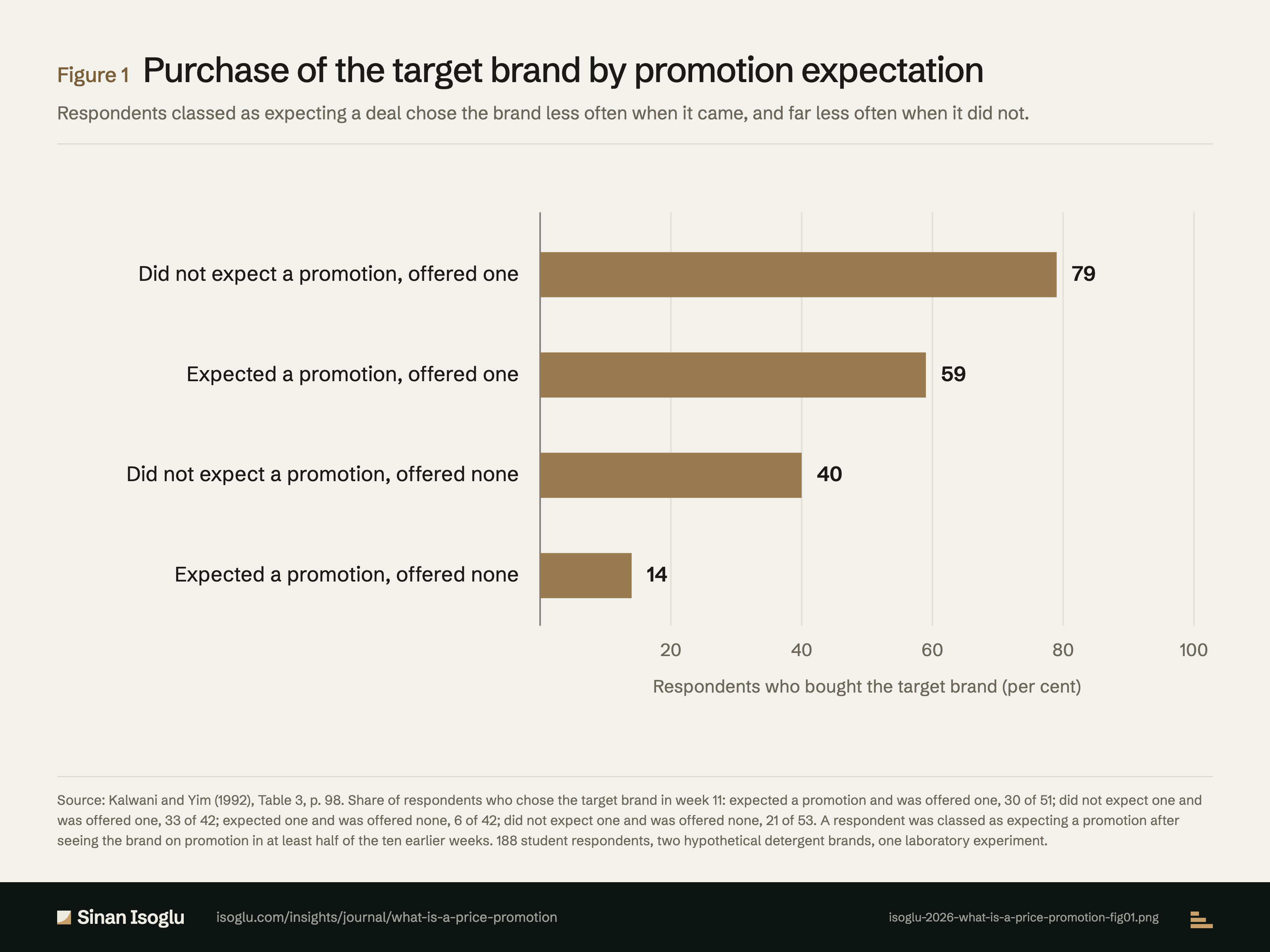
Abbildung 1Grafik
Kauf der Zielmarke nach Aktionserwartung
Was ist eine Preisaktion?
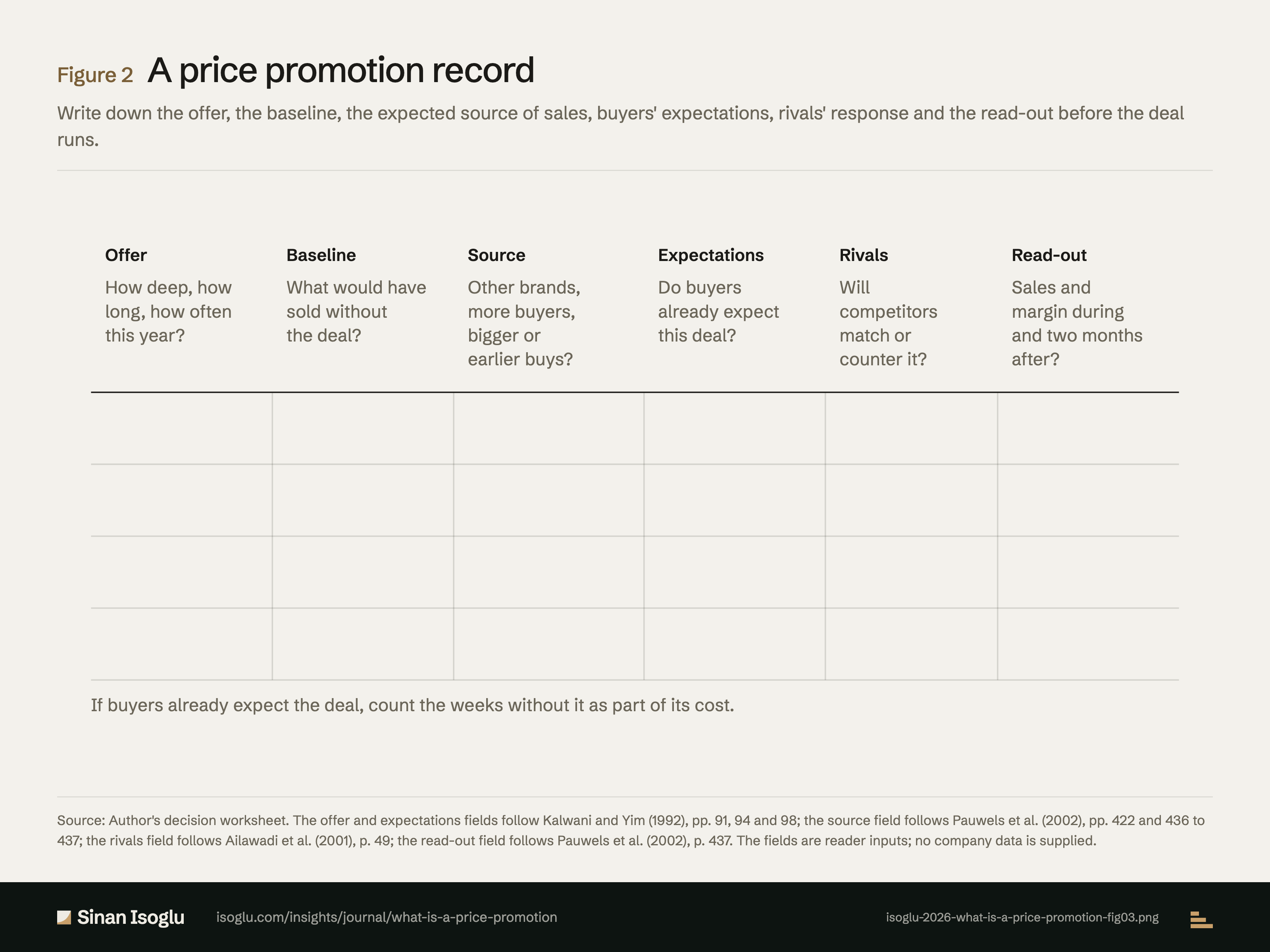
Abbildung 2Grafik
Ein Blatt für eine Preisaktion
Was ist eine Preisaktion?
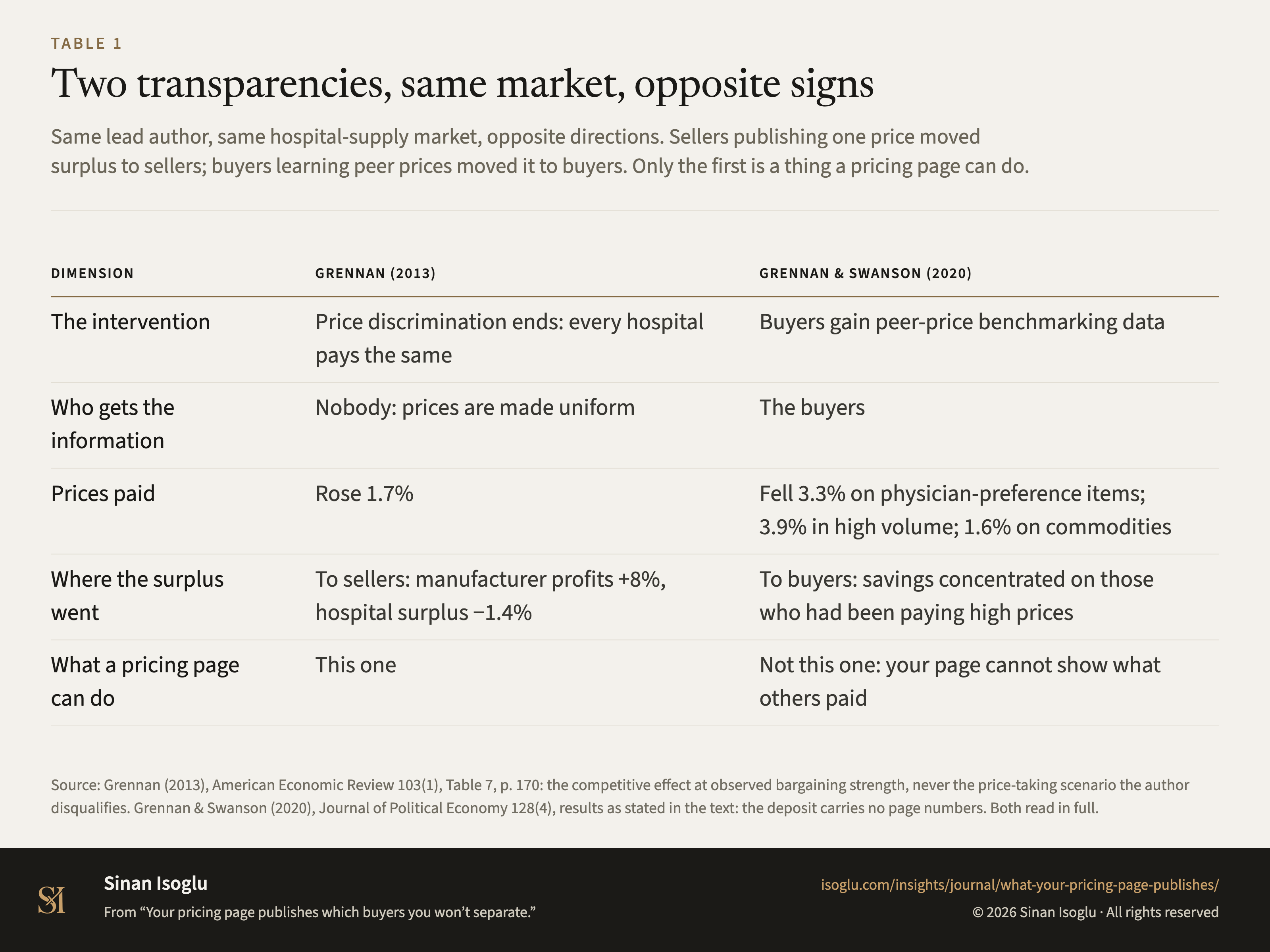
Tabelle 1Tabelle
Zwei Transparenzen, derselbe Markt, entgegengesetzte Vorzeichen
Ihre Preisseite veröffentlicht, welche Kunden Sie nicht trennen wollen
Kontakt
Schicken Sie die Frage, an der Sie arbeiten.
Forschung, ein Gastvortrag oder eine Frage aus der Praxis.