← Every exhibit
Table 1From “What is RevOps?”
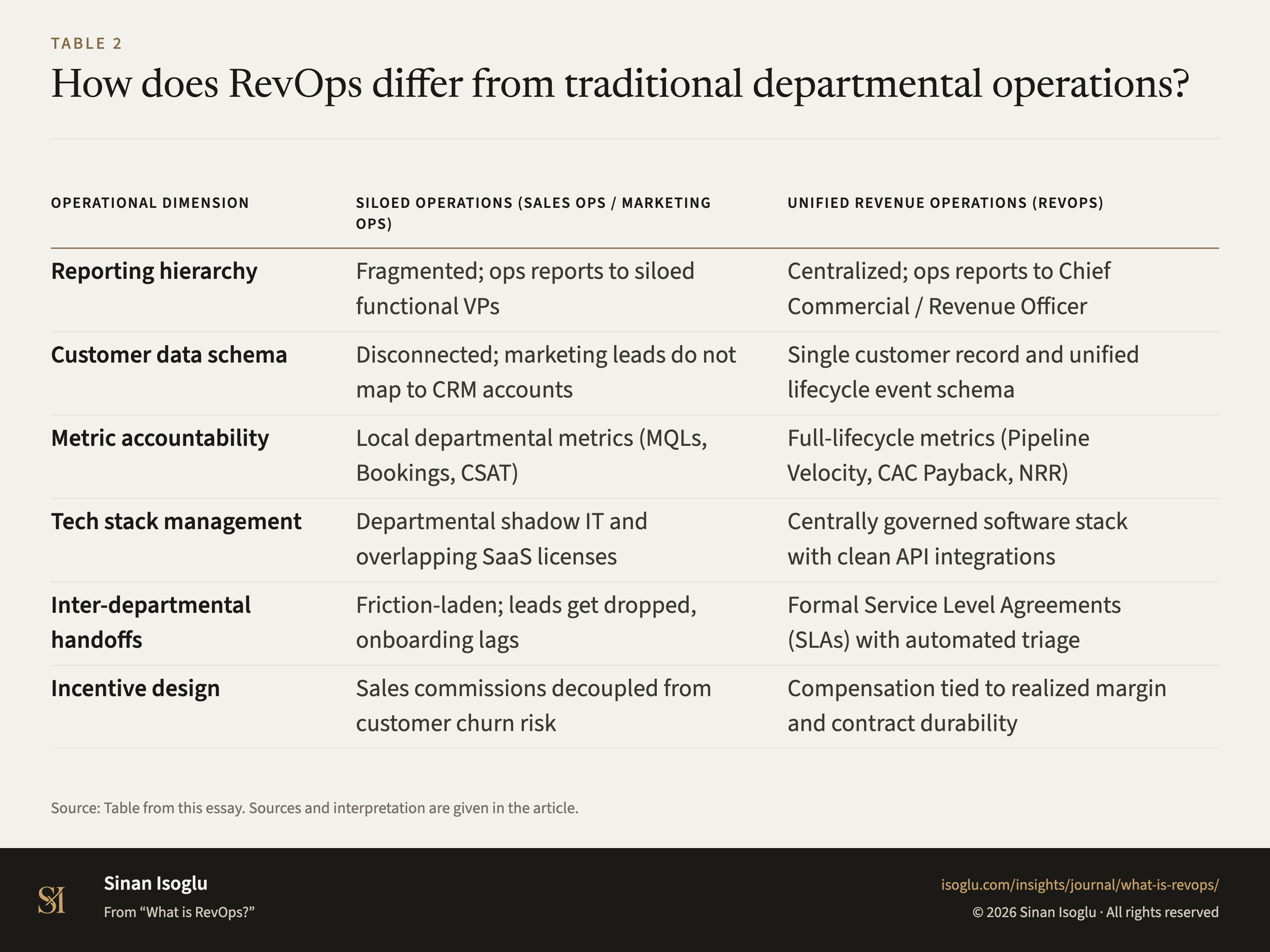
How does RevOps differ from traditional departmental operations?
Table 1How does RevOps differ from traditional departmental operations?
| Operational dimension | Siloed Operations (Sales Ops / Marketing Ops) | Unified Revenue Operations (RevOps) |
|---|---|---|
| Reporting hierarchy | Fragmented; ops reports to siloed functional VPs | Centralized; ops reports to Chief Commercial / Revenue Officer |
| Customer data schema | Disconnected; marketing leads do not map to CRM accounts | Single customer record and unified lifecycle event schema |
| Metric accountability | Local departmental metrics (MQLs, Bookings, CSAT) | Full-lifecycle metrics (Pipeline Velocity, CAC Payback, NRR) |
| Tech stack management | Departmental shadow IT and overlapping SaaS licenses | Centrally governed software stack with clean API integrations |
| Inter-departmental handoffs | Friction-laden; leads get dropped, onboarding lags | Formal Service Level Agreements (SLAs) with automated triage |
| Incentive design | Sales commissions decoupled from customer churn risk | Compensation tied to realized margin and contract durability |
Swipe or scroll horizontally if the table is wider than your screen.
Source: Table from this essay. Sources and interpretation are given in the article.
PNG4:3, 1600 × 1200, with the title, the source line and the attribution set in the image isoglu-2026-what-is-revops-fig02.png
From the essay
Revenue operations & AI
What is RevOps?
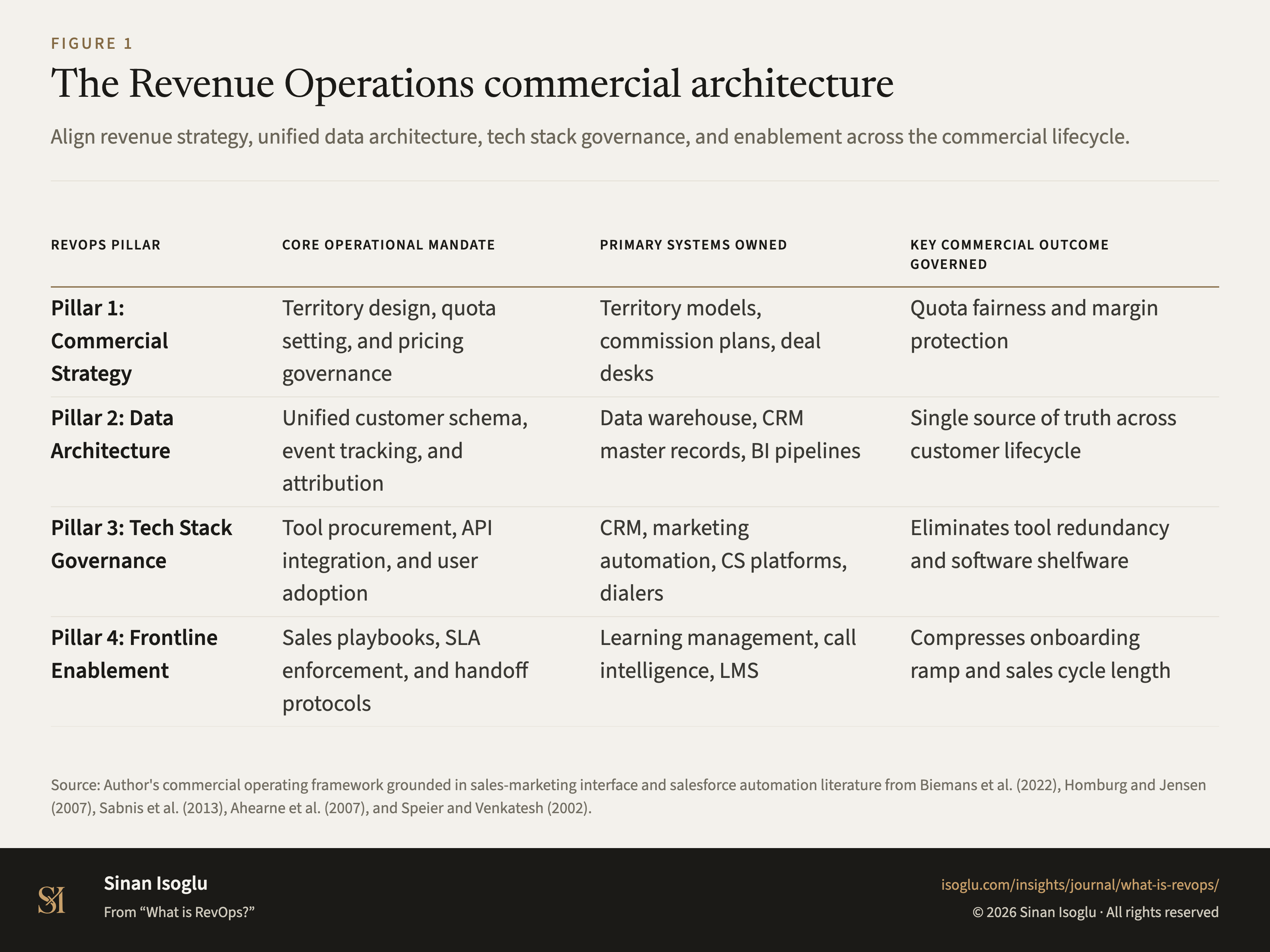
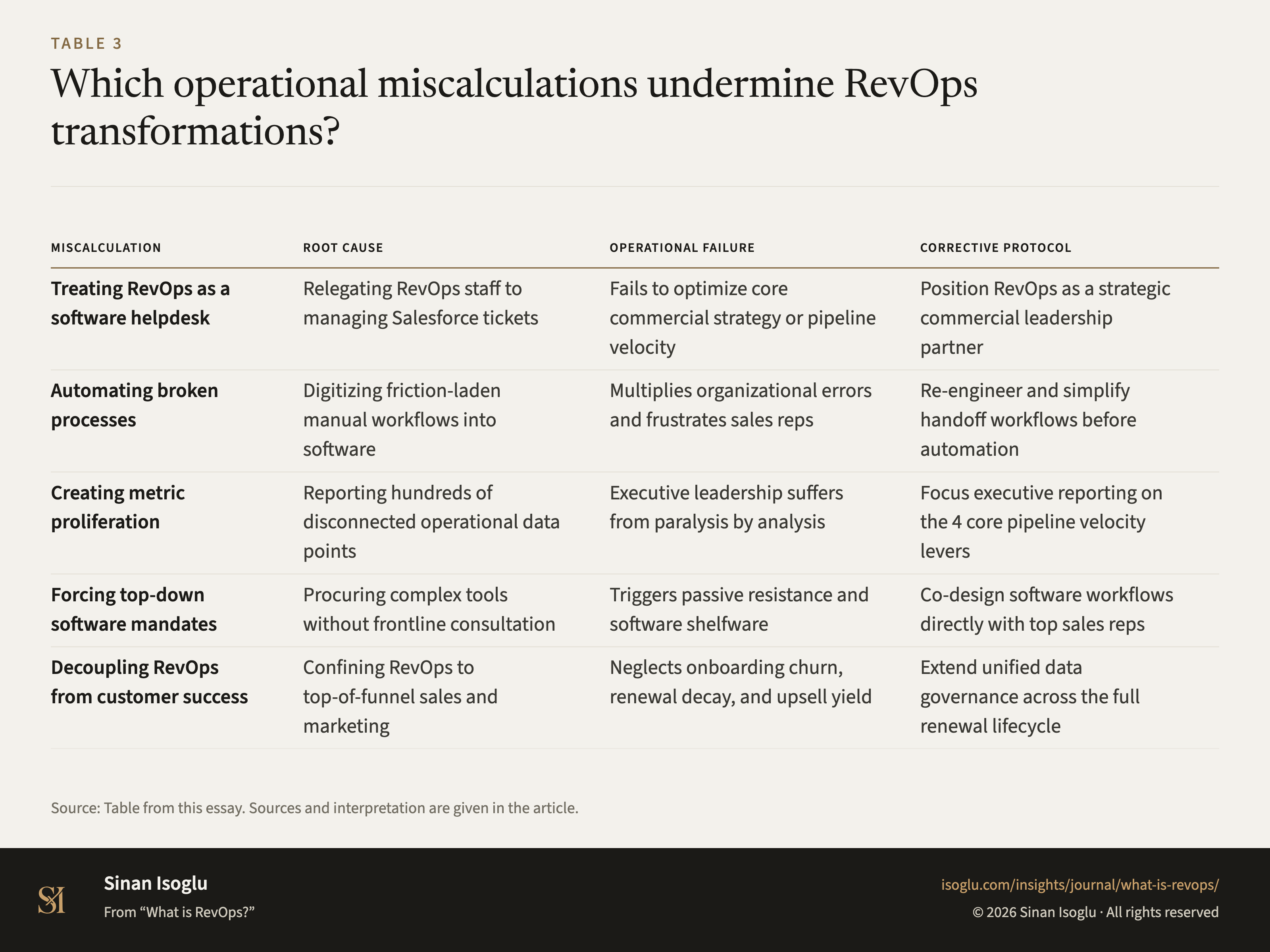
Revenue Operations unifies marketing, sales, and customer success into a single commercial operating system across data, process, and tooling.
Read the essayThis exhibit belongs to an essay: the numbers live here, the argument lives there.
Cite or embed
Related exhibits
Contact
Bring the question you're working on.
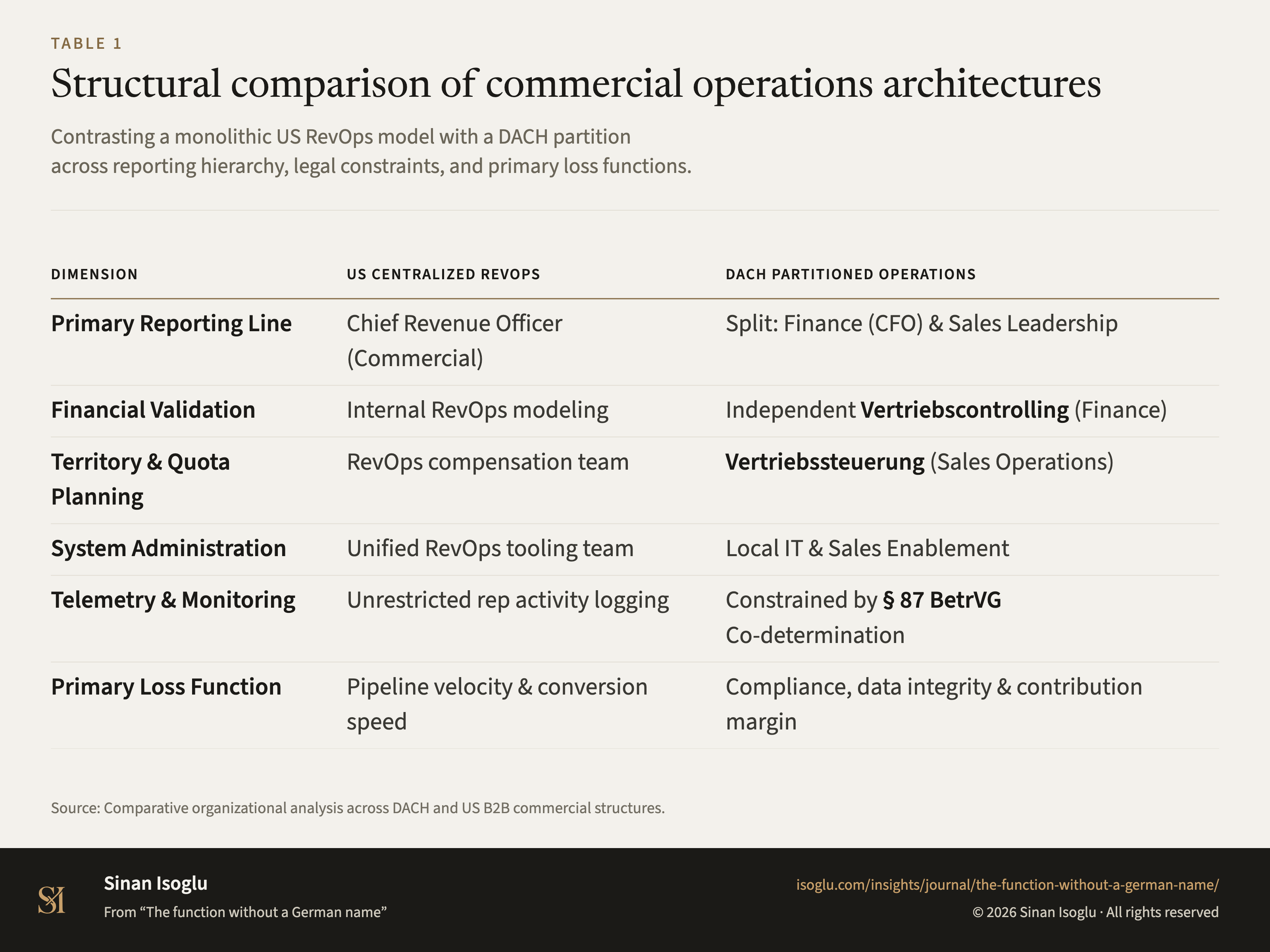
Research, a guest lecture, or a commercial question.