Table 1From “The number you call”
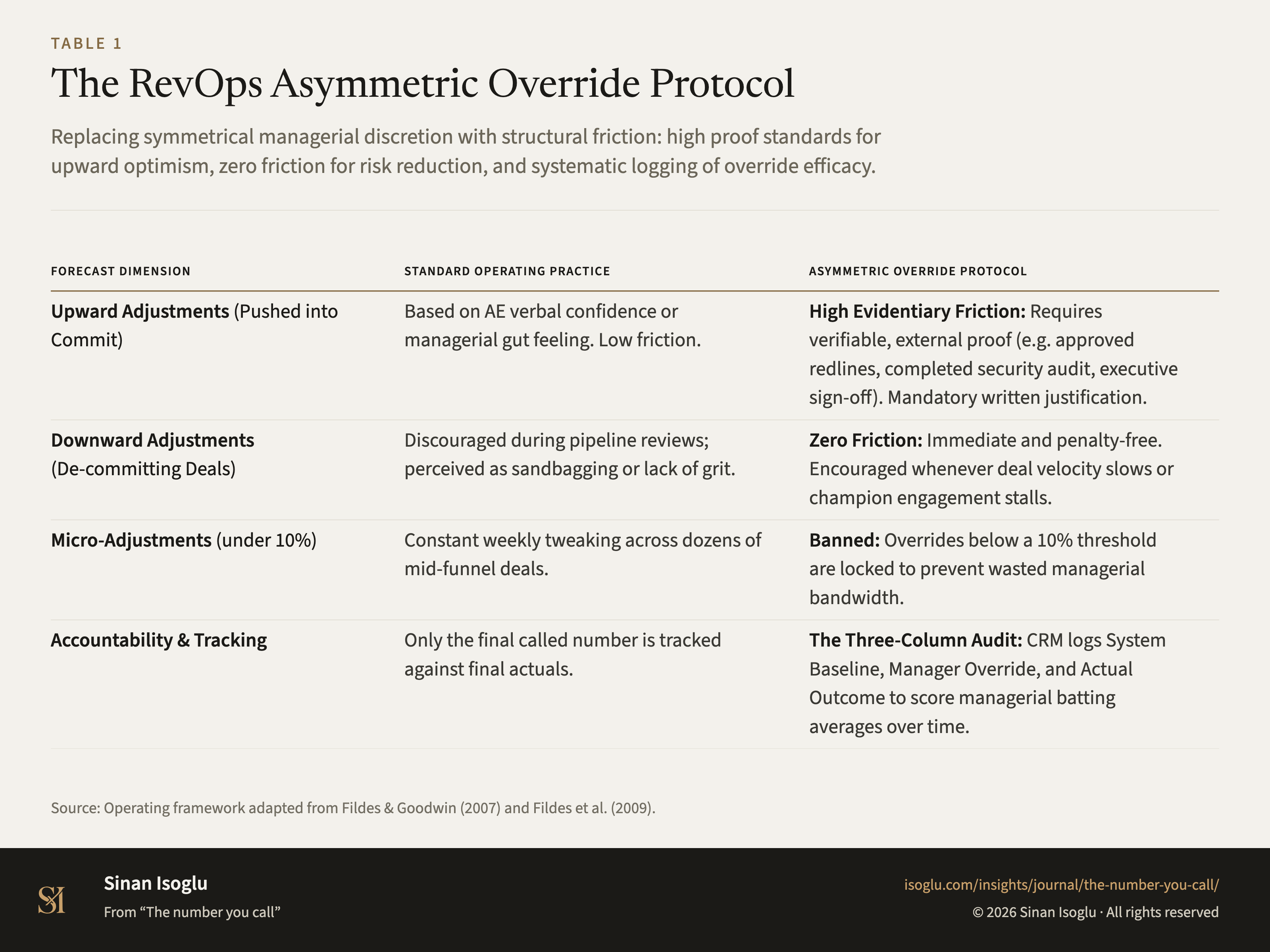
The RevOps Asymmetric Override Protocol
Replacing symmetrical managerial discretion with structural friction: high proof standards for upward optimism, zero friction for risk reduction, and systematic logging of override efficacy.
Table 1The RevOps Asymmetric Override Protocol
| Forecast Dimension | Standard Operating Practice | Asymmetric Override Protocol |
|---|---|---|
| Upward Adjustments (Pushed into Commit) | Based on AE verbal confidence or managerial gut feeling. Low friction. | High Evidentiary Friction: Requires verifiable, external proof (e.g. approved redlines, completed security audit, executive sign-off). Mandatory written justification. |
| Downward Adjustments (De-committing Deals) | Discouraged during pipeline reviews; perceived as sandbagging or lack of grit. | Zero Friction: Immediate and penalty-free. Encouraged whenever deal velocity slows or champion engagement stalls. |
| Micro-Adjustments (under 10%) | Constant weekly tweaking across dozens of mid-funnel deals. | Banned: Overrides below a 10% threshold are locked to prevent wasted managerial bandwidth. |
| Accountability & Tracking | Only the final called number is tracked against final actuals. | The Three-Column Audit: CRM logs System Baseline, Manager Override, and Actual Outcome to score managerial batting averages over time. |
Swipe or scroll horizontally if the table is wider than your screen.
Source: Operating framework adapted from Fildes & Goodwin (2007) and Fildes et al. (2009).
From the essay
Revenue operations & AI
The number you call
Sales leaders routinely adjust baseline forecasts. Data on 68,000 overrides shows upward tweaks fail 66% to 83% of the time, destroying forecast accuracy.
Read the essayThis exhibit belongs to an essay: the numbers live here, the argument lives there.
Cite or embed
Related exhibits
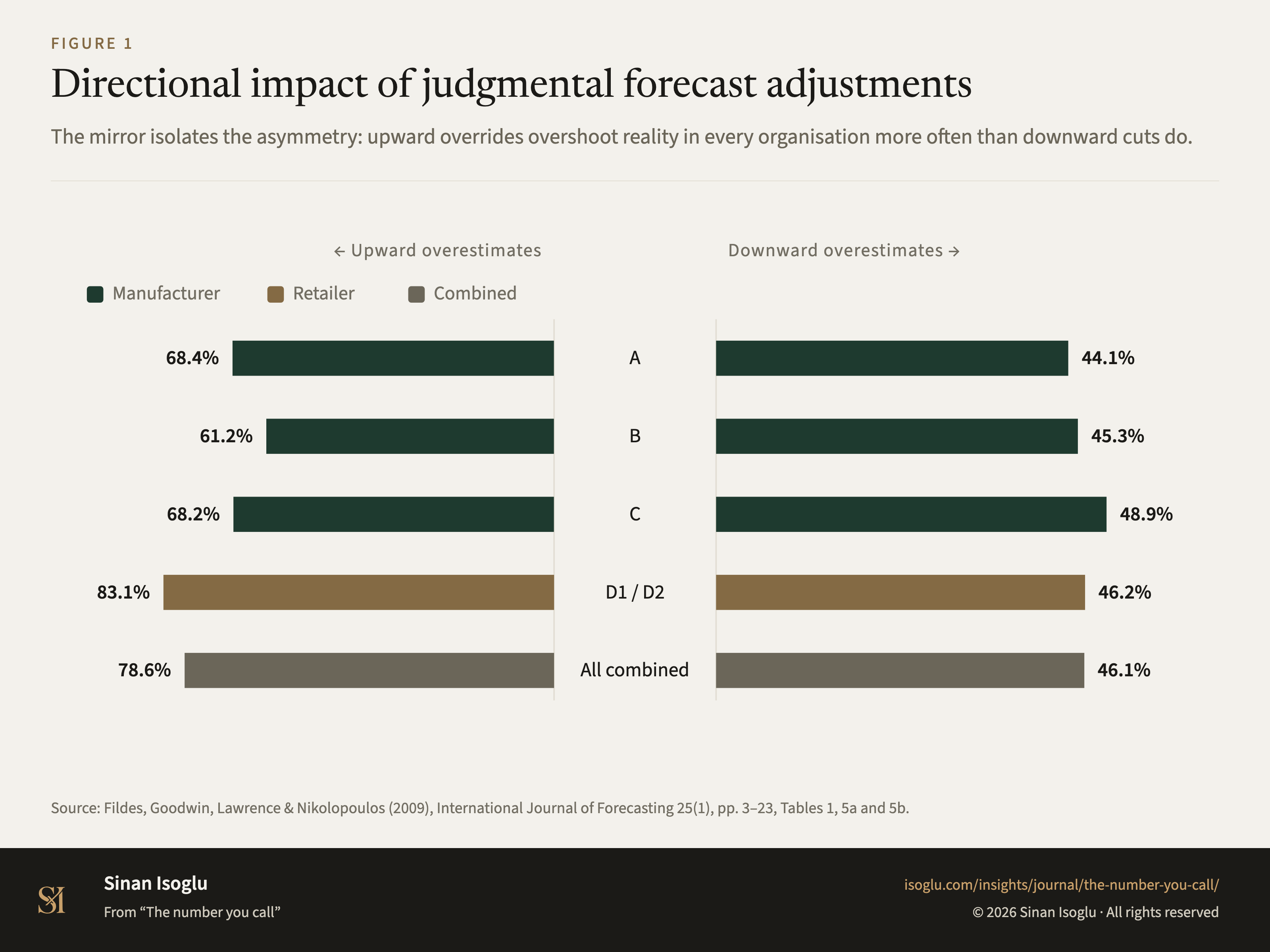
Figure 1Figure
Directional impact of judgmental forecast adjustments
The number you call
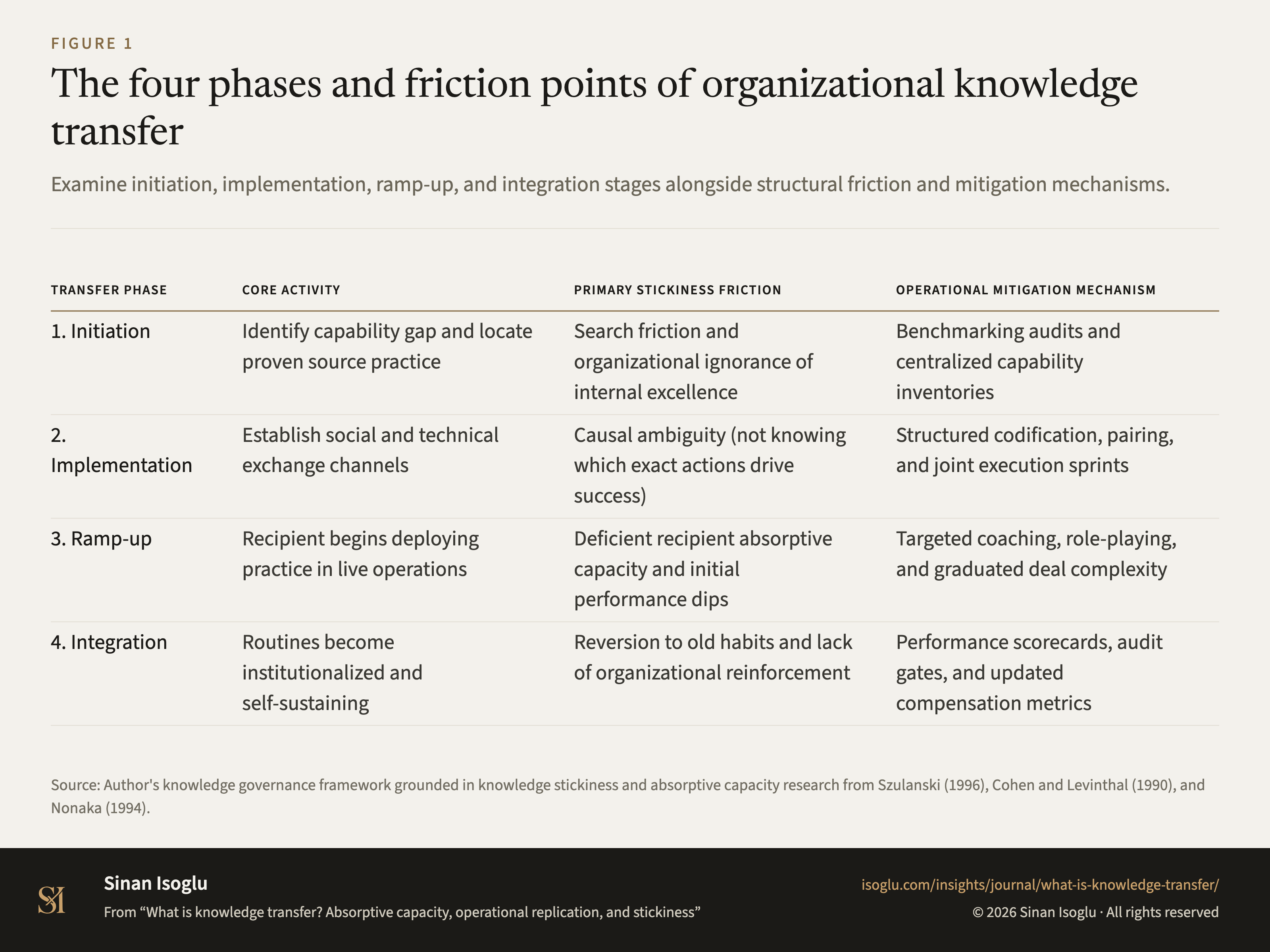
Figure 1Figure
The four phases and friction points of organizational knowledge transfer
What is knowledge transfer? Absorptive capacity, operational replication, and stickiness
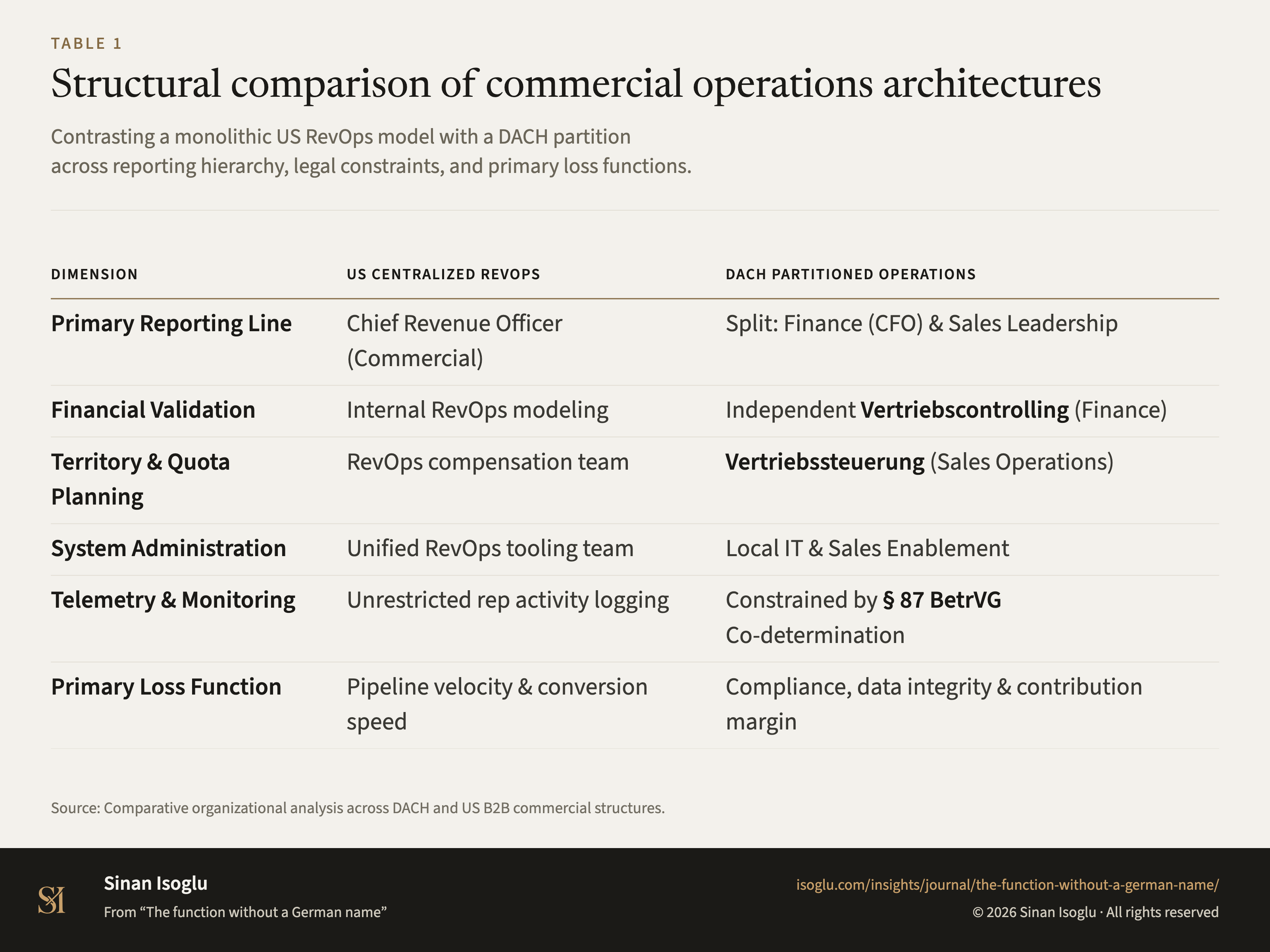
Table 1Table
Structural comparison of commercial operations architectures
The function without a German name
Contact
Bring the question you're working on.
Research, a guest lecture, or a commercial question.