Abbildung 1Aus „Was ist psychologische Preisgestaltung?“
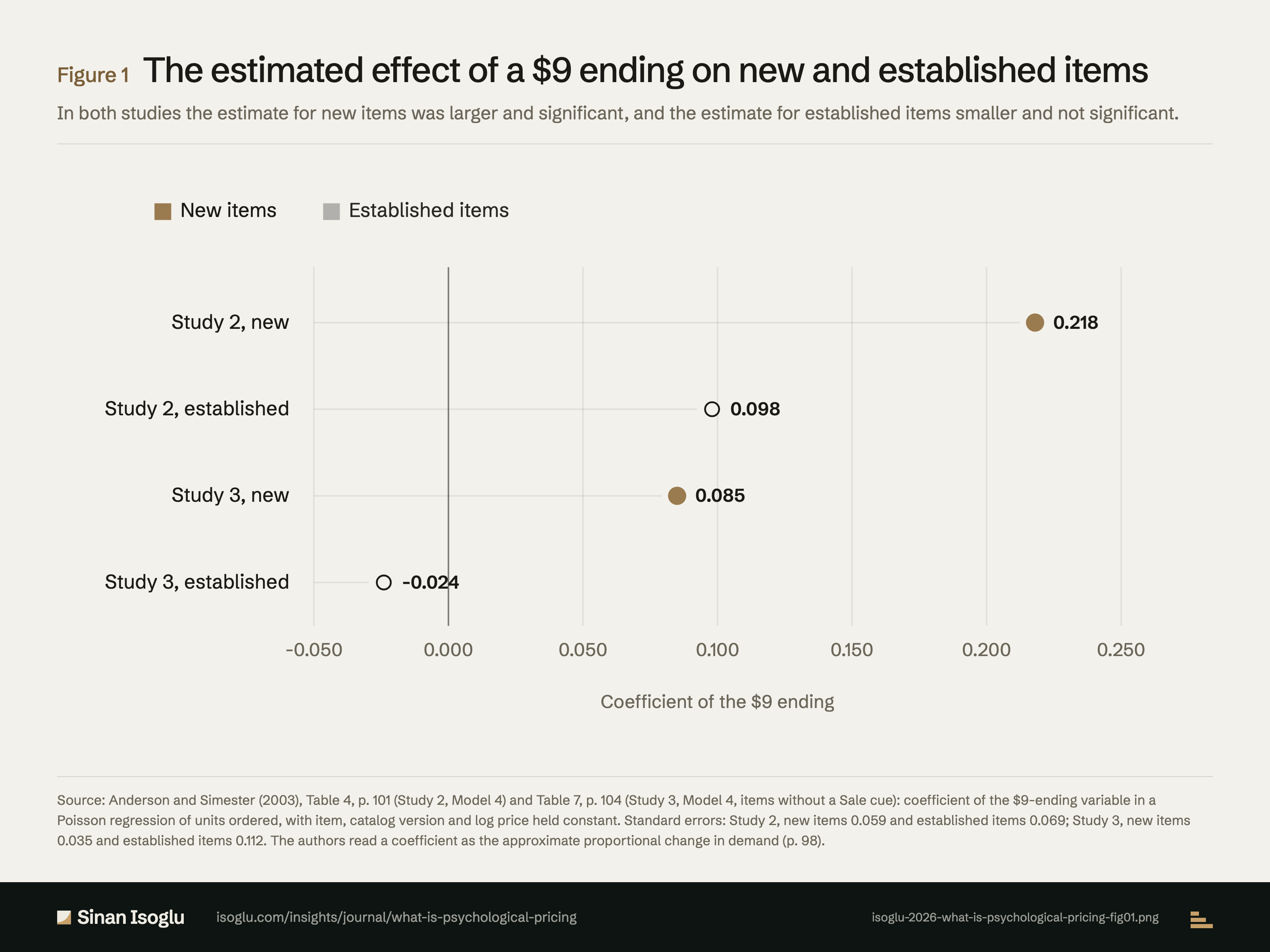
Der geschätzte Effekt einer Endung auf 9 Dollar bei neuen und etablierten Artikeln
In beiden Studien war die Schätzung für neue Artikel größer und signifikant, die für etablierte Artikel kleiner und nicht signifikant.
Abbildung 1Der geschätzte Effekt einer Endung auf 9 Dollar bei neuen und etablierten Artikeln
Quelle: Anderson und Simester (2003), Tabelle 4, S. 101 (Studie 2, Modell 4) und Tabelle 7, S. 104 (Studie 3, Modell 4, Artikel ohne Sale-Hinweis): Koeffizient der Variablen für die Endung auf 9 Dollar in einer Poisson-Regression der bestellten Stückzahlen, mit Artikel, Katalogfassung und logarithmiertem Preis als Kontrollen. Standardfehler: Studie 2, neue Artikel 0,059 und etablierte Artikel 0,069; Studie 3, neue Artikel 0,035 und etablierte Artikel 0,112. Die Autoren lesen einen Koeffizienten als ungefähre relative Änderung der Nachfrage (S. 98).
Quelle und Evidenz
Jede Zeile nennt eine Aussage zu dieser Abbildung, ihre Quelle und die Art ihrer Prüfung.
- A ASPE03-C4 New against established items (Figure 1): new items were generally introduced in the most recent season, established items in previous seasons; Model 4 coefficients, Table 4 (Study 2): new 0.218 (SE 0.059, p < 0.01), established 0.098 (0.069), footwear -0.397 (0.247), and Table 7 (Study 3, no Sale cue): new 0.085 (0.035, single asterisk), established -0.024 (0.112), footwear 0.077 (0.059), signs read from the page images; 22% against 10% in Study 2; no test of the difference between categories is reported, and approximate 95% intervals from the printed standard errors overlap in both studies (this guide's arithmetic, stated in the Figure 1 caption after G5 F5, where the dek and the conditions sentence now speak of estimates and name the category by season, not by familiarity); the coefficient is read as the proportional change in demand (pp. 93, 98, 100, 101, 104, 108): "the increase in demand was stronger for new items than for items that the retailer had sold in previous years"; "The new items were generally introduced in the most recent season, while established items were offered in previous seasons."; "A $9 ending yielded an estimated increase of 1.8 units or 22% for new items compared to 10% for established items."; "For the footwear items the result was difficult to interpret; the coefficient was negative but not"; "The findings also replicate the evidence in Study 2 that the $9 ending effect is stronger for new items than for established items or footwear"; "the percentage change in demand from using a $9 ending"; "The effect is stronger for new items that customers have seen less frequently in the past."Anderson & Simester (2003), QME · Anderson & Simester. (2003). Effects 9 Price Endings Retail Sales
Prüfgrade: A, gegen die gedruckte Seite der Primärquelle geprüft · B, Primärquelle, nur Textebene · C, belastbare Sekundärquelle · D, berichtet.
Aus dem Beitrag
Pricing & Umsatzarchitektur
Was ist psychologische Preisgestaltung?
Psychologische Preisgestaltung legt Endungen wie die 9 unter runden Zahlen fest. In Katalogtests stieg so die Nachfrage, bei neuen Artikeln geschätzt mehr.
Den Beitrag lesenDiese Abbildung gehört zu einem Essay: Die Zahlen stehen hier, das Argument dort.
Zitieren oder einbetten
Verwandte Abbildungen
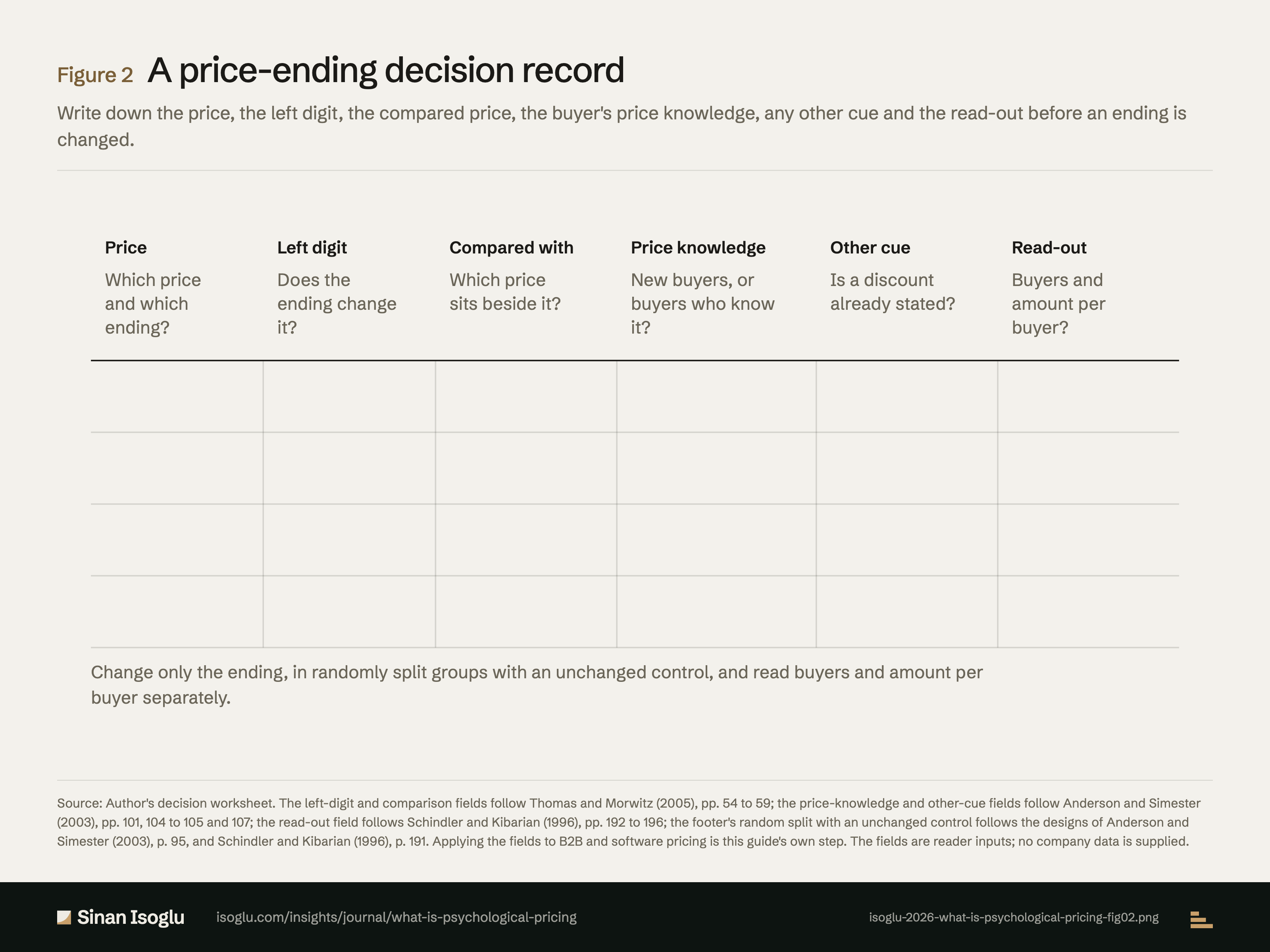
Abbildung 2Grafik
Ein Blatt für die Entscheidung über eine Preisendung
Was ist psychologische Preisgestaltung?
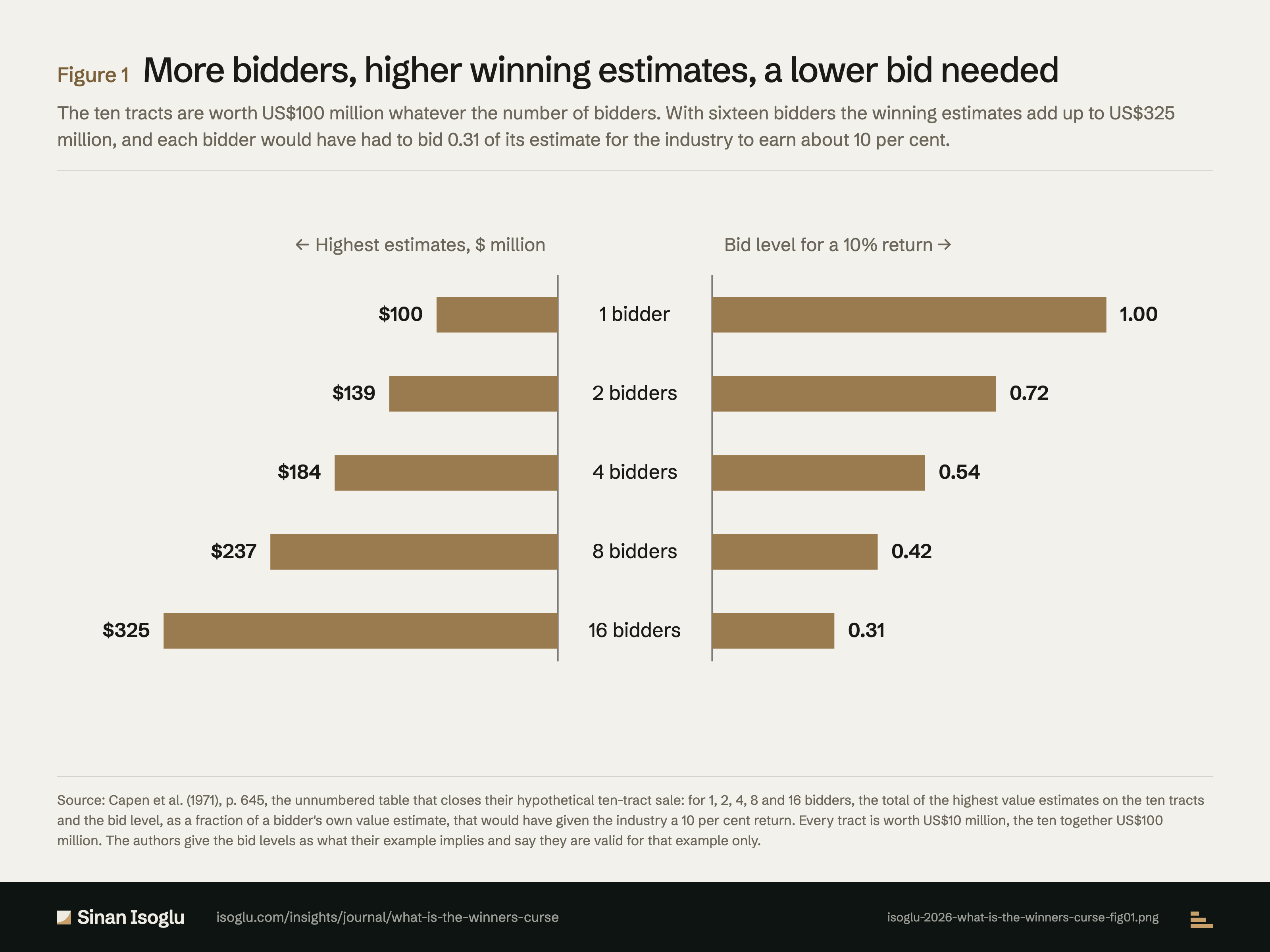
Abbildung 1Grafik
Mehr Bieter, höhere Siegerschätzungen, niedrigere nötige Gebote: das Beispiel mit zehn Parzellen
Was ist der Fluch des Gewinners?
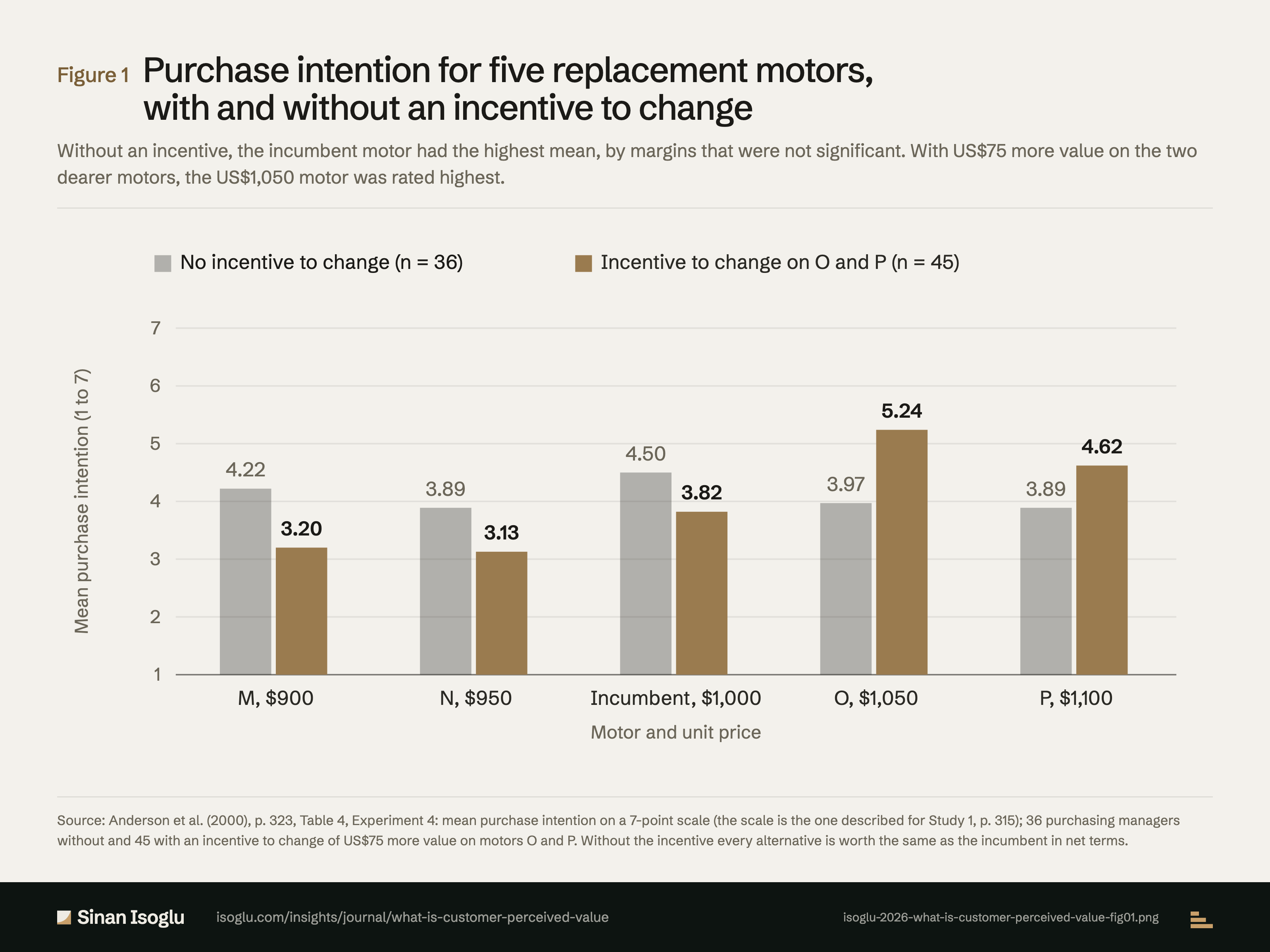
Abbildung 1Grafik
Kaufabsicht für fünf Ersatzmotoren, mit und ohne Wechselanreiz
Was ist der vom Kunden wahrgenommene Wert?
Kontakt
Schicken Sie die Frage, an der Sie arbeiten.
Forschung, ein Gastvortrag oder eine Frage aus der Praxis.