Tabelle 2Aus „Was ist KI-Nachfrageprognose? Eine Prognose ist kein Orakel“
Was bleibt menschliche Verantwortung, wenn KI in die Vertriebsprognose eintritt?
Tabelle 2Was bleibt menschliche Verantwortung, wenn KI in die Vertriebsprognose eintritt?
| Forecast-Arbeit | Möglicher KI-Beitrag | Menschliche Verantwortung | Mindestaufzeichnung |
|---|---|---|---|
| Basisprognose erstellen | Erklärte Eingaben zusammenführen und eine versionierte Schätzung erzeugen. | Ziel, Einheit, Population, Horizont und Ausschlüsse bestätigen. | Eingabesnapshot, Modellversion und Stichtag. |
| Ausnahmen markieren | Ungewöhnliche Bewegungen oder fehlende Felder sichtbar machen. | Entscheiden, ob die Ausnahme die Entscheidung oder nur die Datenprüfung verändert. | Markierung, Grund, prüfende Person und Disposition. |
| Szenarien vergleichen | Alternativen unter erklärten Annahmen erzeugen. | Entscheiden, ob die Alternativen vergleichbar und kaufmännisch relevant sind. | Annahmen, Vergleich und gewähltes Szenario. |
| Override vorschlagen | Eine Änderung der Basisprognose oder eine Prüfung anregen. | Die Änderung vor Bekanntwerden des Istwerts freigeben, ablehnen oder anpassen. | Empfehlung, Override, Grund, Verantwortung und Zeitstempel. |
| Nachperiode prüfen | Forecast und späteren Istwert abgleichen. | Prüfen, ob Prozess, Informationsgrenze oder Zieldefinition gewechselt haben. | Istwert, Verlustfunktion, Abweichung und Prüfentscheidung. |
Bei breiten Tabellen horizontal wischen oder scrollen.
Quelle: Tabelle aus diesem Essay. Quellen und Einordnung stehen im Beitrag.
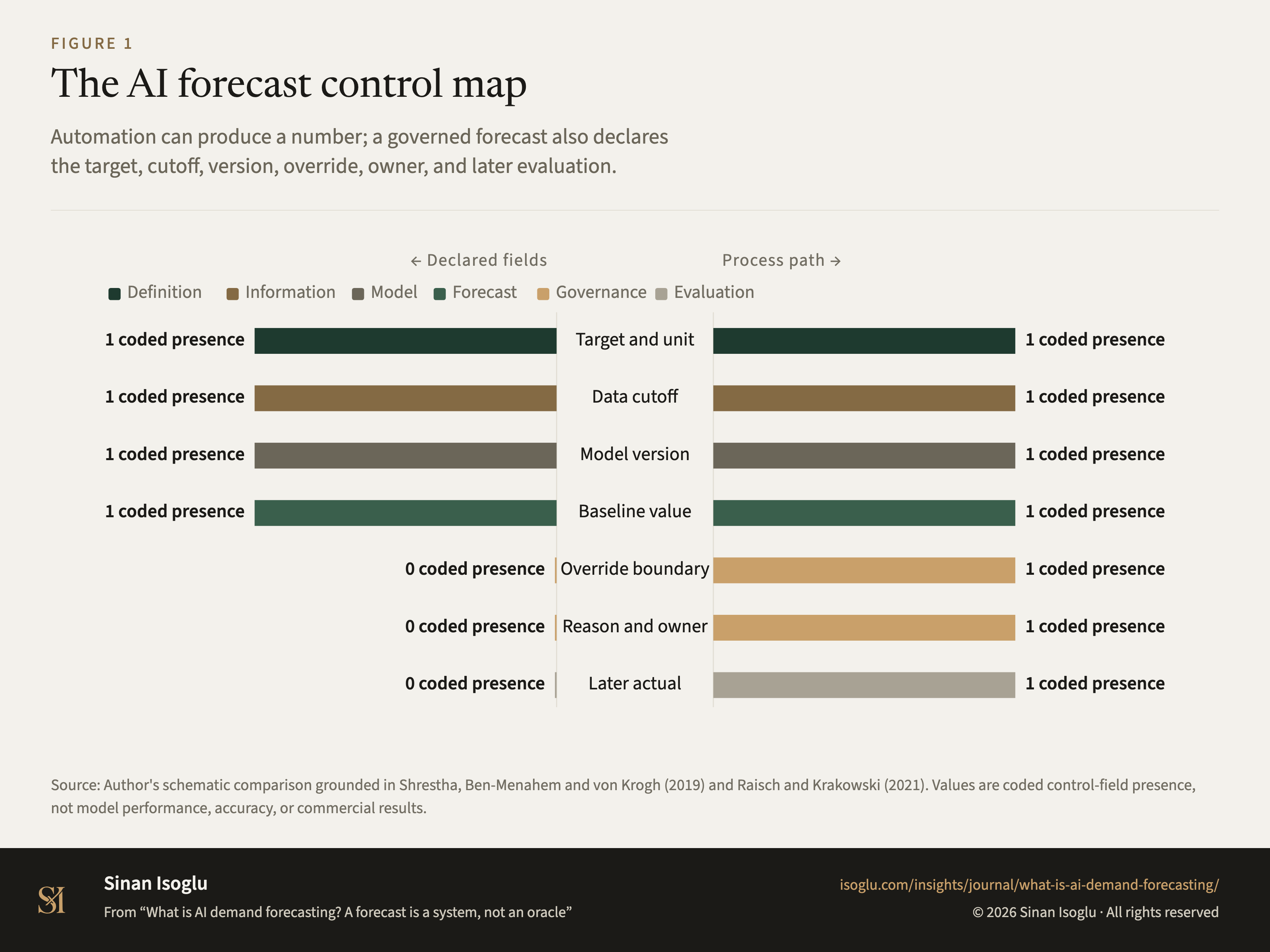
Aus dem Beitrag
Revenue Operations & KI
Was ist KI-Nachfrageprognose? Eine Prognose ist kein Orakel
KI-Nachfrageprognosen brauchen Ziel, Horizont, Informationsstichtag, Eingriffsgrenze und Istwert. Automatisierung allein ist keine Forecast-Governance.
Den Beitrag lesenDiese Abbildung gehört zu einem Essay: Die Zahlen stehen hier, das Argument dort.
Zitieren oder einbetten
Verwandte Abbildungen
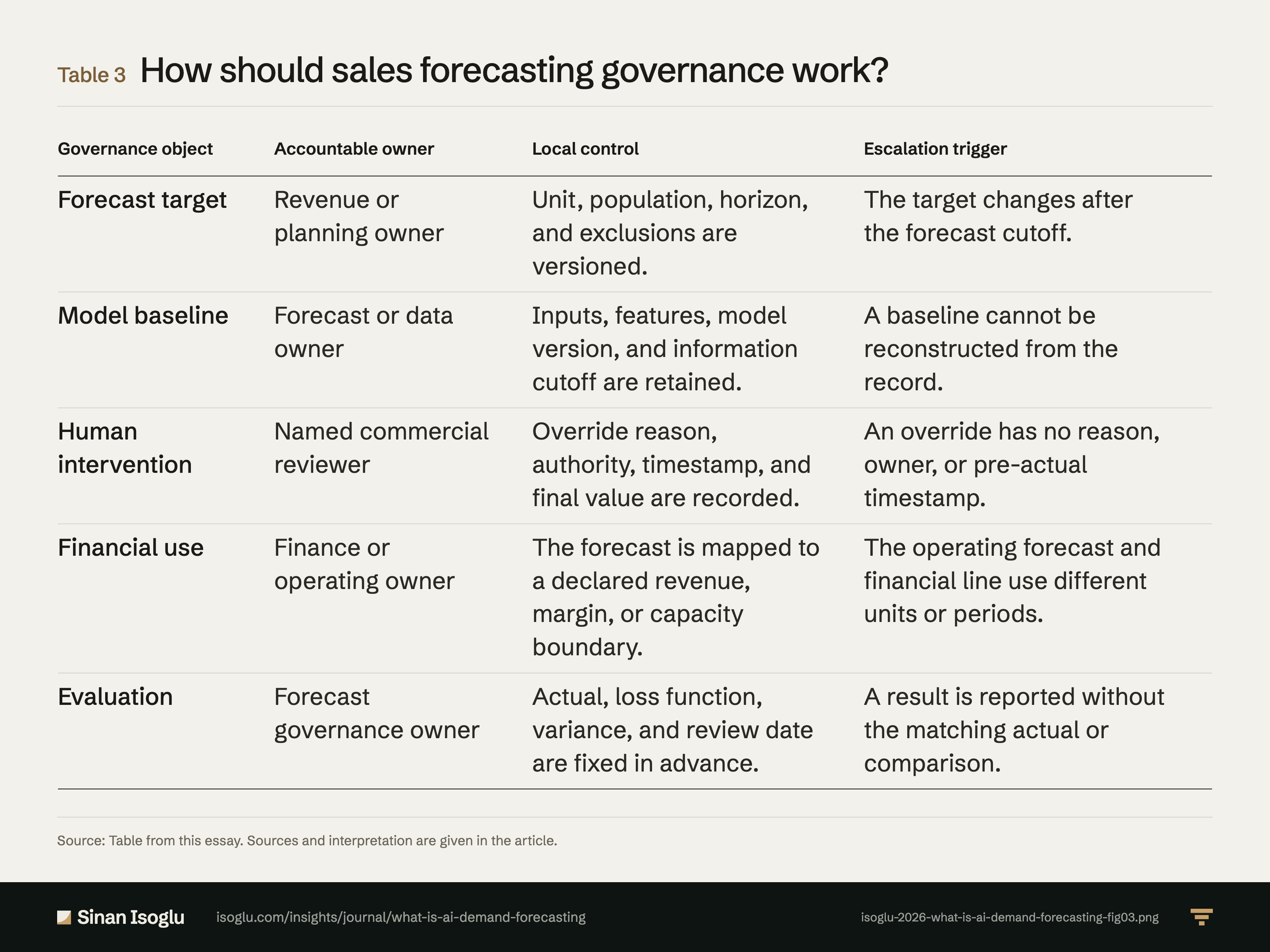
Tabelle 3Tabelle
Wie sollte die Governance der Vertriebsprognose funktionieren?
Was ist KI-Nachfrageprognose? Eine Prognose ist kein Orakel
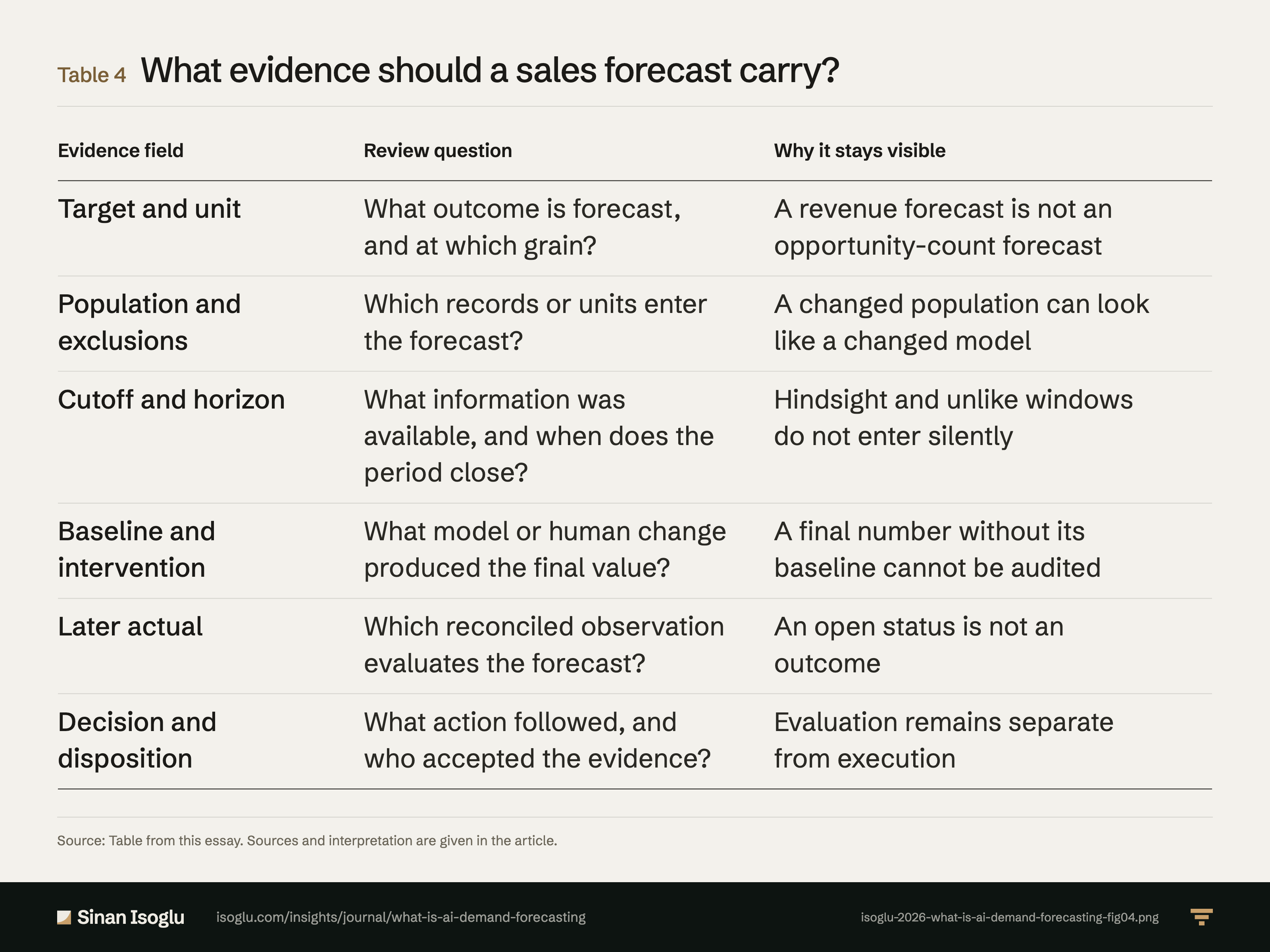
Tabelle 4Tabelle
Welche Evidenz sollte eine Vertriebsprognose tragen?
Was ist KI-Nachfrageprognose? Eine Prognose ist kein Orakel
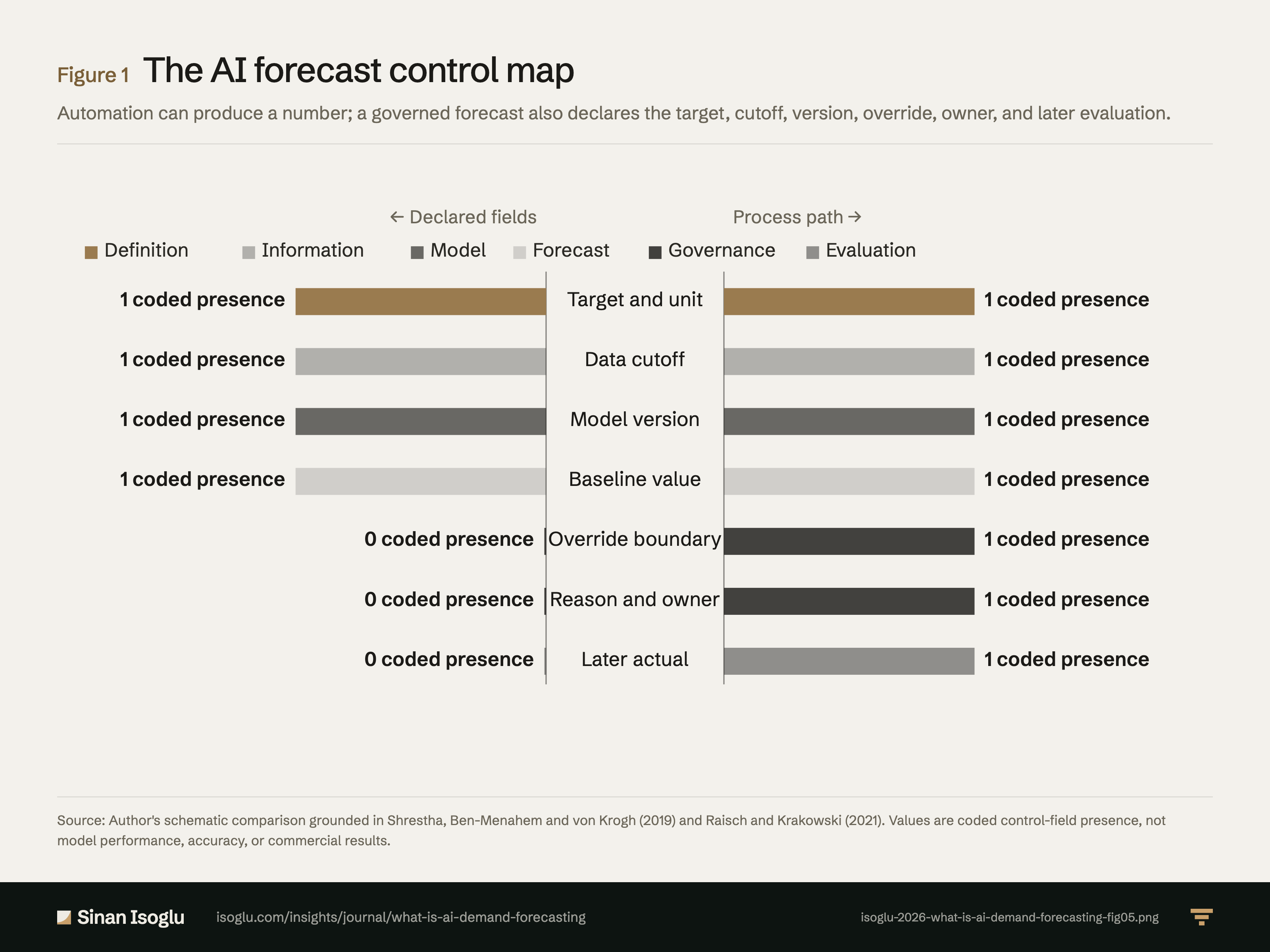
Abbildung 1Grafik
Die KI-Forecast-Kontrollkarte
Was ist KI-Nachfrageprognose? Eine Prognose ist kein Orakel
Kontakt
Schicken Sie die Frage, an der Sie arbeiten.
Forschung, ein Gastvortrag oder eine Frage aus der Praxis.