Abbildung 1Aus „Eine Ökosystemstrategie ist eine Ausrichtungsstruktur, keine Partnerliste“
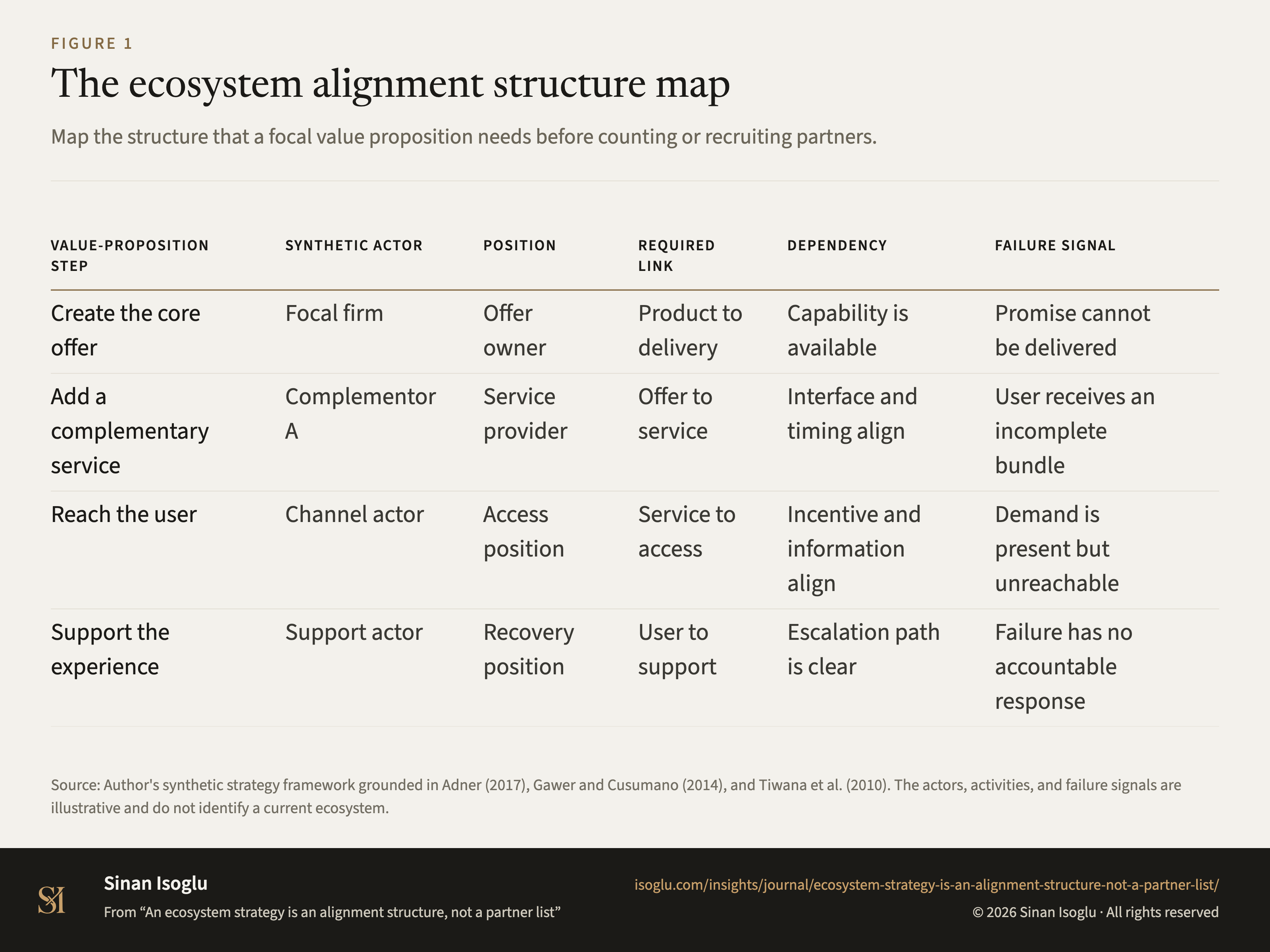
Die Strukturkarte der Ökosystemausrichtung
Kartieren Sie die Struktur, die ein fokales Nutzenversprechen braucht, bevor Sie Partner zählen oder gewinnen.
Abbildung 1Die Strukturkarte der Ökosystemausrichtung
| Schritt des Nutzenversprechens | Synthetischer Akteur | Position | Erforderliche Verbindung | Abhängigkeit | Fehlersignal |
|---|---|---|---|---|---|
| Kernangebot erstellen | Fokales Unternehmen | Angebotsinhaber | Produkt zu Lieferung | Fähigkeit ist verfügbar | Versprechen kann nicht geliefert werden |
| Ergänzenden Service hinzufügen | Komplementor A | Serviceanbieter | Angebot zu Service | Schnittstelle und Timing passen | Unvollständiges Paket erreicht Nutzer |
| Nutzer erreichen | Kanalakteur | Zugangsposition | Service zu Zugang | Anreiz und Information passen | Nachfrage ist da, aber unerreichbar |
| Nutzung unterstützen | Supportakteur | Wiederherstellungsposition | Nutzer zu Support | Eskalationsweg ist klar | Ausfall hat keine verantwortliche Reaktion |
Bei breiten Tabellen horizontal wischen oder scrollen.
Quelle: Synthetischer Strategierahmen des Autors auf Grundlage von Adner (2017), Gawer und Cusumano (2014) sowie Tiwana et al. (2010). Akteure, Aktivitäten und Fehlersignale sind illustrativ und benennen kein aktuelles Ökosystem.
Quelle und Evidenz
Jede Zeile nennt eine Aussage zu dieser Abbildung, ihre Quelle und die Art ihrer Prüfung.
- A ADN17-C1 The definition, verbatim: an ecosystem is "the alignment structure of the multilateral set of partners that need to interact in order for a focal value proposition to materialize"adner-2017-ecosystem-as-structure
- A ADN17-C2 Interdependence is the unit: the definition turns on "the multilateral set of partners that need to interact in order for a focal value proposition to materialize", so activities and positions are described relative to that propositionadner-2017-ecosystem-as-structure
- A ADN17-C3 Alignment is the strategic problem, not a by-product: an ecosystem IS "the alignment structure of the multilateral set of partners", which makes getting partners aligned the thing to be managedadner-2017-ecosystem-as-structure
- A GC14-C1 Two types, and the paper says only two: "there are two predominant types of platforms internal or company specific platforms and external or industry wide platforms"Gawer & Cusumano. (2014)
- A GC14-C2 Both definitions are the authors' own: an internal platform is "a set of assets organized in a common structure from which a company can efficiently develop and produce a stream of derivative products", an external one "a foundation upon which external innovators organized as an innovative business ecosystem can develop their own complementary products technologies or services"Gawer & Cusumano. (2014)
- A GC14-C3 What the review actually offers: "we summarize from the literature general propositions on the design economics and strategic management of platforms", illustrated through "the case of Intel and other examples" rather than testedGawer & Cusumano. (2014)
- A TKB10-C1 The subject, from the title itself: "platform evolution coevolution of platform architecture governance and environmental dynamics"Tiwana, Konsynski & Bush. (2010)
- A TKB10-C2 A research agenda, not a result: "we identify five broad research questions stemming from this tripartite coevolution perspective", studiable at ecosystem or module levelTiwana, Konsynski & Bush. (2010)
- A TKB10-C3 Design and governance, ongoing: "the coevolution of the design governance and environmental dynamics of such ecosystems influences how they evolve", presented with "five broad research questions"Tiwana, Konsynski & Bush. (2010)
Prüfgrade: A, gegen die gedruckte Seite der Primärquelle geprüft · B, Primärquelle, nur Textebene · C, belastbare Sekundärquelle · D, berichtet.
Aus dem Beitrag
Go-to-Market-Strategie
Eine Ökosystemstrategie ist eine Ausrichtungsstruktur, keine Partnerliste
Eine Ökosystemstrategie kartiert Akteure, Aktivitäten, Positionen, Verbindungen und Abhängigkeiten für ein konkretes Nutzenversprechen.
Den Beitrag lesenDiese Abbildung gehört zu einem Essay: Die Zahlen stehen hier, das Argument dort.
Zitieren oder einbetten
Verwandte Abbildungen
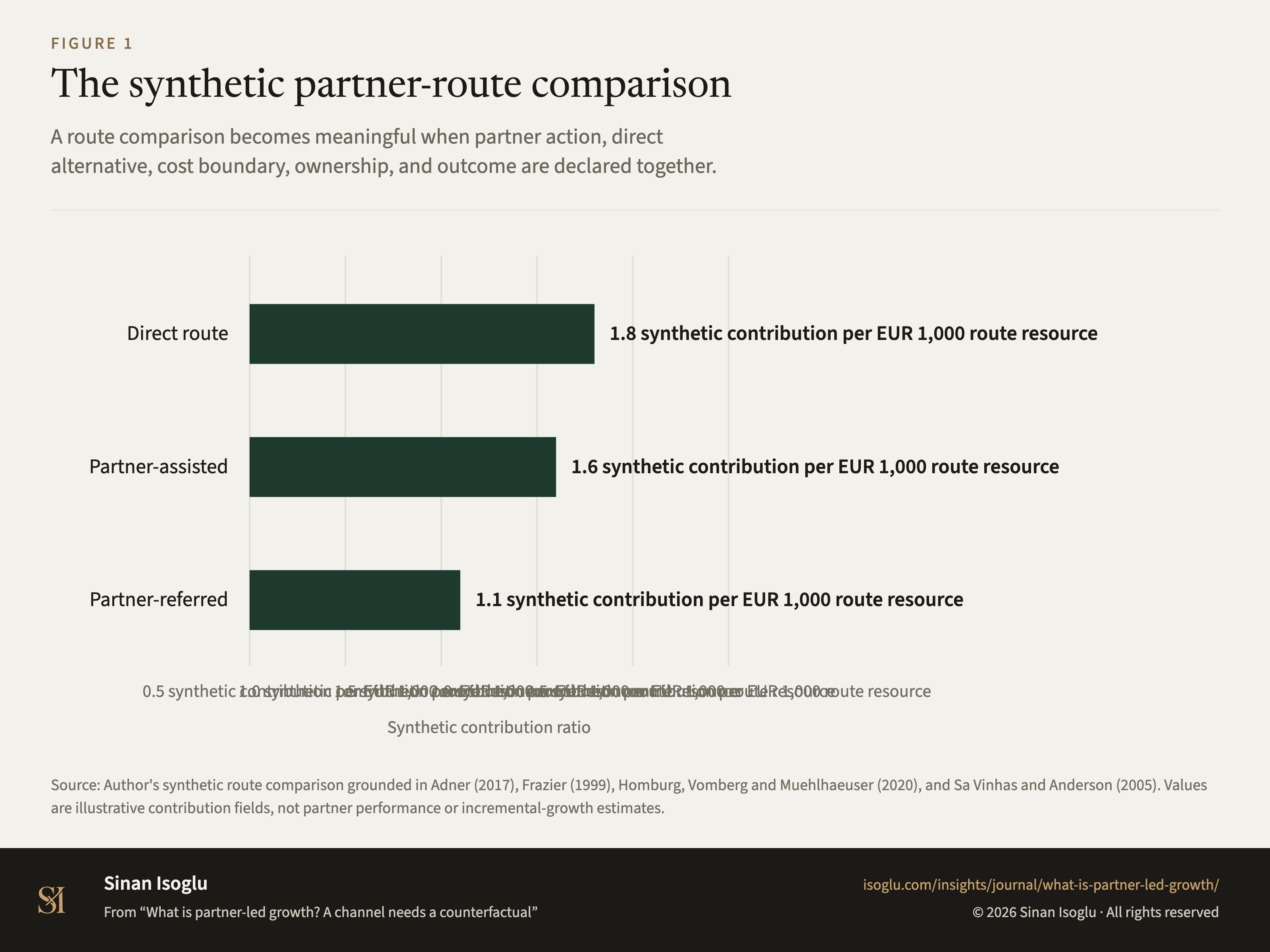
Abbildung 1Grafik
Der synthetische Vergleich von Partnerrouten
Was ist partnergeführtes Wachstum? Ein Kanal braucht ein Kontrafaktum
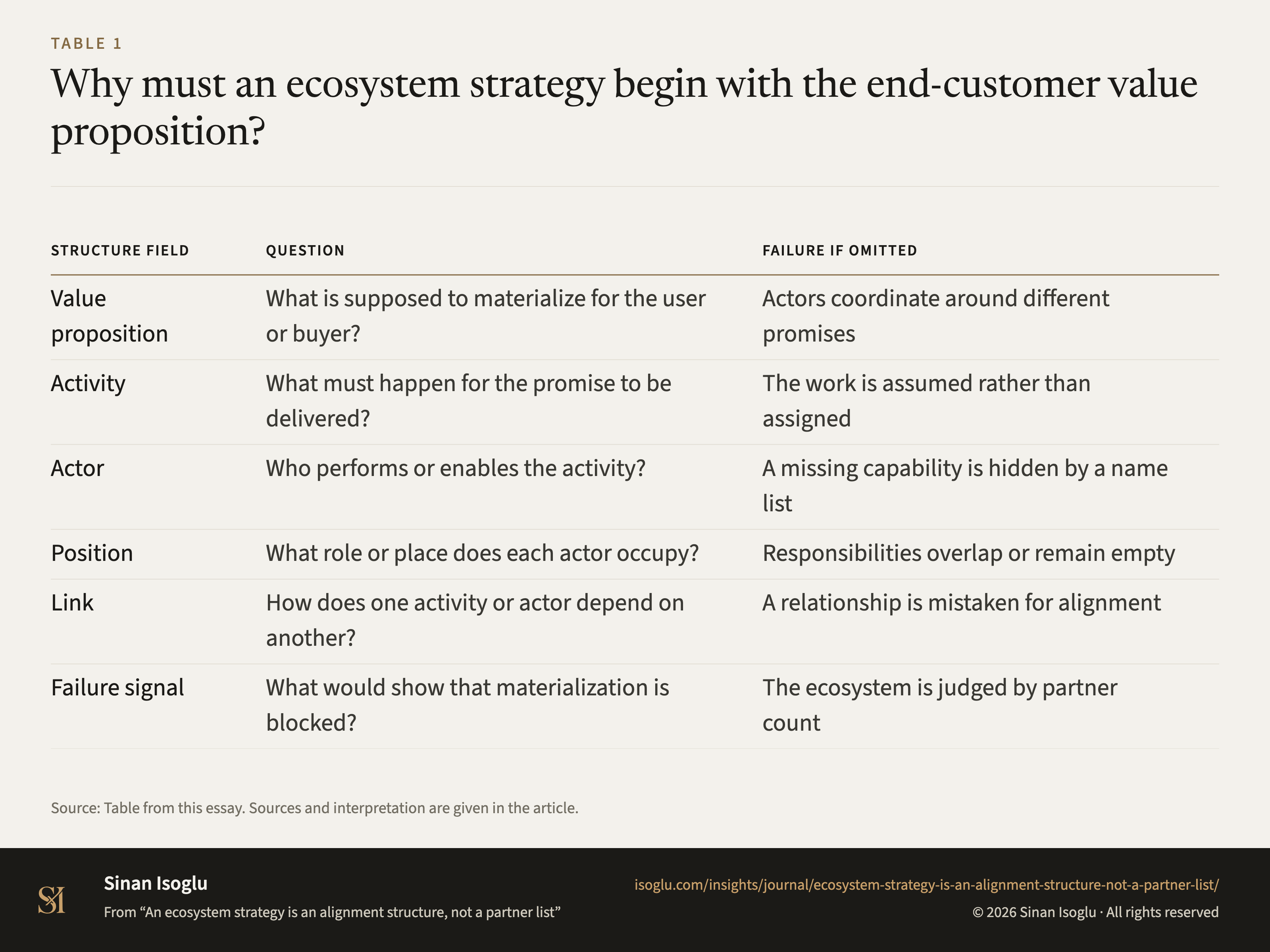
Tabelle 1Tabelle
Warum muss jede Ökosystemstrategie beim Nutzenversprechen für Endkunden ansetzen?
Eine Ökosystemstrategie ist eine Ausrichtungsstruktur, keine Partnerliste
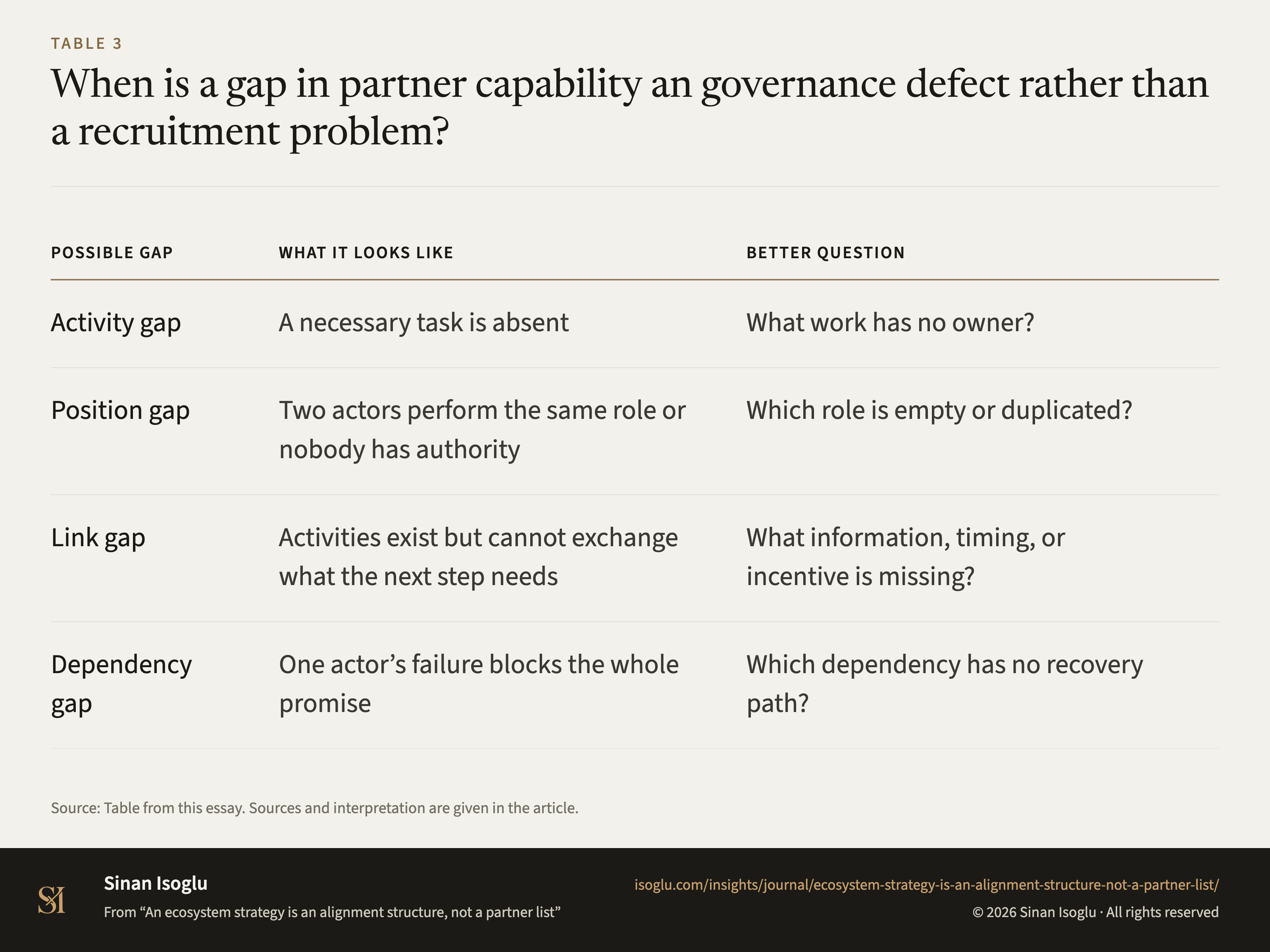
Tabelle 2Tabelle
Warum kann ein Nutzenversprechen scheitern, obwohl die Partnerkarte vollständig aussieht?
Eine Ökosystemstrategie ist eine Ausrichtungsstruktur, keine Partnerliste
Kontakt
Schicken Sie die Frage, an der Sie arbeiten.
Forschung, ein Gastvortrag oder eine Frage aus der Praxis.