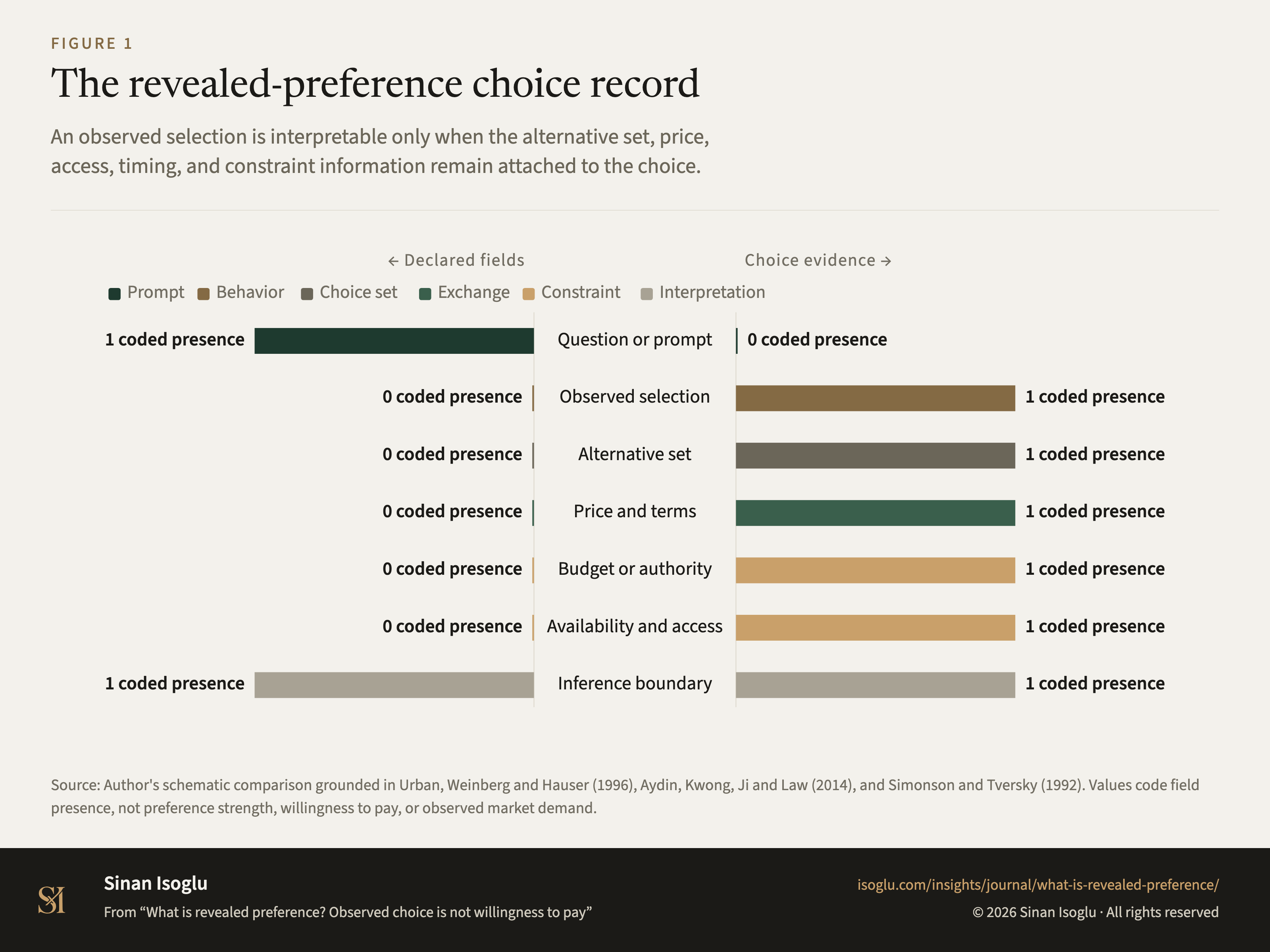
Abbildung 1Aus „Was ist offenbarte Präferenz? Beobachtete Wahl ist keine Zahlungsbereitschaft“
Der Datensatz zur offenbarten Präferenz
Eine beobachtete Wahl ist erst interpretierbar, wenn Auswahlmenge, Preis, Zugang, Zeitpunkt und Einschränkungen an der Wahl bleiben.
Abbildung 1Der Datensatz zur offenbarten Präferenz
Quelle: Schematischer Vergleich des Autors auf Grundlage von Urban, Weinberg und Hauser (1996), Aydin, Kwong, Ji und Law (2014) sowie Simonson und Tversky (1992). Die Werte codieren Feldpräsenz und keine Präferenzstärke, Zahlungsbereitschaft oder beobachtete Marktnachfrage.
Quelle und Evidenz
Jede Zeile nennt eine Aussage zu dieser Abbildung, ihre Quelle und die Art ihrer Prüfung.
- A UWH96-C1 The concern is stated preference inflating under hype: the authors worried that "respondents overstated their willingness to purchase an environmentally sound car" and built the design around it. It is one electric-vehicle case in which "the authors describe how one firm combines managerial judgment" with market measurement, not a general lawUrban, Weinberg & Hauser. (1996)
- A AKJL14-C1 The paper's actual claim is about FUZZINESS, not a survey-versus-choice-model comparison: "a high degree of fuzziness always exists in the data obtained from conjoint surveys" and "ignorance of the fuzziness would lead to the over-estimation of market demands"Aydin, Kwong, Ji & Law. (2014)
- B ST92-C1 Tradeoff contrast, in the authors' words: "the tendency to prefer an alternative is enhanced or hindered depending on whether the tradeoffs within the set under" consideration are favourable or unfavourable to that option. Checked against the PDF, because the extract warns that it mangles hyphenationsimonson-tversky-1992-choice-in-context
- B ST92-C2 Extremeness aversion: "the attractiveness of an option is enhanced if it is an intermediate option in the choice set and is diminished if it is an extreme option". Checked against the PDF for the same reasonsimonson-tversky-1992-choice-in-context
- B T06-OWN-C1 Revealed preference infers preference from observed choice or behavior under a declared choice set, price, constraint, and time boundaryAuthor framework grounded in UWH96-C1 and ST92-C1
- B T06-OWN-C2 Observed choice, stated preference, willingness to pay, transaction price, and demand response are different objectsAuthor taxonomy grounded in AKJL14-C1 and ST92-C2
- B T06-OWN-C4 An observed choice can reflect preference, budget, availability, search, default, switching cost, or constraint rather than price aloneAuthor boundary
- B T06-OWN-C5 Revealed preference is evidence about behavior in the observed environment and does not automatically identify a reservation priceAuthor negative boundary
Prüfgrade: A, gegen die gedruckte Seite der Primärquelle geprüft · B, Primärquelle, nur Textebene · C, belastbare Sekundärquelle · D, berichtet.
Aus dem Beitrag
Pricing & Umsatzarchitektur
Was ist offenbarte Präferenz? Beobachtete Wahl ist keine Zahlungsbereitschaft
Offenbarte Präferenz leitet Wahl aus Verhalten unter Bedingungen ab. Preis, Alternativen, Budget, Zugang und Absicht bleiben getrennt.
Den Beitrag lesenDiese Abbildung gehört zu einem Essay: Die Zahlen stehen hier, das Argument dort.
Zitieren oder einbetten
Verwandte Abbildungen
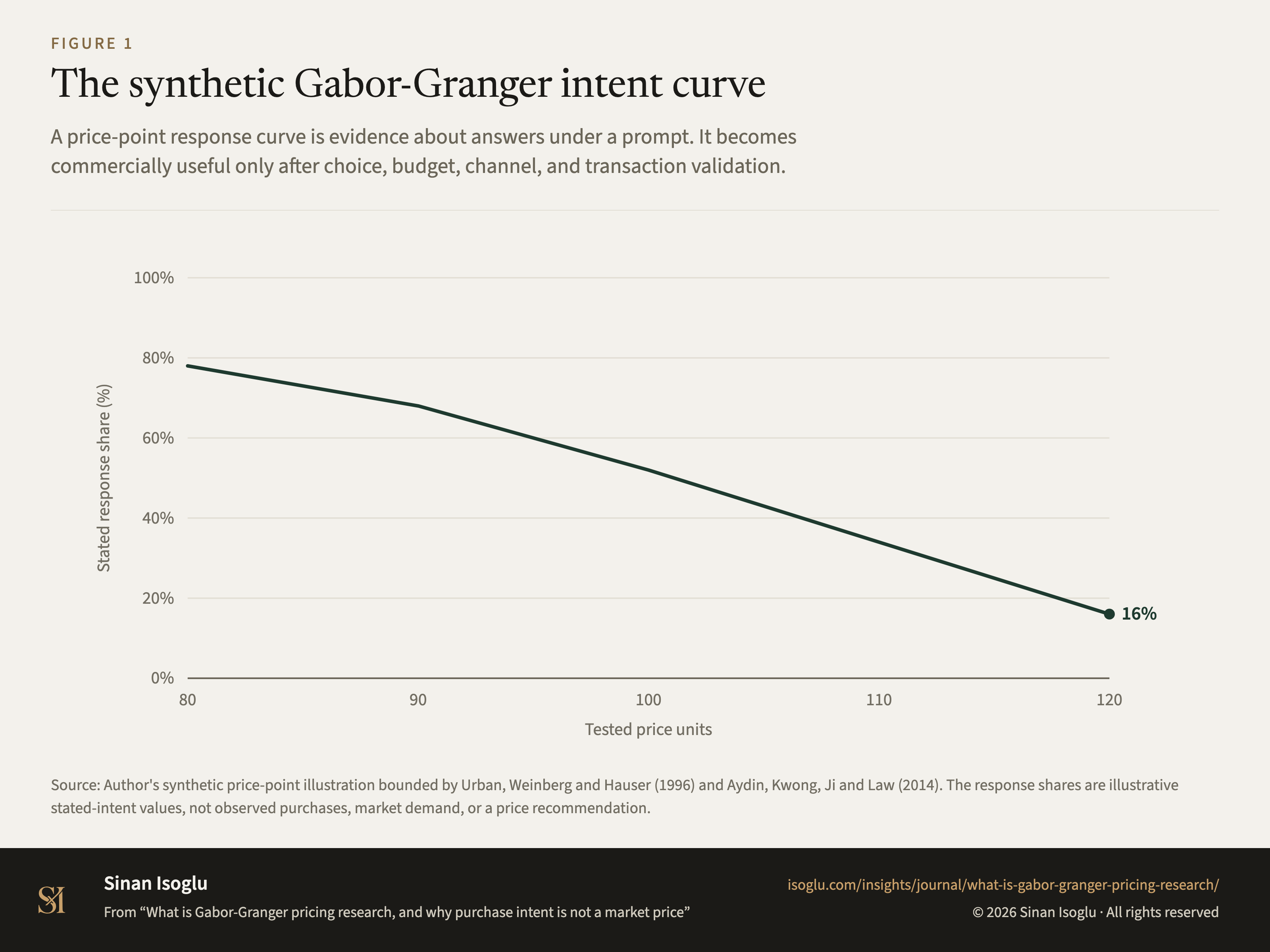
Abbildung 1Grafik
Die synthetische Gabor-Granger-Absichtskurve
Was ist Gabor-Granger-Preisforschung? Kaufabsicht ist kein Marktpreis
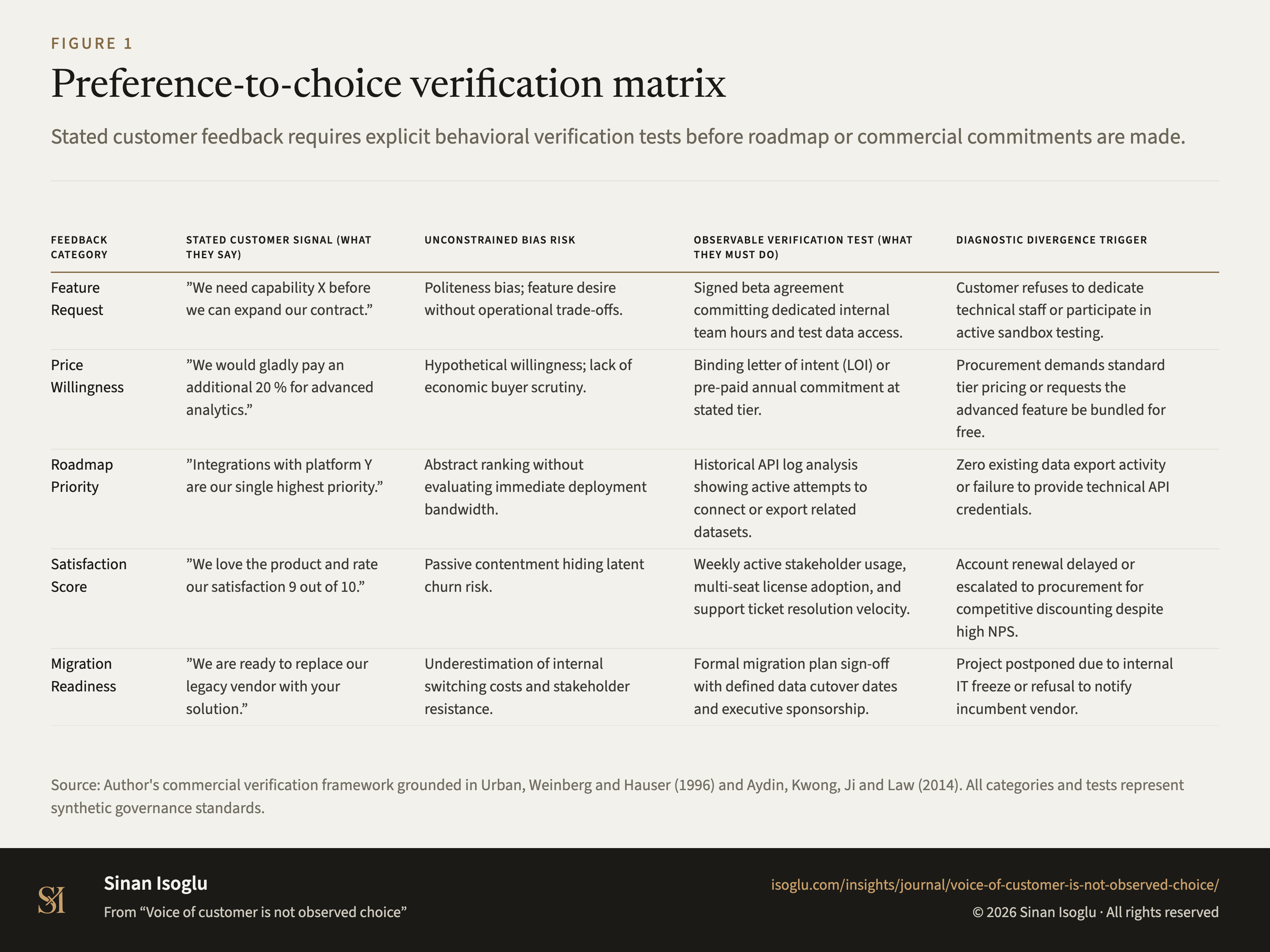
Abbildung 1Grafik
Verifikationsmatrix: Präferenz versus beobachtete Wahl
Voice of Customer ist keine beobachtete Wahl
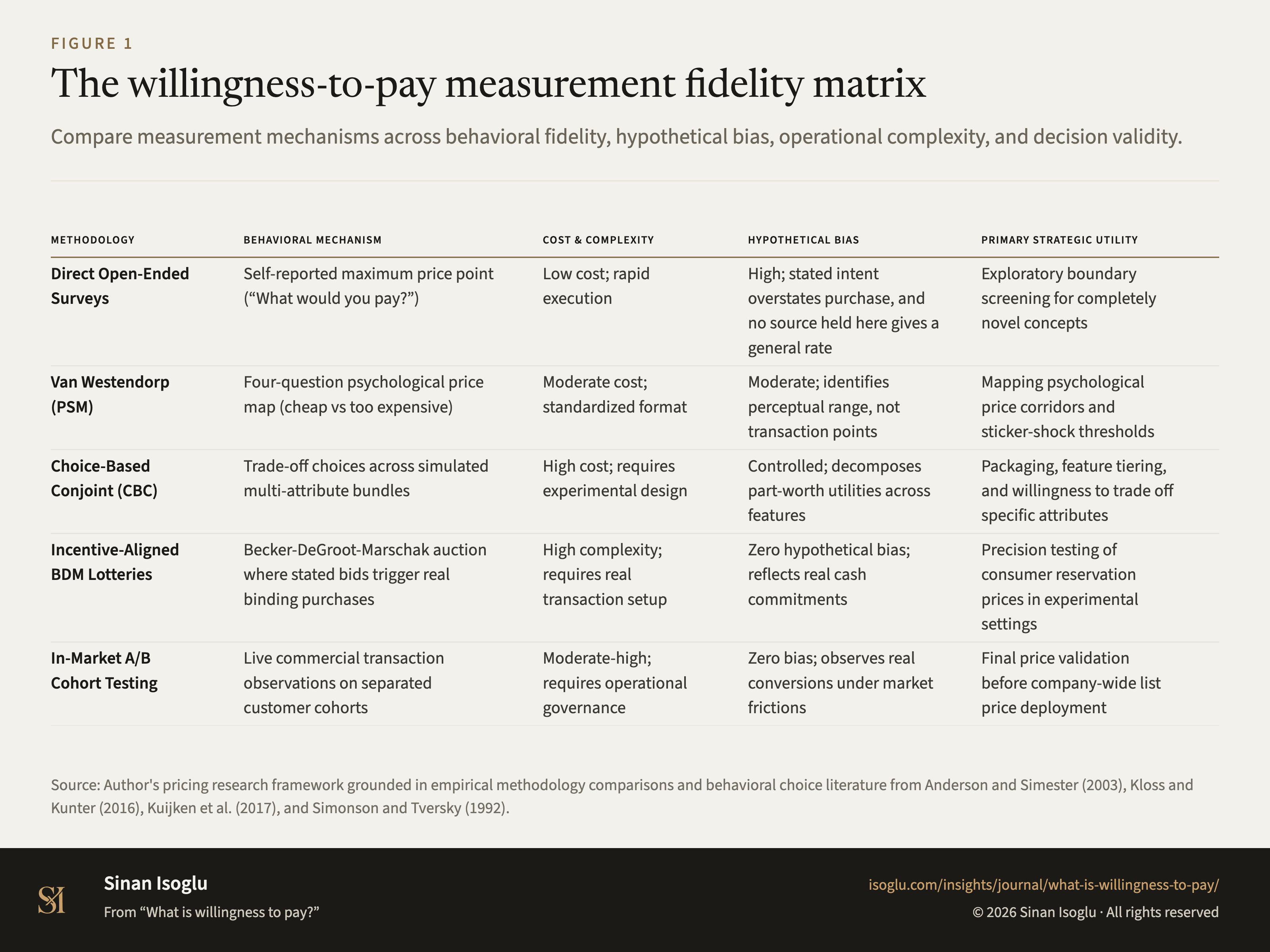
Abbildung 1Grafik
Die Messmethoden-Matrix der Zahlungsbereitschaft
Was ist Zahlungsbereitschaft?
Kontakt
Schicken Sie die Frage, an der Sie arbeiten.
Forschung, ein Gastvortrag oder eine Frage aus der Praxis.