Abbildung 1Aus „Was ist Markenwert?“
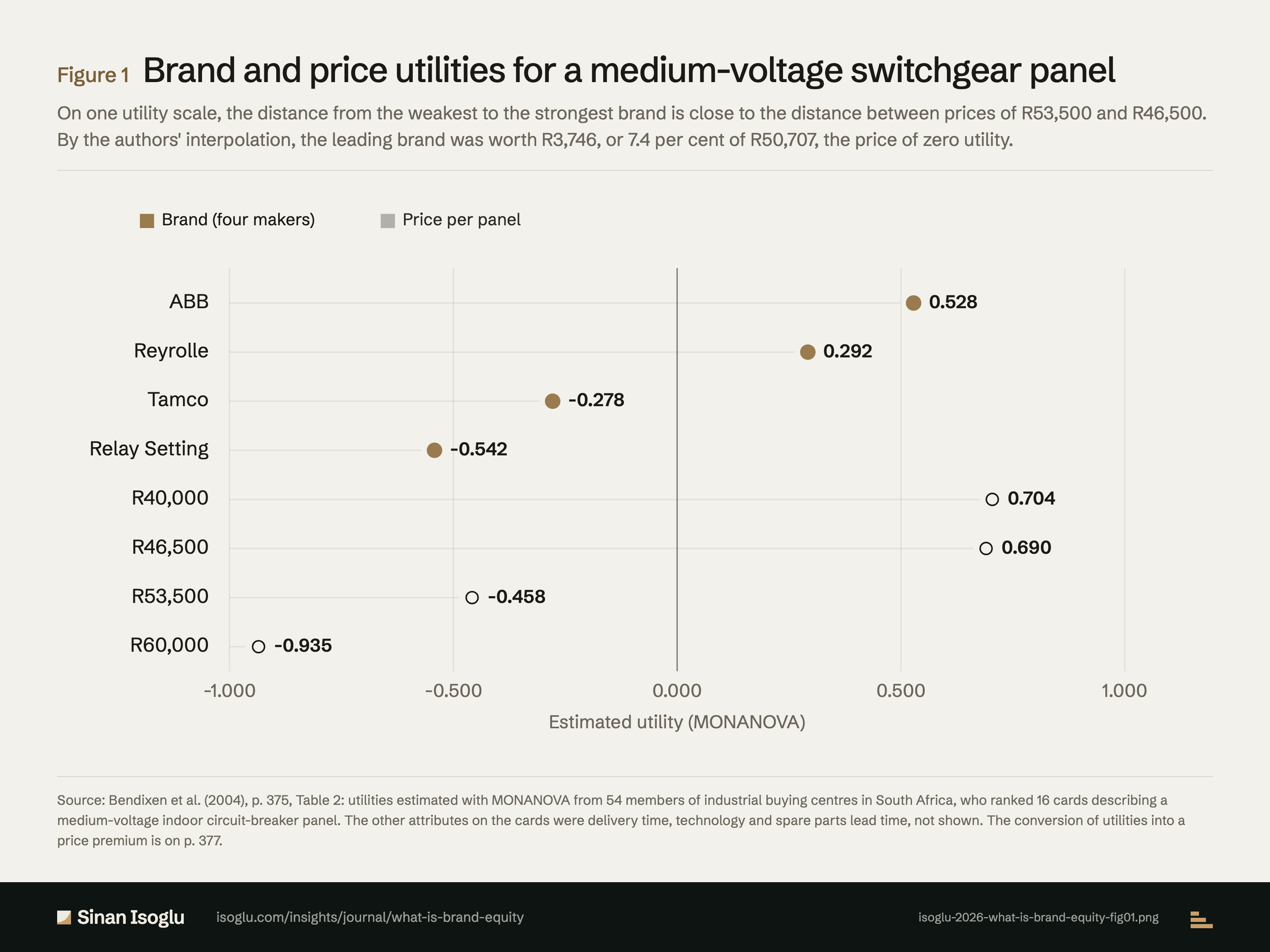
Nutzenwerte für Marke und Preis eines Mittelspannungs-Schaltfelds
Auf einer gemeinsamen Nutzenskala liegt die schwächste Marke etwa so weit unter der stärksten wie der Nutzenwert eines Preises von 53.500 Rand unter dem eines Preises von 46.500 Rand. Nach der Interpolation der Autoren war die führende Marke 3.746 Rand wert, 7,4 Prozent von 50.707 Rand, dem Preis mit dem Nutzenwert null.
Abbildung 1Nutzenwerte für Marke und Preis eines Mittelspannungs-Schaltfelds
Quelle: Bendixen et al. (2004), S. 375, Tabelle 2: mit MONANOVA geschätzte Nutzenwerte von 54 Mitgliedern industrieller Buying Center in Südafrika, die 16 Karten mit Beschreibungen eines Leistungsschalterfelds für Mittelspannung in Innenraumausführung in eine Rangfolge brachten. Die weiteren Merkmale auf den Karten waren Lieferzeit, Technik und Lieferzeit für Ersatzteile; sie sind nicht dargestellt. Die Umrechnung der Nutzenwerte in einen Preisaufschlag steht auf S. 377.
Quelle und Evidenz
Jede Zeile nennt eine Aussage zu dieser Abbildung, ihre Quelle und die Art ihrer Prüfung.
- A BBA04-C5 Table 2 utilities (p. 375, read from the page image): ABB +0.528, Reyrolle +0.292, Tamco -0.278, Relay Setting -0.542; R40,000 +0.704, R46,500 +0.690, R53,500 -0.458, R60,000 -0.935. By linear interpolation, other things equal, R50,707 has zero utility and a price utility of -0.528 sits at R54,453; the leading brand could command R3,746 or 7.4% over R50,707, which the authors call the average price, setting average in quotation marks, although it is the price of zero utility (the mean of the four price levels is R50,000), the least preferred would discount R3,305 to R47,402 or 6.5%, nearly 14% between them; the conclusions state 6.8% over the average brand and 14% over an unknown brand; buyers develop a sentimental relationship worth a premium even for a standard, interchangeable product (pp. 375, 377, 379): "Using linear interpolation, a price of R50,707 would have a utility of zero."; "assuming all other things being equal"; "would represent R54,453"; "price premium of R3746 or 7.4% relative to an ‘‘average’’ price of R50,707"; "the most preferred brand could command a price premium of R3746 or 7.4%"; "would have to discount its price by R3305 to R47,402 or 6.5%"; "the brand leader could afford a price premium of nearly 14% over relatively unknown brands on the market"; "could command a price premium of 6.8% over the average industrial brand and 14% over a new, unknown brand"; "even for a standard and interchangeable product"; "develop a sentimental relationship for which they are prepared to pay a price premium"Bendixen, Bukasa & Abratt (2004) · Bendixen, Bukasa & Abratt. (2004)
Prüfgrade: A, gegen die gedruckte Seite der Primärquelle geprüft · B, Primärquelle, nur Textebene · C, belastbare Sekundärquelle · D, berichtet.
Aus dem Beitrag
Pricing & Umsatzarchitektur
Was ist Markenwert?
Markenwert ist, was eine Marke einem Angebot über dessen Leistung hinaus gibt. In einer B2B-Studie trug die Spitzenmarke rechnerisch 7,4 Prozent Aufschlag.
Den Beitrag lesenDiese Abbildung gehört zu einem Essay: Die Zahlen stehen hier, das Argument dort.
Zitieren oder einbetten
Verwandte Abbildungen
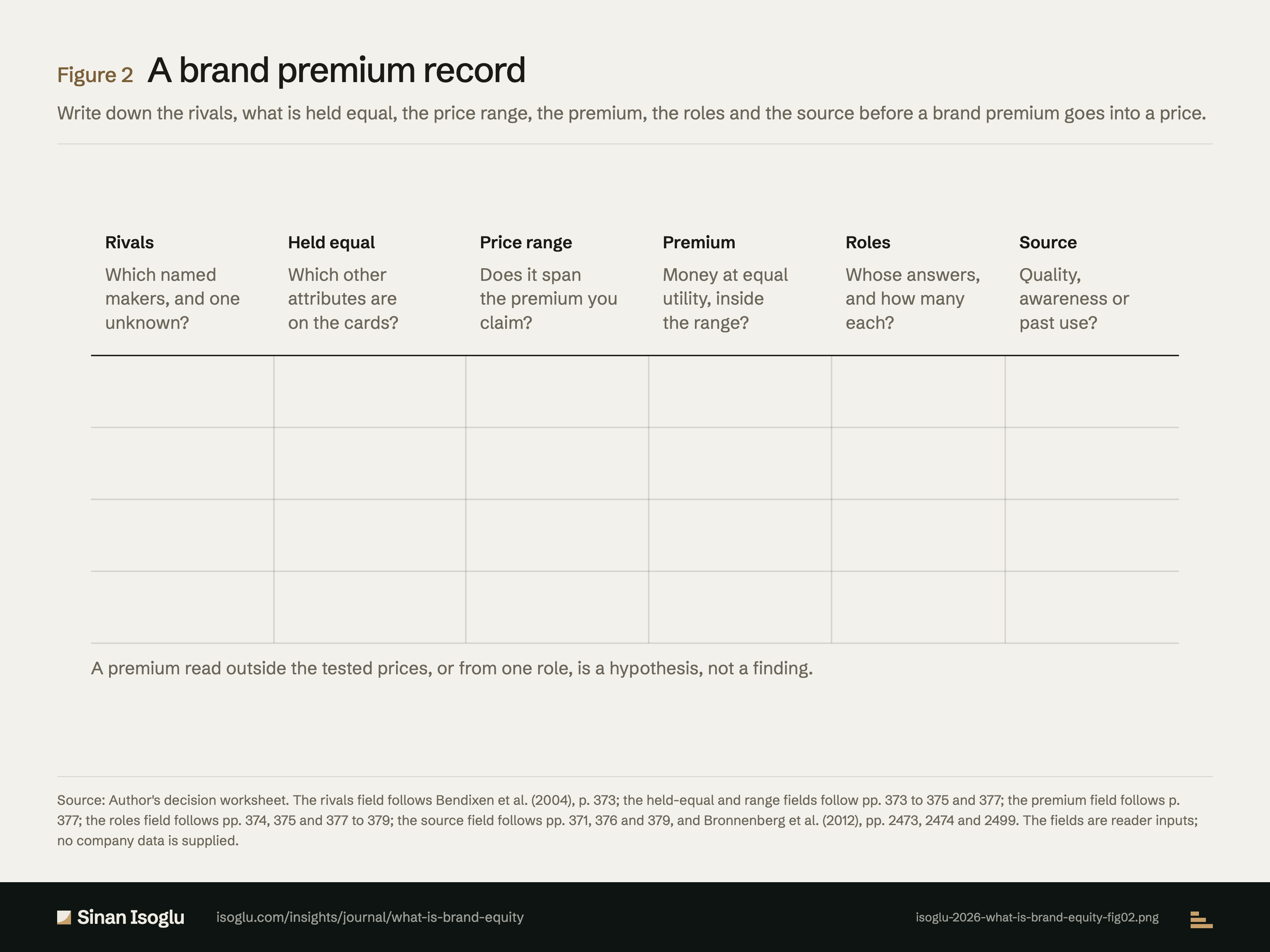
Abbildung 2Grafik
Ein Blatt für einen Markenaufschlag
Was ist Markenwert?
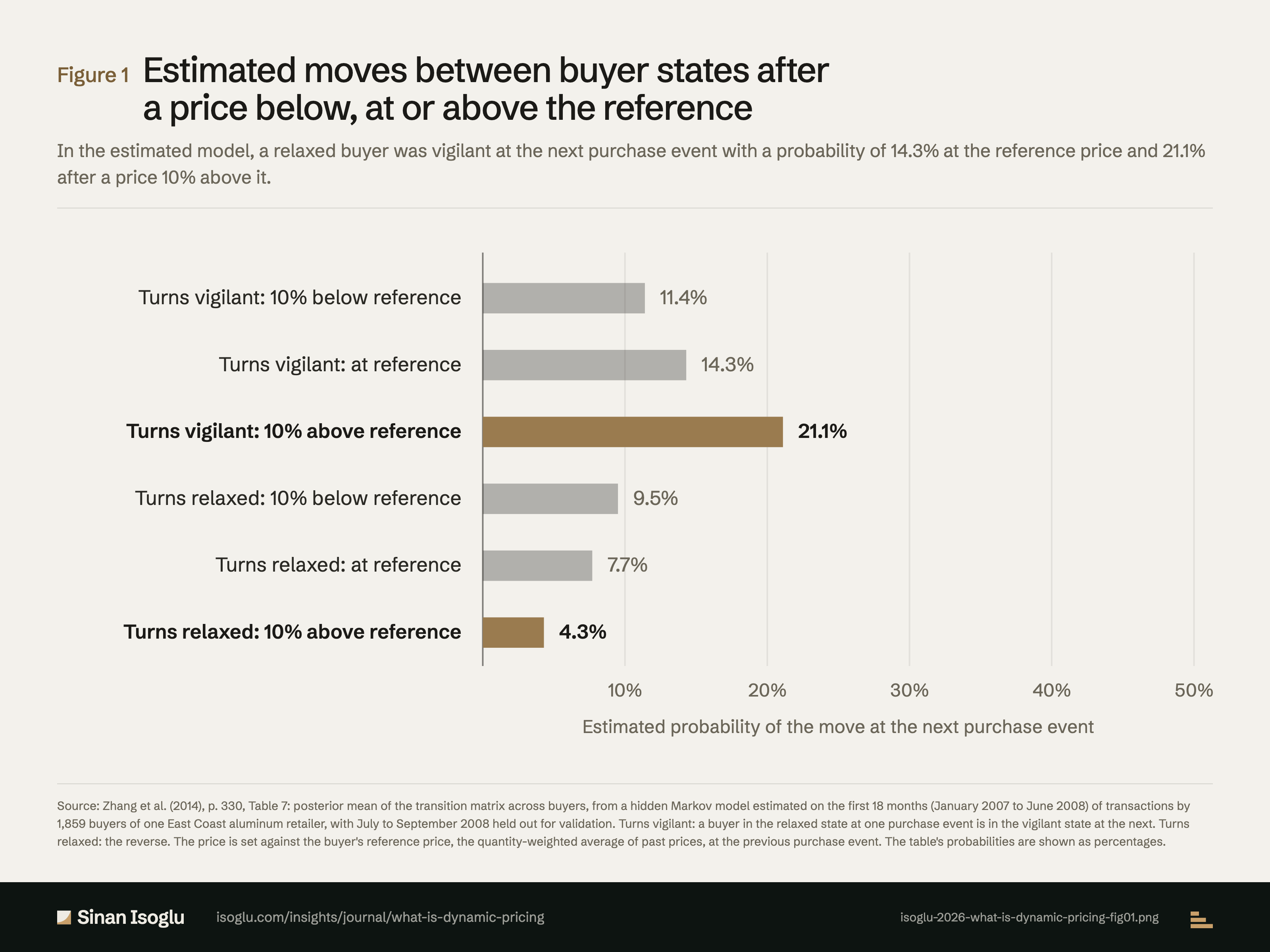
Abbildung 1Grafik
Geschätzte Wechsel zwischen Käuferzuständen nach einem Preis unter dem Referenzpreis, in seiner Höhe oder darüber
Was ist dynamische Preisgestaltung?
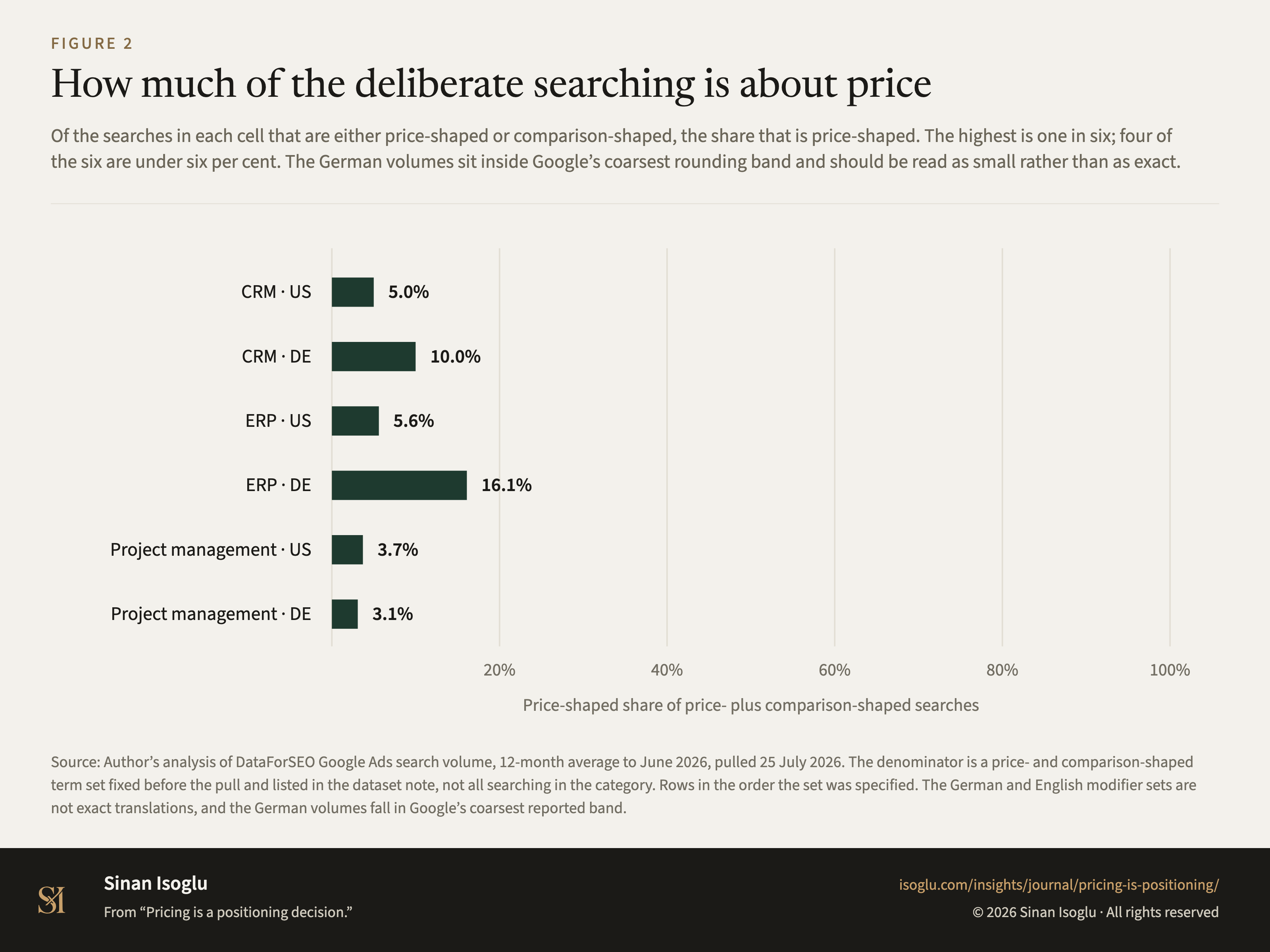
Abbildung 2Grafik
Wie viel der gezielten Suche dem Preis gilt
Pricing ist eine Positionierungsentscheidung.
Kontakt
Schicken Sie die Frage, an der Sie arbeiten.
Forschung, ein Gastvortrag oder eine Frage aus der Praxis.