Abbildung 1Aus „Was ist eine Voreinstellung?“
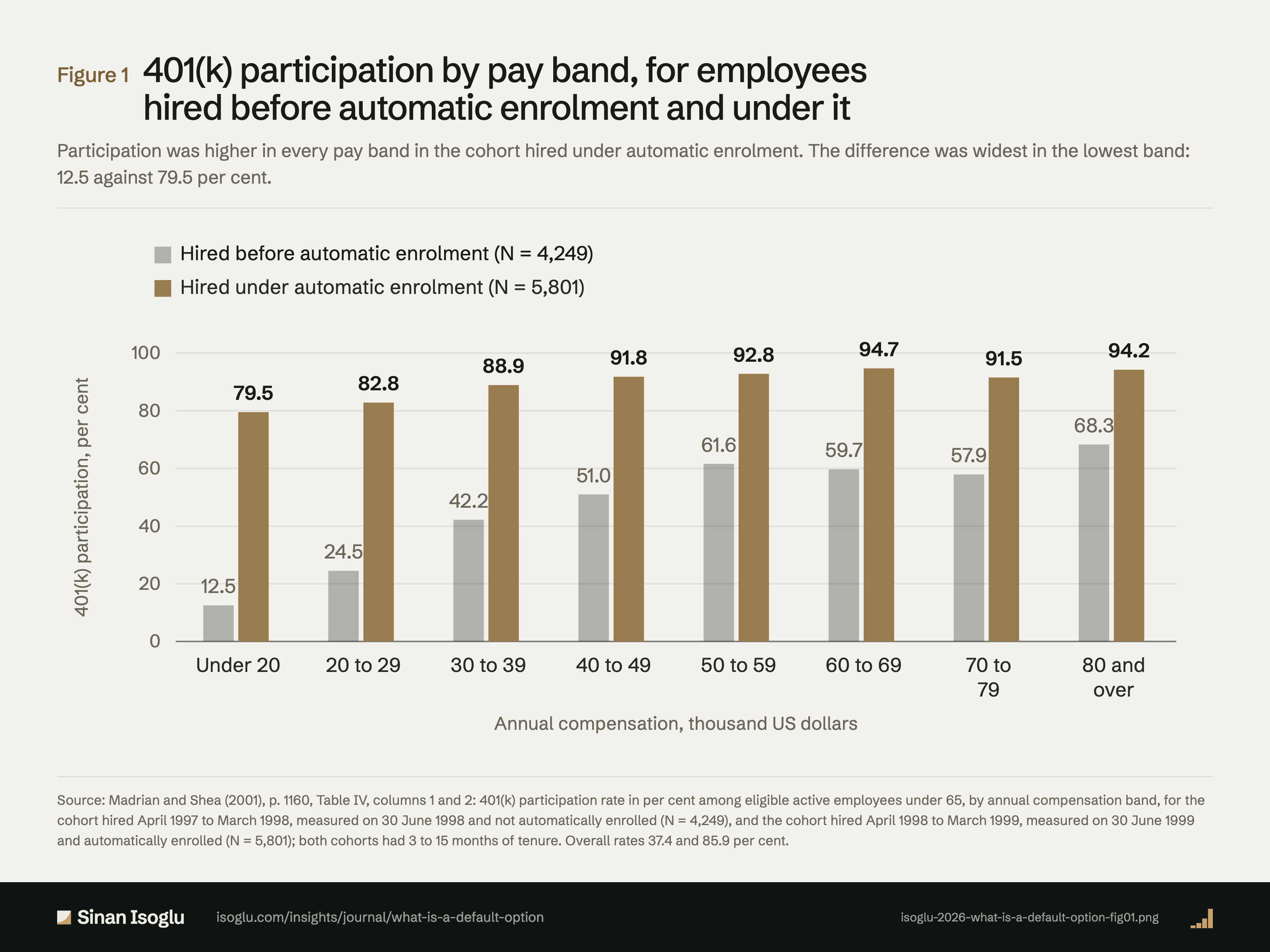
Teilnahme am 401(k)-Plan nach Vergütungsstufe, für vor und unter der automatischen Aufnahme Eingestellte
Im unter automatischer Aufnahme eingestellten Jahrgang war die Teilnahme in jeder Vergütungsstufe höher. Am größten war der Unterschied in der niedrigsten Stufe: 12,5 gegenüber 79,5 Prozent.
Abbildung 1Teilnahme am 401(k)-Plan nach Vergütungsstufe, für vor und unter der automatischen Aufnahme Eingestellte
Quelle: Madrian und Shea (2001), S. 1160, Tabelle IV, Spalten 1 und 2: Teilnahmequote am 401(k)-Plan in Prozent unter teilnahmeberechtigten aktiven Beschäftigten unter 65 Jahren, nach Stufe der Jahresvergütung, für den von April 1997 bis März 1998 eingestellten Jahrgang, gemessen am 30. Juni 1998 und nicht automatisch aufgenommen (N = 4.249), und den von April 1998 bis März 1999 eingestellten Jahrgang, gemessen am 30. Juni 1999 und automatisch aufgenommen (N = 5.801); beide Jahrgänge hatten 3 bis 15 Monate Betriebszugehörigkeit. Gesamtquoten 37,4 und 85,9 Prozent.
Quelle und Evidenz
Jede Zeile nennt eine Aussage zu dieser Abbildung, ihre Quelle und die Art ihrer Prüfung.
- A MSH01-C2 Participation: the WINDOW cohort (hired April 1997 to March 1998, not automatically enrolled) and the NEW cohort (hired April 1998 to March 1999, automatically enrolled) compared at 3 to 15 months of tenure on 30 June 1998 and 30 June 1999: 37.4 and 85.9 per cent (Table IV, p. 1160, page image; N = 4,249 and 5,801); raw difference 48.5 points, 50.4 regression-adjusted for gender, race, age, compensation and months of tenure, both marked significant (Table VI, p. 1167); immediate eligibility, introduced the same day, checked on the OLD cohort (30 June 1998) and the WINDOW cohort (30 June 1999) at 15 to 27 months: 48.7 and 49.4 per cent, 0.6 raw and 4.1 adjusted, the adjusted estimate also marked significant (Table VI, page image; G5 N1), small relative to the combined impact, the comparison not completely untainted; Table IV by compensation (page image), WINDOW then NEW: under 20 thousand dollars 12.5 and 79.5; 20 to 29 thousand 24.5 and 82.8; 30 to 39 thousand 42.2 and 88.9; 40 to 49 thousand 51.0 and 91.8; 50 to 59 thousand 61.6 and 92.8; 60 to 69 thousand 59.7 and 94.7; 70 to 79 thousand 57.9 and 91.5; 80 thousand and over 68.3 and 94.2; the highest and lowest pay-related rates about 55 points apart (WINDOW) and 15 (NEW); effects largest among the groups with the lowest participation before; participation equalized, in the conclusion partially (p. 1185; G5 N12); the authors attribute the difference almost completely to automatic enrollment; a comparison of hiring cohorts, not of employees assigned at random (pp. 1151, 1154 to 1162, 1167, 1185): "were made immediately eligible to participate in the 401(k) plan regardless of service"; "less than half the 86 percent participation rate of the NEW cohort with a similar amount of tenure"; "The regression-adjusted impact of automatic enrollment on the 401(k) participation rate for these two groups of employees is in fact even slightly larger, at 50 percent"; "The regression-adjusted differences are estimated from OLS regressions which include categorical controls for gender, race, age, compensation, and months of tenure."; "An asterisk indicates statistical significance."; "This is small, however, relative to the overall combined impact of automatic enrollment and immediate eligibility"; "This comparison does not provide a completely untainted assessment of the impact of immediate eligibility"; "the disparity between the highest and lowest pay-related participation rates is about 55 percentage points for the WINDOW cohort"; "15 percentage points for the NEW cohort"; "The effects are largest among the groups with the lowest participation rate under the previous regime of affirmative elections"; "it equalizes participation rates across various demographic groups"; "Thus, it seems likely that the 401(k) participation differences between the NEW and the WINDOW cohort can be attributed almost completely to the impact of automatic enrollment."; "Automatic enrollment also serves to partially equalize participation differences"Madrian & Shea (2001) · Madrian & Shea. (2001)
Prüfgrade: A, gegen die gedruckte Seite der Primärquelle geprüft · B, Primärquelle, nur Textebene · C, belastbare Sekundärquelle · D, berichtet.
Aus dem Beitrag
Wachstum, das sich potenziert
Was ist eine Voreinstellung?
Eine Voreinstellung gilt für alle, die nicht wählen. In einer US-Firma waren 37 Prozent neu Eingestellter im 401(k)-Plan, mit automatischer Aufnahme 86.
Den Beitrag lesenDiese Abbildung gehört zu einem Essay: Die Zahlen stehen hier, das Argument dort.
Zitieren oder einbetten
Verwandte Abbildungen
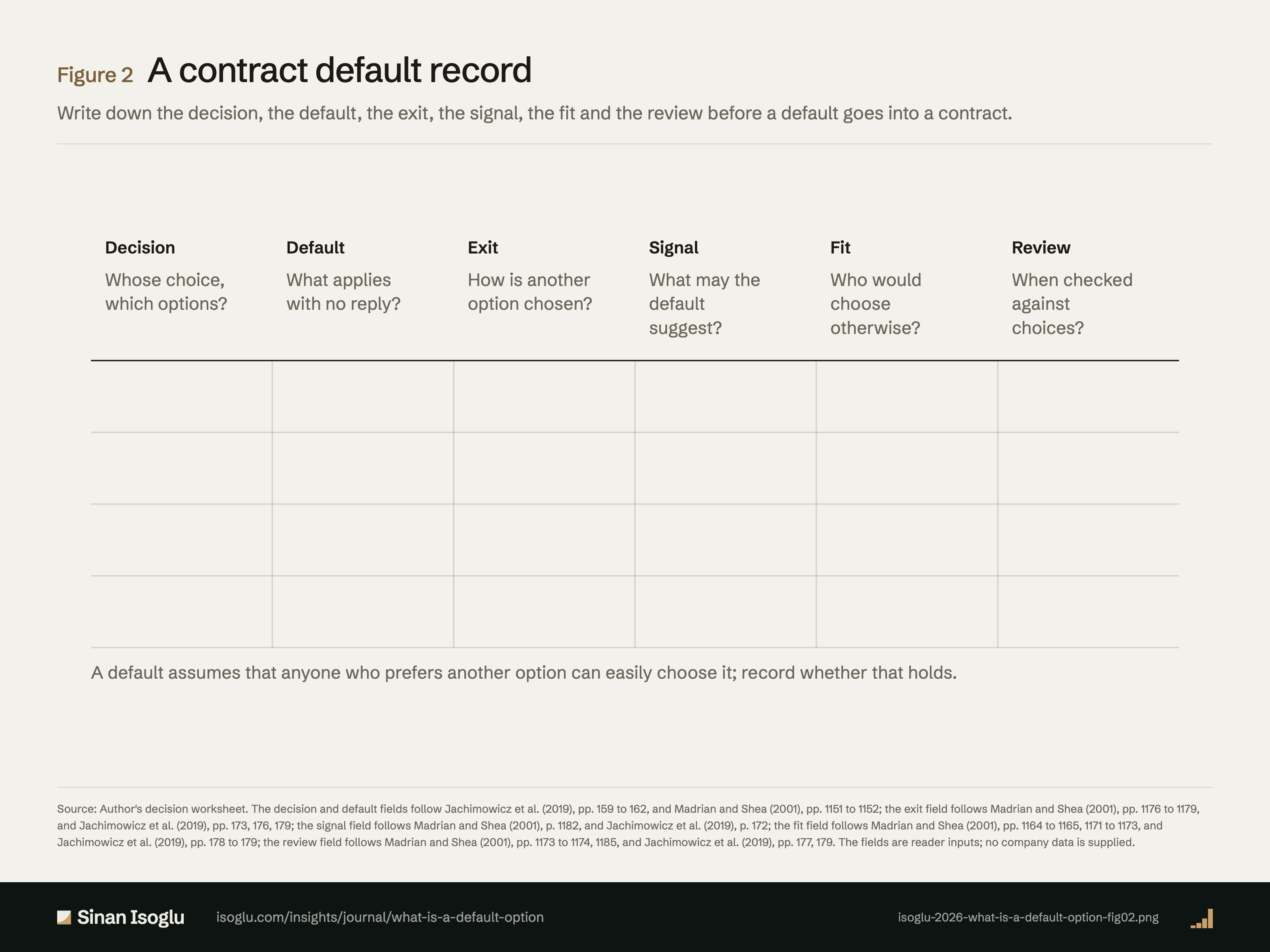
Abbildung 2Grafik
Ein Blatt für eine vertragliche Voreinstellung
Was ist eine Voreinstellung?
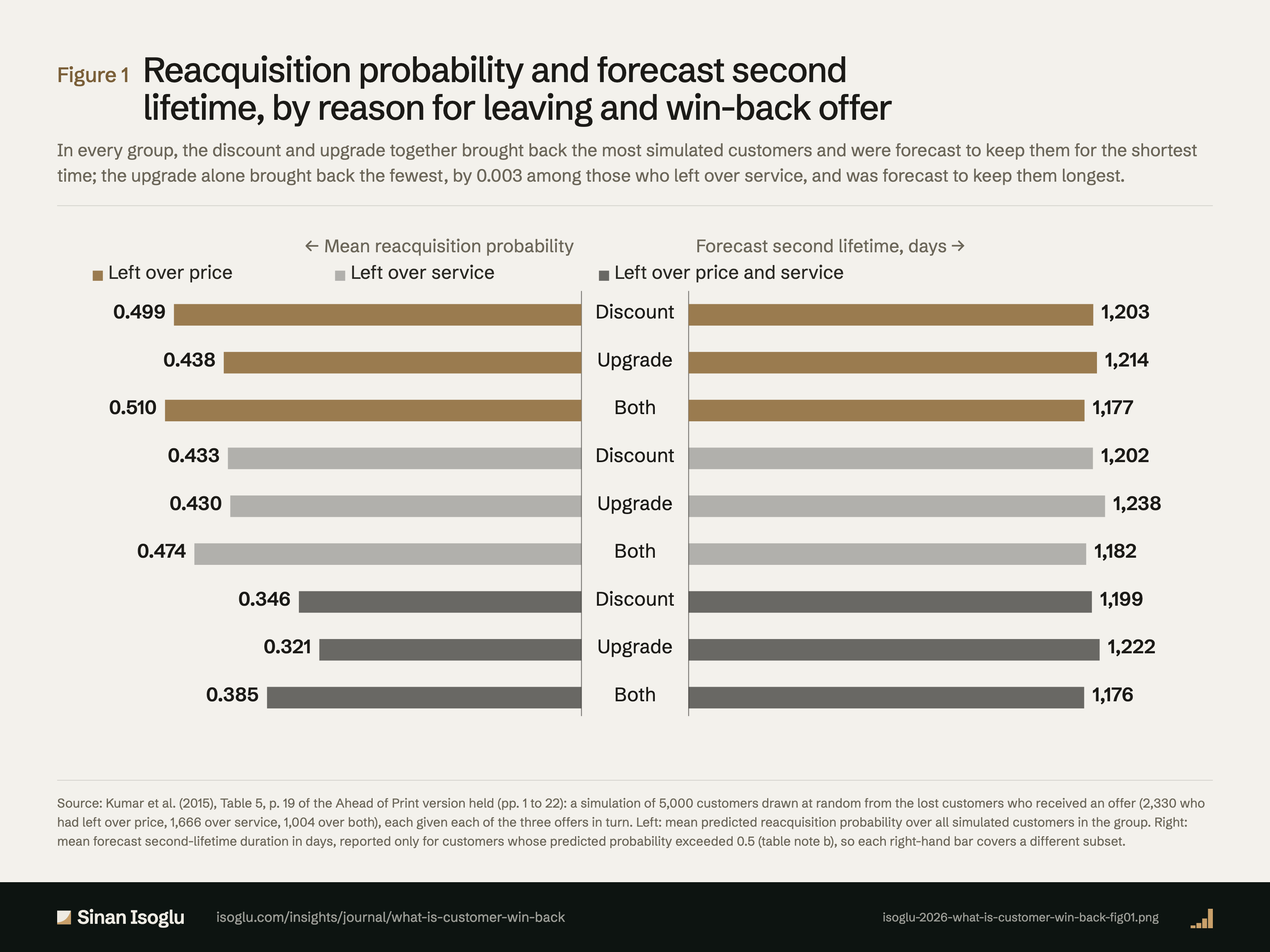
Abbildung 1Grafik
Rückgewinnungswahrscheinlichkeit und prognostizierte zweite Kundenbeziehung, nach Abwanderungsgrund und Angebot
Was ist Kundenrückgewinnung?
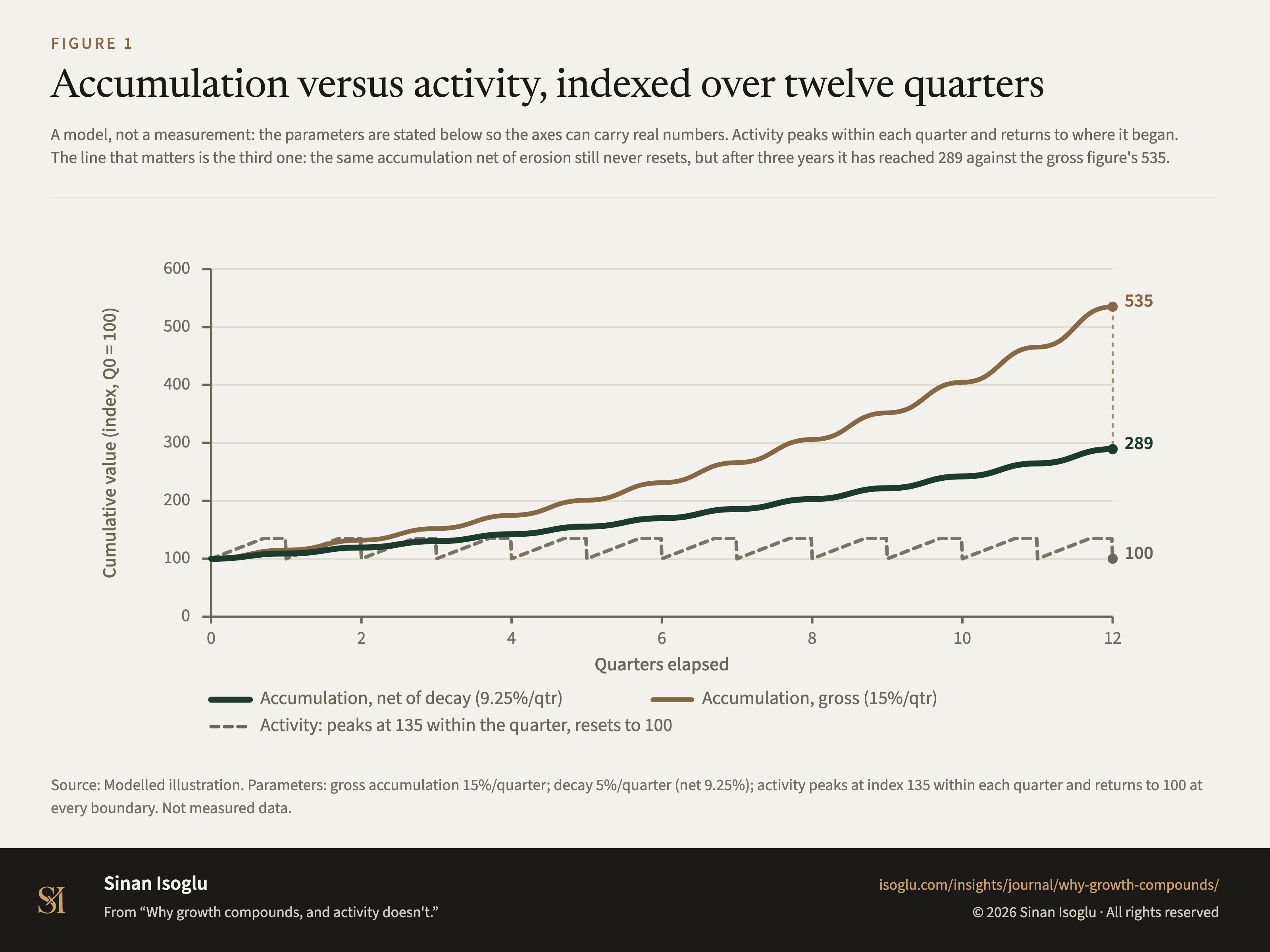
Abbildung 1Grafik
Aufbau und Aktivität im Vergleich, indexiert über zwölf Quartale
Warum sich Wachstum potenziert – und Aktivität nicht.
Kontakt
Schicken Sie die Frage, an der Sie arbeiten.
Forschung, ein Gastvortrag oder eine Frage aus der Praxis.