Tabelle 1Aus „Business-Case-Control ist eine lebende Entscheidungsschleife“
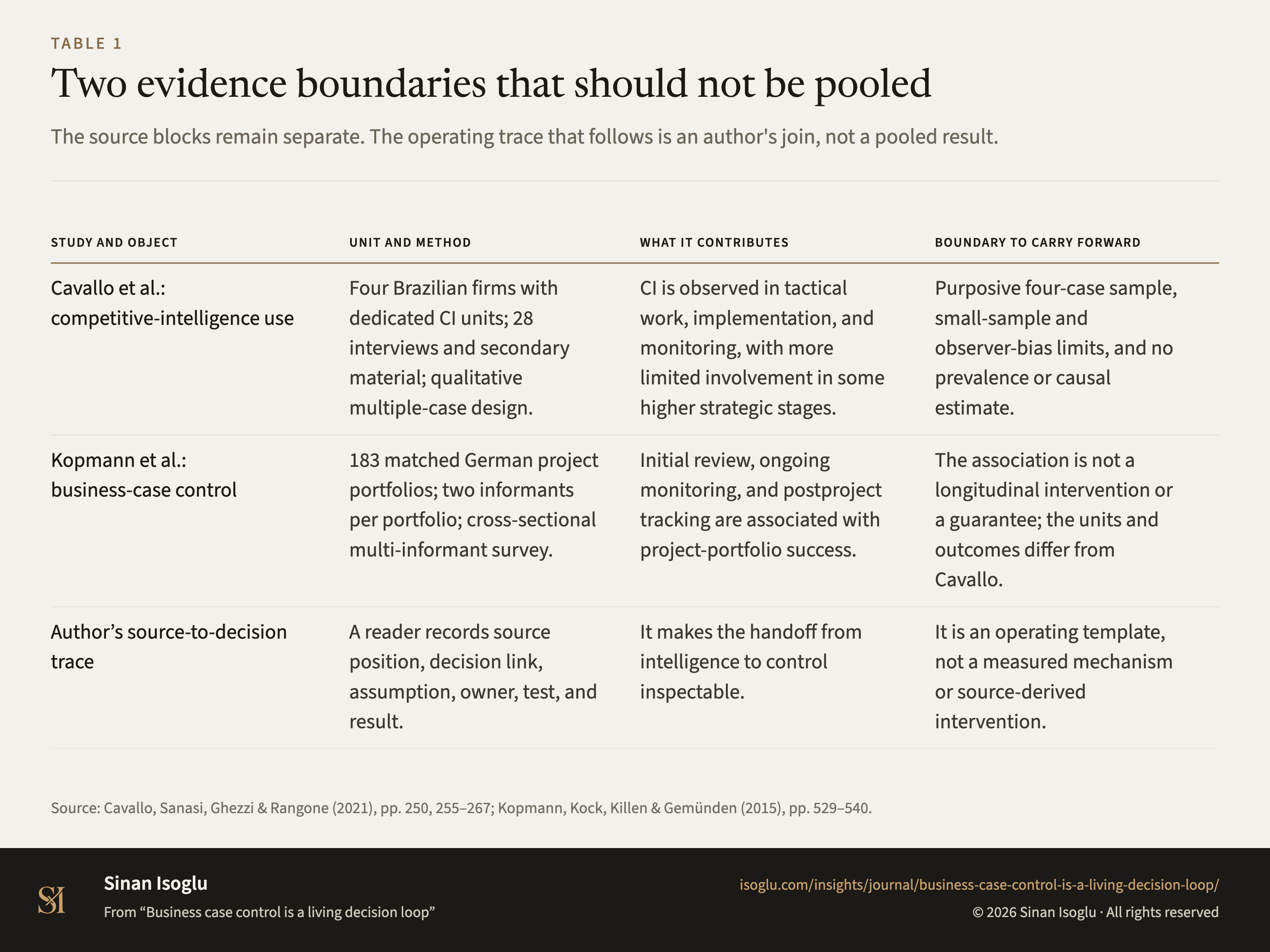
Zwei Evidenzgrenzen, die nicht zusammengelegt werden dürfen
Die Quellenblöcke bleiben getrennt. Die folgende Entscheidungsspur ist eine eigene Verbindung, kein gepooltes Ergebnis.
Tabelle 1Zwei Evidenzgrenzen, die nicht zusammengelegt werden dürfen
| Studie und Gegenstand | Einheit und Methode | Was sie beiträgt | Grenze für die Übertragung |
|---|---|---|---|
| Cavallo et al.: Nutzung von Competitive Intelligence | Vier brasilianische Unternehmen mit eigenen CI-Einheiten; 28 Interviews und Sekundärmaterial; qualitative Mehrfachfallstudie. | CI wird in taktischer Arbeit, Implementierung und Monitoring beobachtet, mit geringerer Beteiligung an einigen höheren strategischen Stufen. | Gezielt ausgewählte Vier-Fälle-Stichprobe, Grenzen durch kleine Stichprobe und Beobachterbias, keine Verbreitungs- oder Kausalschätzung. |
| Kopmann et al.: Business-Case-Control | 183 verbundene deutsche Projektportfolios; zwei Informanten pro Portfolio; querschnittliche Mehrfachinformantenbefragung. | Erste Prüfung, laufendes Monitoring und Tracking nach Abschluss hängen mit Projekterfolg im Portfolio zusammen. | Der Zusammenhang ist weder eine Längsschnittintervention noch eine Garantie; Einheiten und Ergebnisse unterscheiden sich von Cavallo. |
| Eigene Quelle-zu-Entscheidung-Spur | Ein Leser dokumentiert Quellenposition, Entscheidungsverbindung, Annahme, Verantwortung, Test und Ergebnis. | Sie macht die Übergabe von Intelligence in Kontrolle prüfbar. | Sie ist eine Arbeitsvorlage, kein gemessener Mechanismus und keine aus der Quelle stammende Intervention. |
Bei breiten Tabellen horizontal wischen oder scrollen.
Quelle: Cavallo, Sanasi, Ghezzi & Rangone (2021), S. 250, 255–267; Kopmann, Kock, Killen & Gemünden (2015), S. 529–540.
Quelle und Evidenz
Jede Zeile nennt eine Aussage zu dieser Abbildung, ihre Quelle und die Art ihrer Prüfung.
- A CSR21-C1 The design is four cases, and the paper says so: "a multiple case study has been performed related to four companies located in Brazil that adopted CI practices within dedicated business units to inform and support strategic decision-making"Cavallo, Sanasi, Ghezzi & Rangone (2021), pp. 255-256
- A CSR21-C2 The tension the study reports, verbatim: CI practices, "despite their strategic relevance and diffusion, are still extensively adopted for tactical use"Cavallo, Sanasi, Ghezzi & Rangone (2021), p. 250
- A CSR21-C3 What the study delivers is descriptive: "The authors provide detailed empirical evidence on the connection and use of CI practices throughout each stage of the strategy formulation process"Cavallo, Sanasi, Ghezzi & Rangone (2021), pp. 264-267
- A CSR21-C4 The authors bound their own generalisation: "This study is not free of limitations. First, the small sample size could limit the generalization and relevance of our findings; and second, the observer bias typical of qualitative studies"Cavallo, Sanasi, Ghezzi & Rangone (2021), p. 267
- A KKKG15-C1 The three elements and the association: "We identify three elements of a business case control at the portfolio level": "the initial review, the ongoing mon""itoring during the project execution, and the postproject tracking until the business case is realized": and "Based on a cross-industry sample of 183 firms, we find that the business case control is positively related to the project portfolio success"Kopmann, Kock, Killen & Gemünden (2015), p. 529
- A KKKG15-C2 The construct is those three parts: "the initial review, the ongoing mon""itoring during the project execution, and the postproject tracking until the business case is realized"Kopmann, Kock, Killen & Gemünden (2015), pp. 531-532
- A KKKG15-C3 Monitoring is where a decision can still change: "the ongoing monitoring of the business case enables manage"ment to act early, which "may involve adjusting project scope or urgency" or cancelling projects for alternativesKopmann, Kock, Killen & Gemünden (2015), p. 532
- A KKKG15-C5 The authors caution that formal controls may limit creativity and strain innovation in some portfolio environmentsKopmann, Kock, Killen & Gemünden (2015), p. 540
Prüfgrade: A, gegen die gedruckte Seite der Primärquelle geprüft · B, Primärquelle, nur Textebene · C, belastbare Sekundärquelle · D, berichtet.
Aus dem Beitrag
Aus der Forschung
Business-Case-Control ist eine lebende Entscheidungsschleife
Competitive Intelligence zählt nach der Freigabe nur, wenn Quelle, Entscheidung, Annahme, Verantwortung, Test und Ergebnis verbunden bleiben.
Den Beitrag lesenDiese Abbildung gehört zu einem Essay: Die Zahlen stehen hier, das Argument dort.
Zitieren oder einbetten
Verwandte Abbildungen
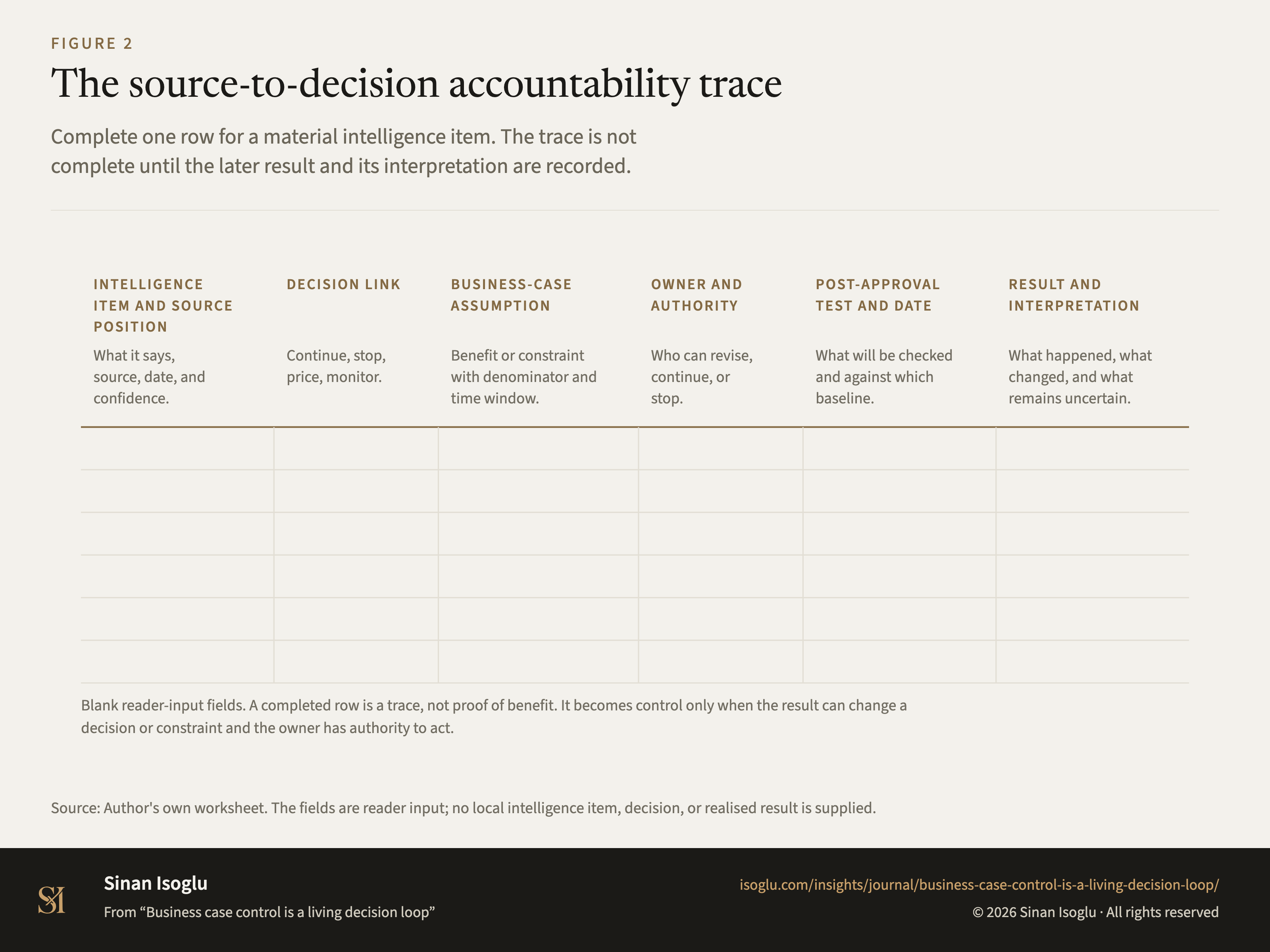
Abbildung 2Grafik
Die Quelle-zu-Entscheidung-Spur
Business-Case-Control ist eine lebende Entscheidungsschleife
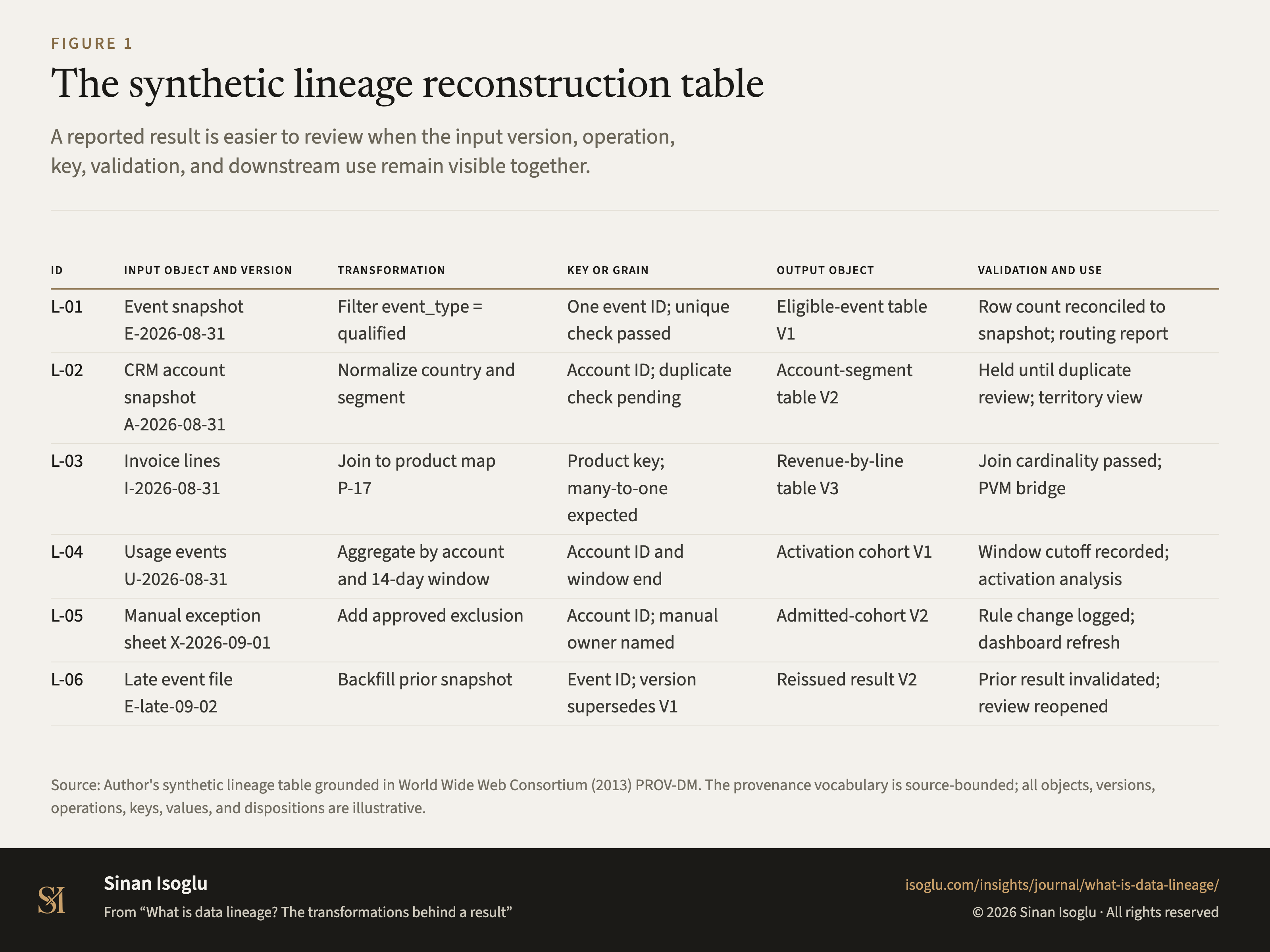
Abbildung 1Grafik
Die synthetische Tabelle zur Lineage-Rekonstruktion
Was ist Data Lineage? Die Transformationen hinter einem Ergebnis
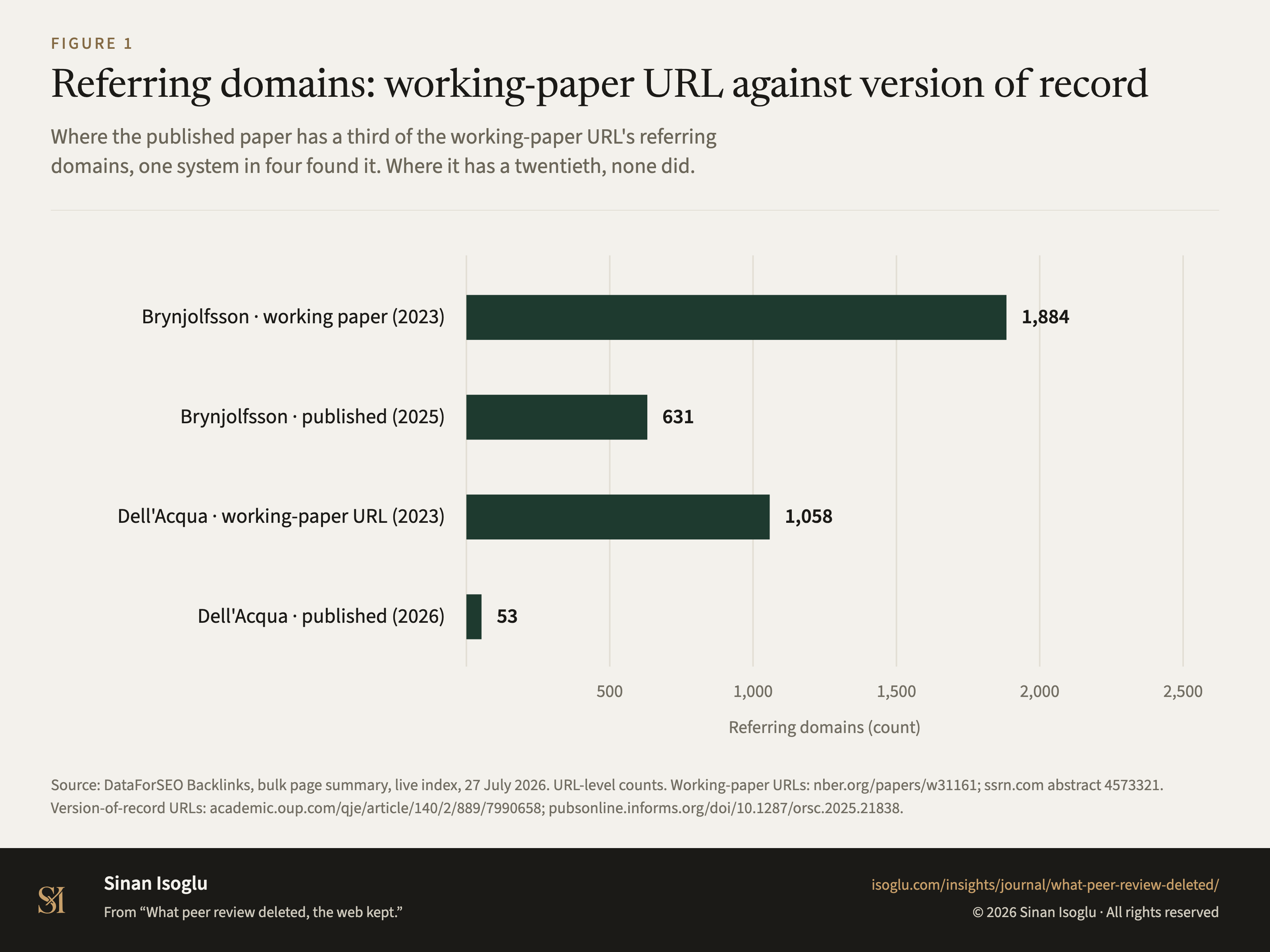
Abbildung 1Grafik
Verweisende Domains: Working-Paper-URL gegen Verlagsfassung
Was das Peer-Review strich, ist im Netz geblieben.
Kontakt
Schicken Sie die Frage, an der Sie arbeiten.
Forschung, ein Gastvortrag oder eine Frage aus der Praxis.