Abbildung 1Aus „Was sind parallele Trends? Die Annahme hinter Difference-in-Differences“
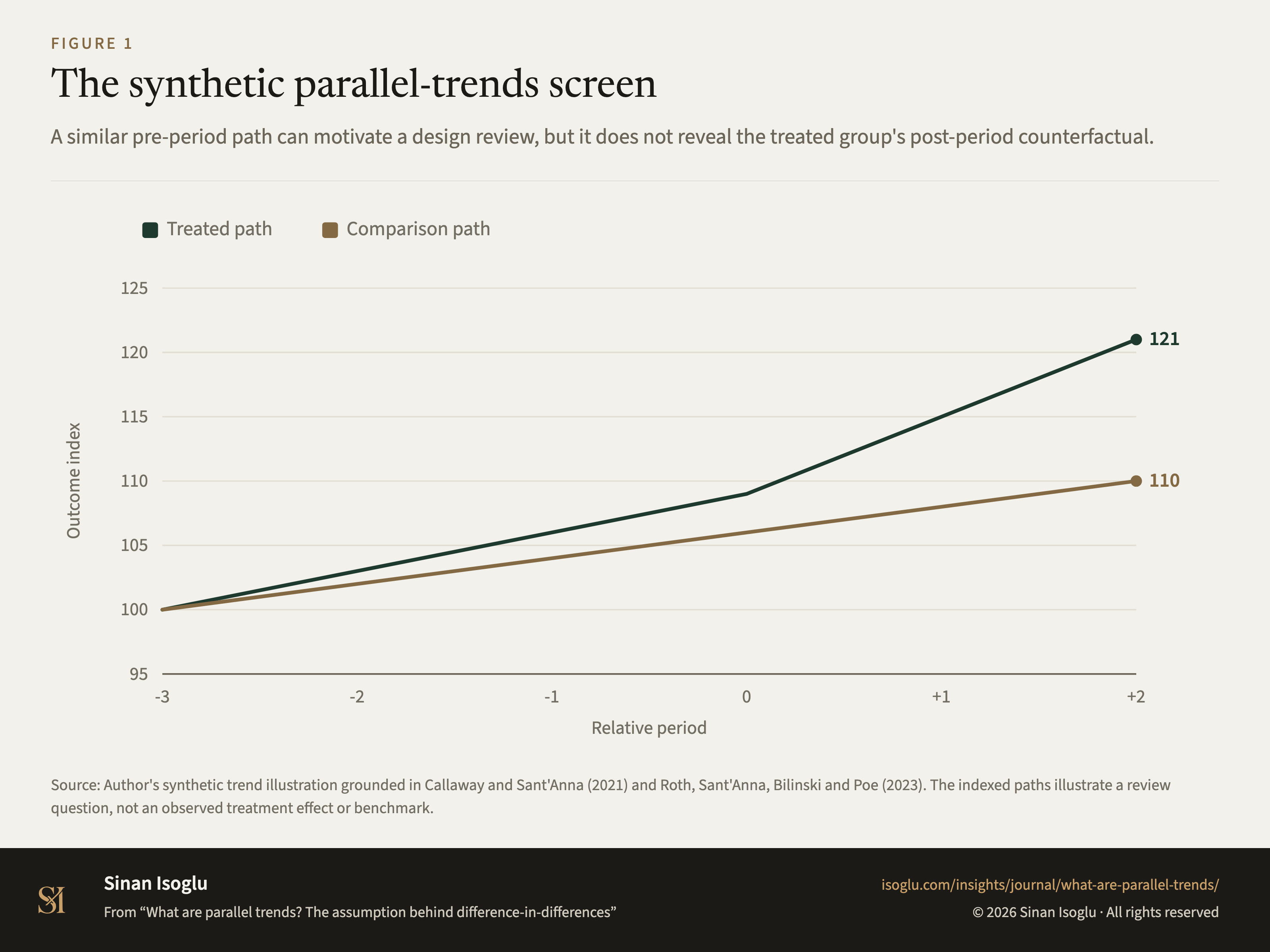
Der synthetische Screen für parallele Trends
Ein ähnlicher Vorbehandlungsverlauf kann eine Designprüfung begründen, zeigt aber nicht das kontrafaktische Nachbehandlungsergebnis der behandelten Gruppe.
Abbildung 1Der synthetische Screen für parallele Trends
Quelle: Synthetische Trendillustration des Autors auf Grundlage von Callaway und Sant'Anna (2021) sowie Roth, Sant'Anna, Bilinski und Poe (2023). Die Indexpfade illustrieren eine Prüfungsfrage und sind kein beobachteter Behandlungseffekt oder Benchmark.
Quelle und Evidenz
Jede Zeile nennt eine Aussage zu dieser Abbildung, ihre Quelle und die Art ihrer Prüfung.
- A CS21-C1 The parameter, named: "the disaggregated causal parameter that we call the group time average treatment effect i e the average treatment effect for group g at time t where a group is defined by the time period when units are first treated"Callaway & Sant'Anna. (2021)
- A CS21-C2 Parallel trends is the identifying assumption: comparison groups "would have followed parallel paths over time which is the so called parallel trends assumption"Callaway & Sant'Anna. (2021)
- A RSP23-C1 A synthesis with advice attached: "this paper synthesizes recent advances in the econometrics of difference in differences did and provides concrete recommendations for practitioners"Roth, Sant'Anna, Bilinski & Poe. (2023)
- A RSP23-C2 TWFE is the baseline it complicates: the ATT "can be consistently estimated using a two way fixed effects twfe regression specification" under the canonical assumptions, and recent advances are classified as relaxing thoseRoth, Sant'Anna, Bilinski & Poe. (2023)
- B R10-OWN-C1 Parallel trends is a design assumption that treated and comparison units would have followed comparable outcome paths absent treatmentAuthor framework grounded in CS21-C1 and RSP23-C1
- B R10-OWN-C2 Pre-treatment visual similarity is evidence about the assumption, not proof that post-treatment counterfactual trends are parallelAuthor boundary
- B R10-OWN-C3 A parallel-trends review should declare treatment timing, comparison set, outcome, pre-period, post-period, aggregation, and event maturityAuthor operating framework
- B R10-OWN-C4 Anticipation, composition change, differential shocks, staggered timing, and outcome redefinition can threaten a parallel-trends argumentAuthor diagnostic framework
Prüfgrade: A, gegen die gedruckte Seite der Primärquelle geprüft · B, Primärquelle, nur Textebene · C, belastbare Sekundärquelle · D, berichtet.
Aus dem Beitrag
Aus der Forschung
Was sind parallele Trends? Die Annahme hinter Difference-in-Differences
Parallele Trends sind eine kontrafaktische Annahme, kein Vortrend-Siegel. Schätzen Sie Estimand, Timing, Überlappung und Sensitivität gemeinsam.
Den Beitrag lesenDiese Abbildung gehört zu einem Essay: Die Zahlen stehen hier, das Argument dort.
Zitieren oder einbetten
Verwandte Abbildungen
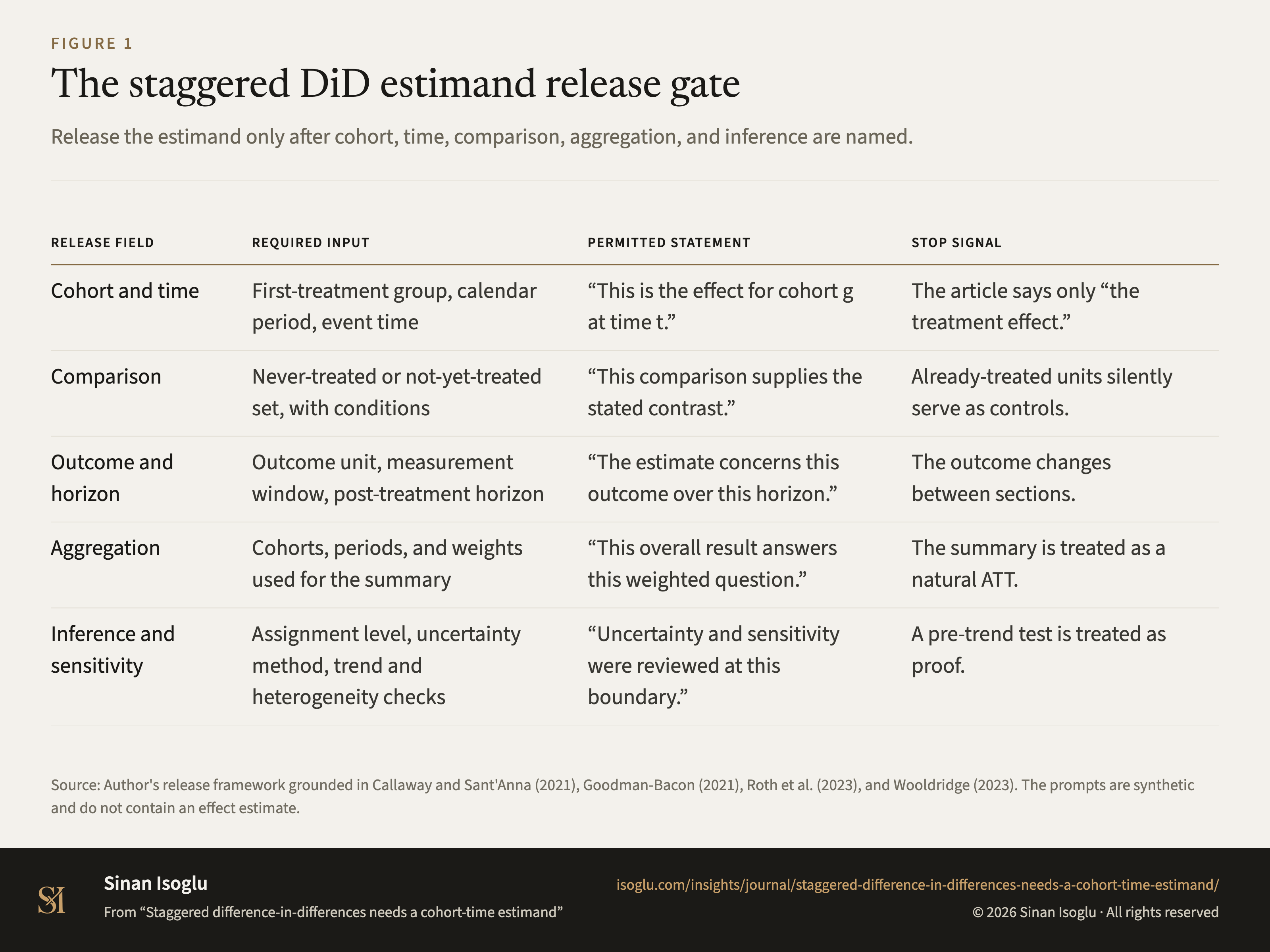
Abbildung 1Grafik
Die Freigabekarte für gestaffelte Difference-in-Differences
Gestaffelte Difference-in-Differences braucht ein Kohorten-Zeit-Estimand
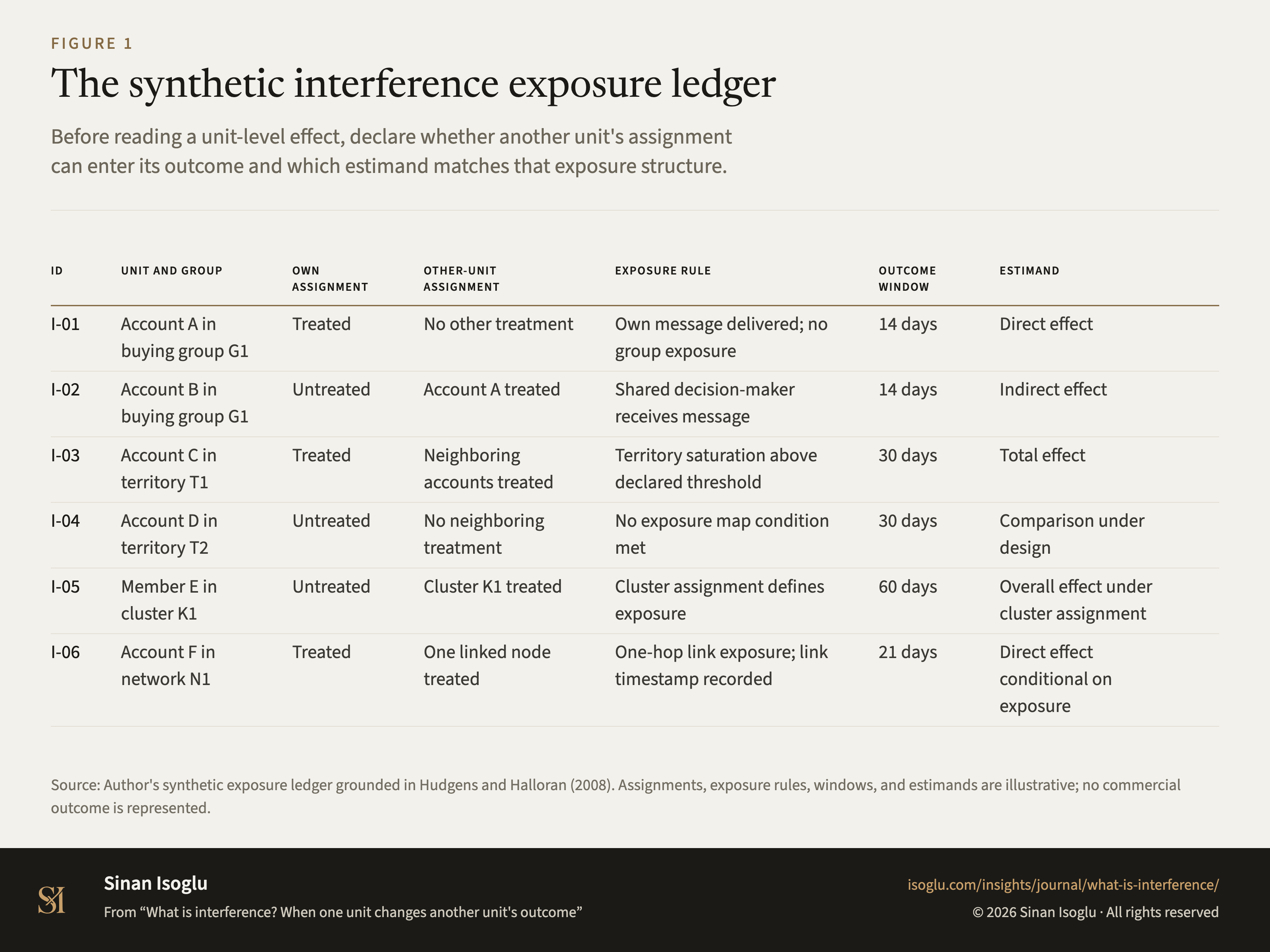
Abbildung 1Grafik
Das synthetische Expositionsregister für Interferenz
Was ist Interferenz? Wenn die Behandlung einer Einheit ein anderes Ergebnis verändert
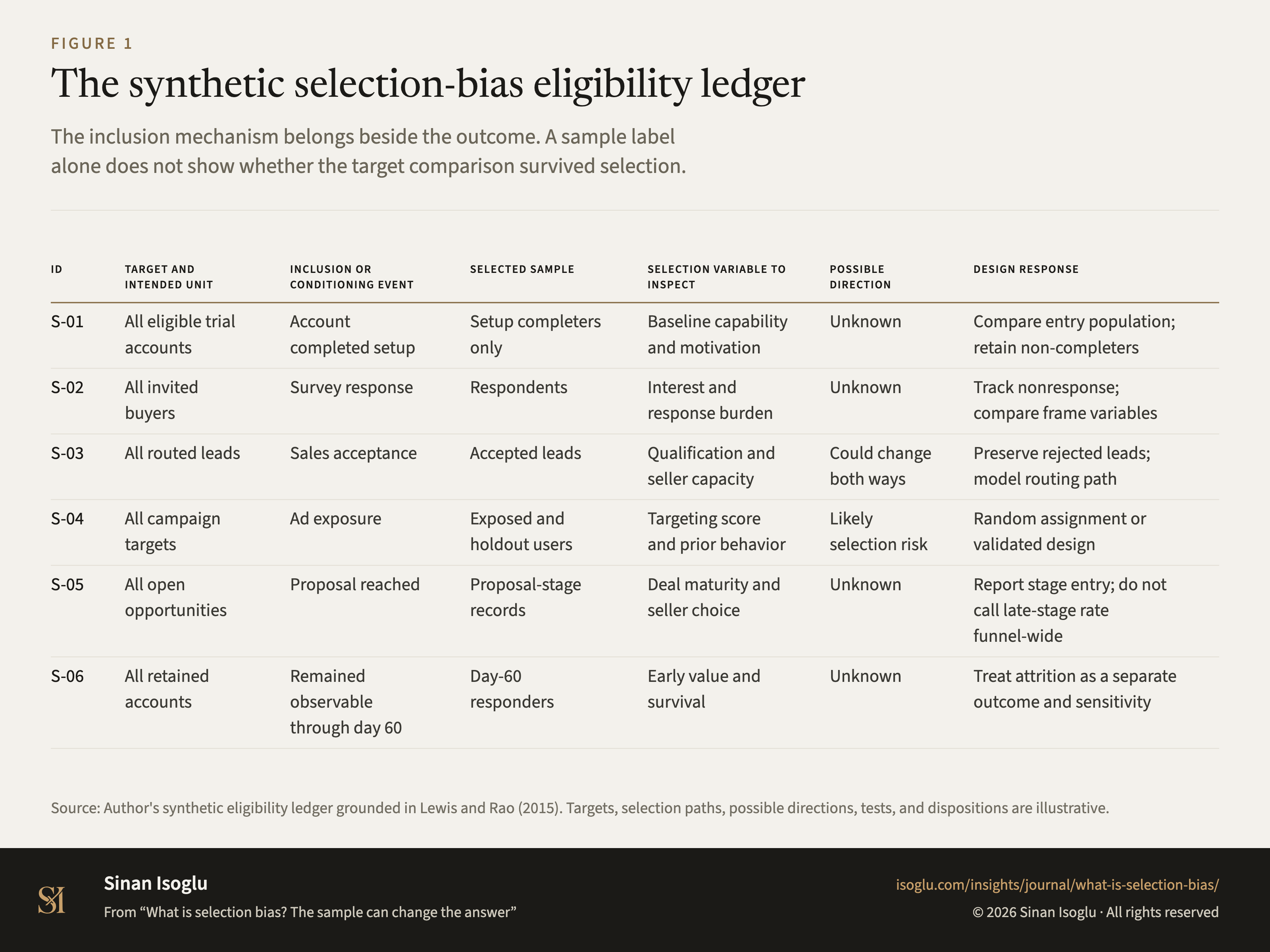
Abbildung 1Grafik
Das synthetische Zulässigkeitsregister für Selektionsbias
Was ist Selektionsbias? Die Stichprobe kann die Antwort verändern
Kontakt
Schicken Sie die Frage, an der Sie arbeiten.
Forschung, ein Gastvortrag oder eine Frage aus der Praxis.