Abbildung 1Aus „CRM-Adoption ist Wissensintegration, kein Rollout“
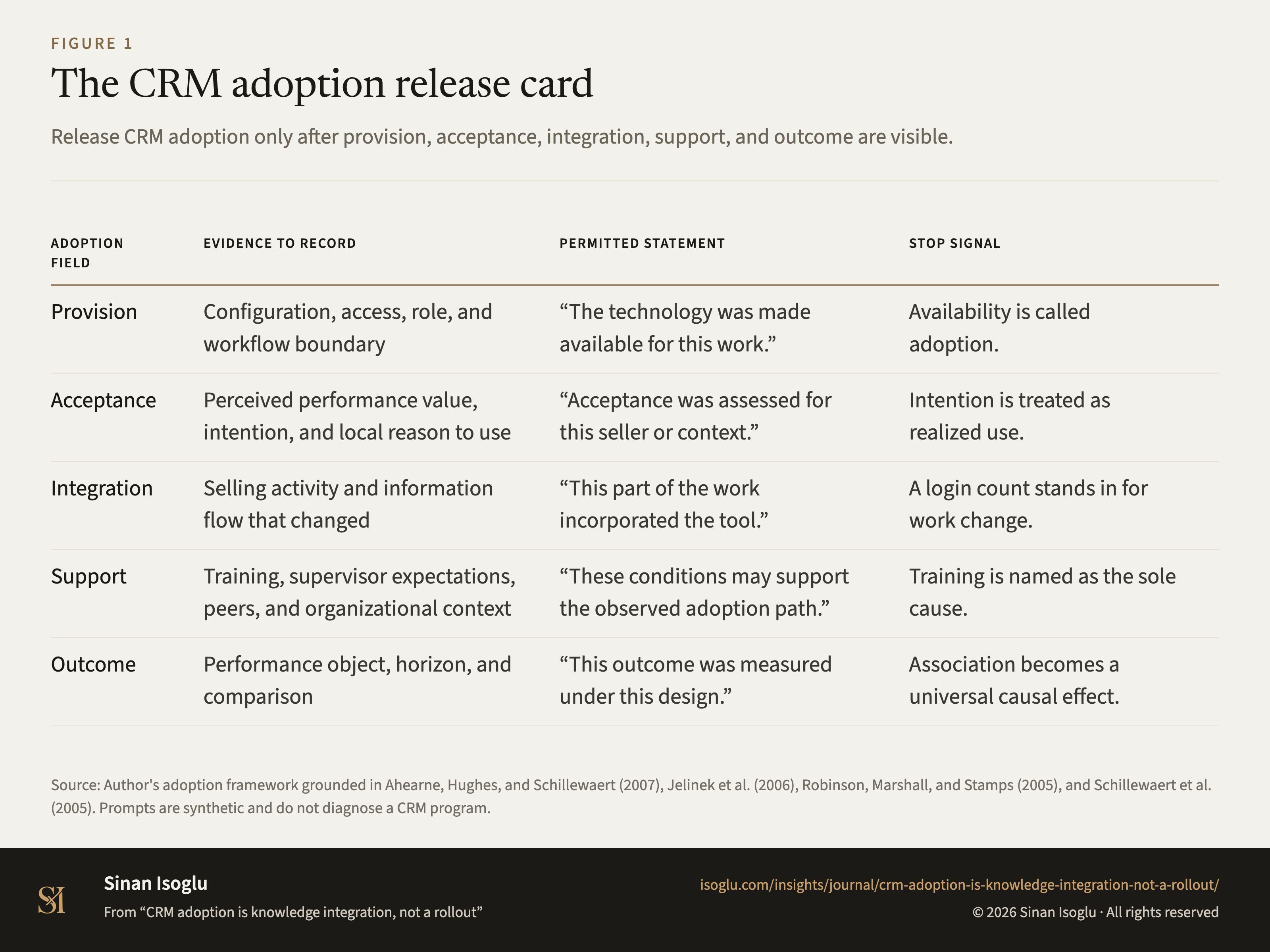
Die CRM-Adoptionskarte
Geben Sie CRM-Adoption erst frei, wenn Bereitstellung, Akzeptanz, Integration, Unterstützung und Ergebnis sichtbar sind.
Abbildung 1Die CRM-Adoptionskarte
| Adoptionsfeld | Zu dokumentierende Evidenz | Zulässiger Satz | Abbruchsignal |
|---|---|---|---|
| Bereitstellung | Konfiguration, Zugang, Rolle und Ablaufgrenze | „Die Technologie wurde für diese Arbeit bereitgestellt.“ | Verfügbarkeit wird Adoption genannt. |
| Akzeptanz | Wahrgenommener Leistungswert, Absicht und lokaler Nutzungsgrund | „Akzeptanz wurde für diese Person oder diesen Kontext geprüft.“ | Absicht wird mit tatsächlicher Nutzung verwechselt. |
| Integration | Vertriebsaktivität und Informationsfluss, die sich verändert haben | „Dieser Teil der Arbeit enthält das System.“ | Loginzahlen ersetzen die Arbeitsveränderung. |
| Unterstützung | Schulung, Erwartungen der Führungskraft, Peers und Organisationskontext | „Diese Bedingungen können den beobachteten Adoptionsweg unterstützen.“ | Schulung wird als alleinige Ursache genannt. |
| Ergebnis | Leistungsobjekt, Horizont und Vergleich | „Dieses Ergebnis wurde unter diesem Design gemessen.“ | Zusammenhang wird zum universellen Kausaleffekt. |
Bei breiten Tabellen horizontal wischen oder scrollen.
Quelle: Adoptionsrahmen des Autors auf Grundlage von Ahearne, Hughes und Schillewaert (2007), Jelinek et al. (2006), Robinson, Marshall und Stamps (2005) sowie Schillewaert et al. (2005). Die Fragen sind synthetisch und diagnostizieren kein CRM-Programm.
Quelle und Evidenz
Jede Zeile nennt eine Aussage zu dieser Abbildung, ihre Quelle und die Art ihrer Prüfung.
- A AHS07-C1 Two companies, positive effect: "using data collected from two companies we show that despite uncertain results and the frequent resistance among salespeople to it interventions it acceptance indeed has a positive effect on sales performance"Ahearne, Hughes & Schillewaert. (2007)
- A AHS07-C2 The proposed mechanism, in their words: "salespeople using it expand their knowledge and in turn gain improved targeting abilities enhanced presentation skills and increased call productivity"Ahearne, Hughes & Schillewaert. (2007)
- A AHS07-C3 Acceptance is the variable, not provision: "it acceptance indeed has a positive effect on sales performance", and the incentive to accept follows from what acceptance buys the salespersonAhearne, Hughes & Schillewaert. (2007)
- A JAMS06-C1 The design is in the title: "a longitudinal examination of individual organizational and contextual factors on sales technology adoption and job performance"Jelinek, Ahearne, Mathieu & Schillewaert. (2006)
- A JAMS06-C2 Adoption is modelled as shaped by those three families of factors: "individual organizational and contextual factors on sales technology adoption"Jelinek, Ahearne, Mathieu & Schillewaert. (2006)
- A JAMS06-C3 Adoption and performance are linked in the same design: "sales technology adoption and job performance", longitudinally rather than cross-sectionallyJelinek, Ahearne, Mathieu & Schillewaert. (2006)
- A RMS05-C1 The model and its route, verbatim: "This study proposes and tests a model linking technology acceptance to adaptive selling and job performance of field salespeople", and the result is that "behavioral intentions to use technology positively affect salesperson performance through enhanced propensity to practice adaptive selling"Robinson Jr., Marshall & Stamps. (2005)
- A RMS05-C2 Technology acceptance is reported to affect performance through an enhanced propensity to practice adaptive selling.Robinson Jr., Marshall & Stamps. (2005)
- A RMS05-C3 The technology is framed as an information route rather than an outcome: "Sales technology is an integral tool for enhancing customer-related information management and knowledge development"Robinson Jr., Marshall & Stamps. (2005)
- A SFA05-C1 The design and the three conditions: "The results from a cross-sectional study of 229 salespeople indicate that putting sales technology to use strongly depends on salespeople"'"s perceptions about the technology enhancing their performance, their personal innovativeness and organizational efforts in terms of user training"Schillewaert, Ahearne, Frambach & Moenaert. (2005)
- A SFA05-C2 Sales line managers matter alongside end users because salesperson adoption is influenced by perceived supervisor expectations.Schillewaert, Ahearne, Frambach & Moenaert. (2005)
- A SFA05-C3 And the peer threat is reported as secondary: "the threat from competing sales professionals or peers who use similar sales technology seems to be of secondary importance" for individual adoptionSchillewaert, Ahearne, Frambach & Moenaert. (2005)
Prüfgrade: A, gegen die gedruckte Seite der Primärquelle geprüft · B, Primärquelle, nur Textebene · C, belastbare Sekundärquelle · D, berichtet.
Aus dem Beitrag
Revenue Operations & KI
CRM-Adoption ist Wissensintegration, kein Rollout
Ein CRM-Rollout stellt ein System bereit: Adoption braucht Akzeptanz, Wissensintegration, veränderte Vertriebsarbeit, Unterstützung und ein Ergebnis.
Den Beitrag lesenDiese Abbildung gehört zu einem Essay: Die Zahlen stehen hier, das Argument dort.
Zitieren oder einbetten
Verwandte Abbildungen
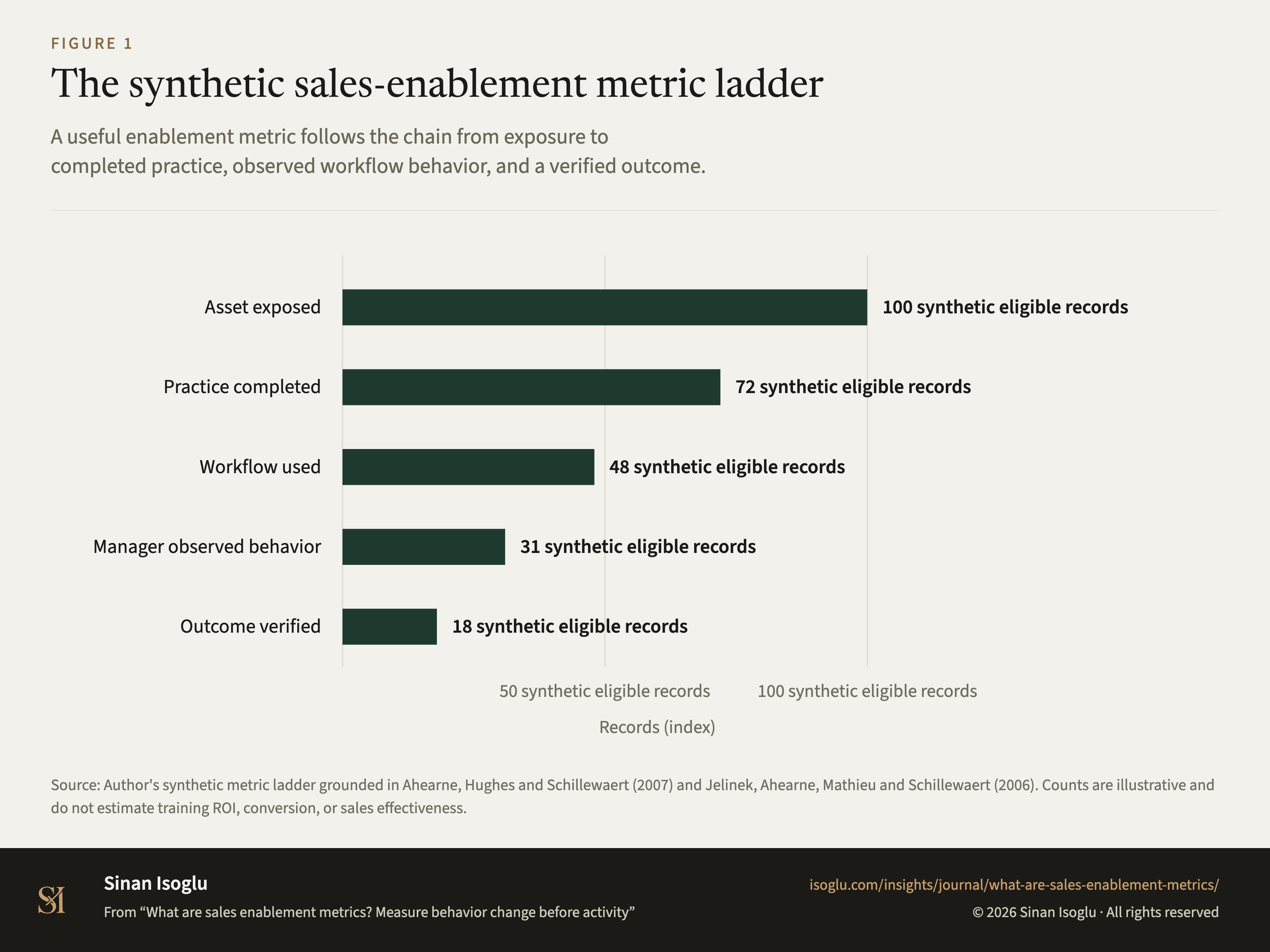
Abbildung 1Grafik
Die synthetische Messleiter für Sales Enablement
Was sind Sales-Enablement-Kennzahlen? Erst Verhalten, dann Aktivität
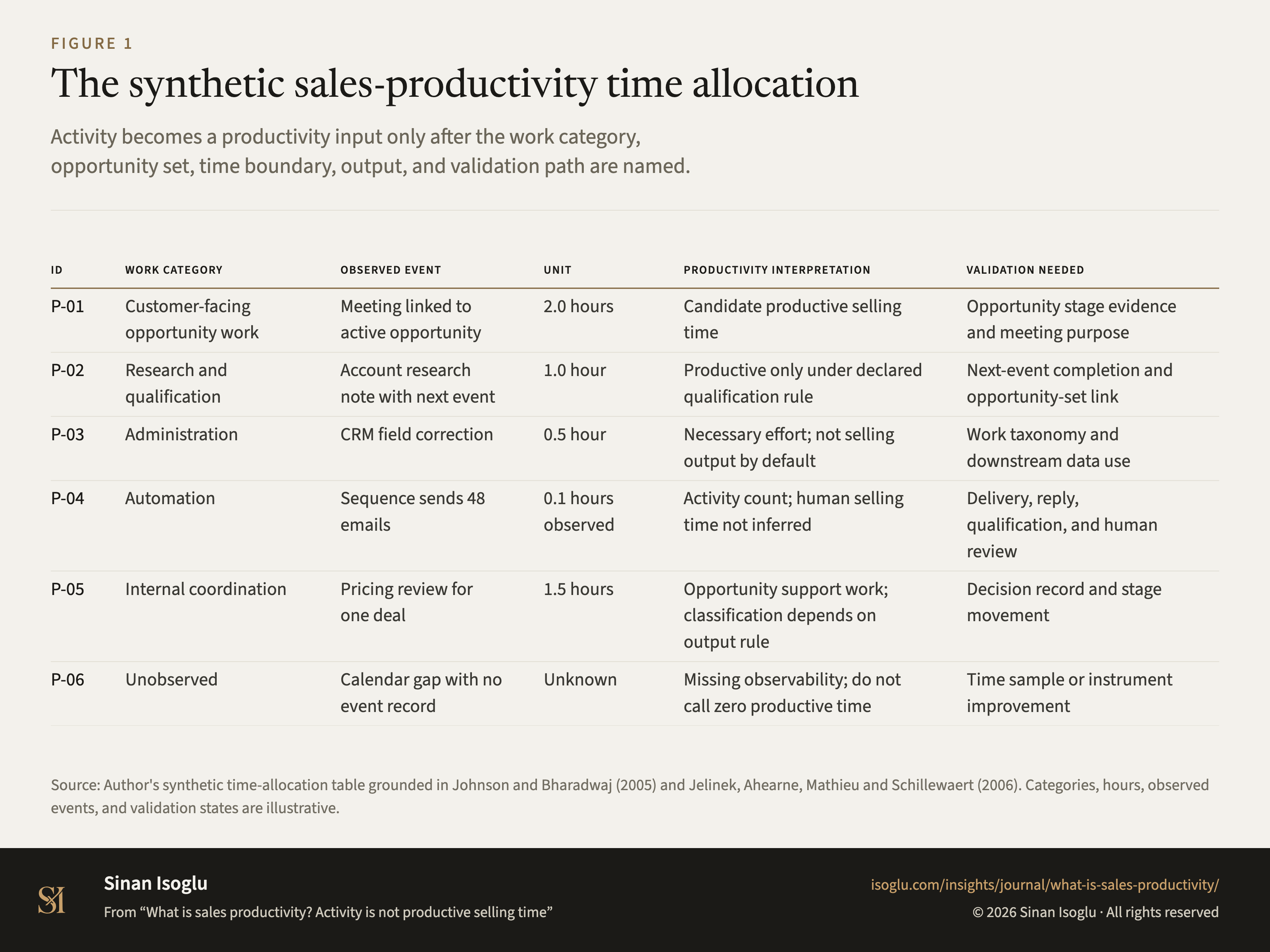
Abbildung 1Grafik
Die synthetische Zeitallokation für Vertriebsproduktivität
Was ist Vertriebsproduktivität? Aktivität ist keine produktive Verkaufszeit
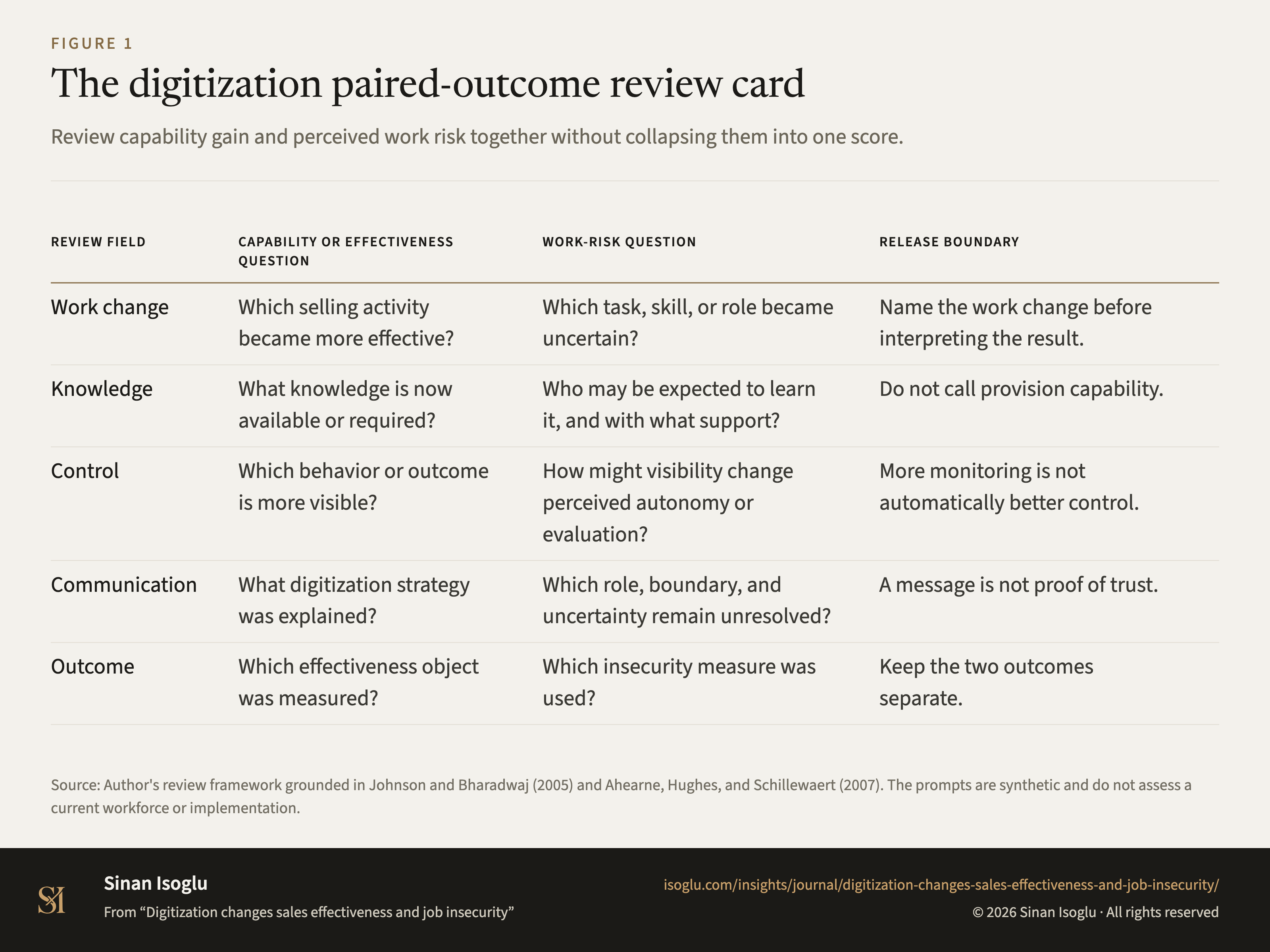
Abbildung 1Grafik
Die Freigabekarte für das doppelte Digitalisierungsergebnis
Digitalisierung verändert Vertriebseffektivität und Arbeitsplatzunsicherheit
Kontakt
Schicken Sie die Frage, an der Sie arbeiten.
Forschung, ein Gastvortrag oder eine Frage aus der Praxis.